From the workshop
Notes from the building of House of Noah: what Genesis says, what history, archaeology and the studies add, and what we had to model where the sources are silent. Every page gives its sources.
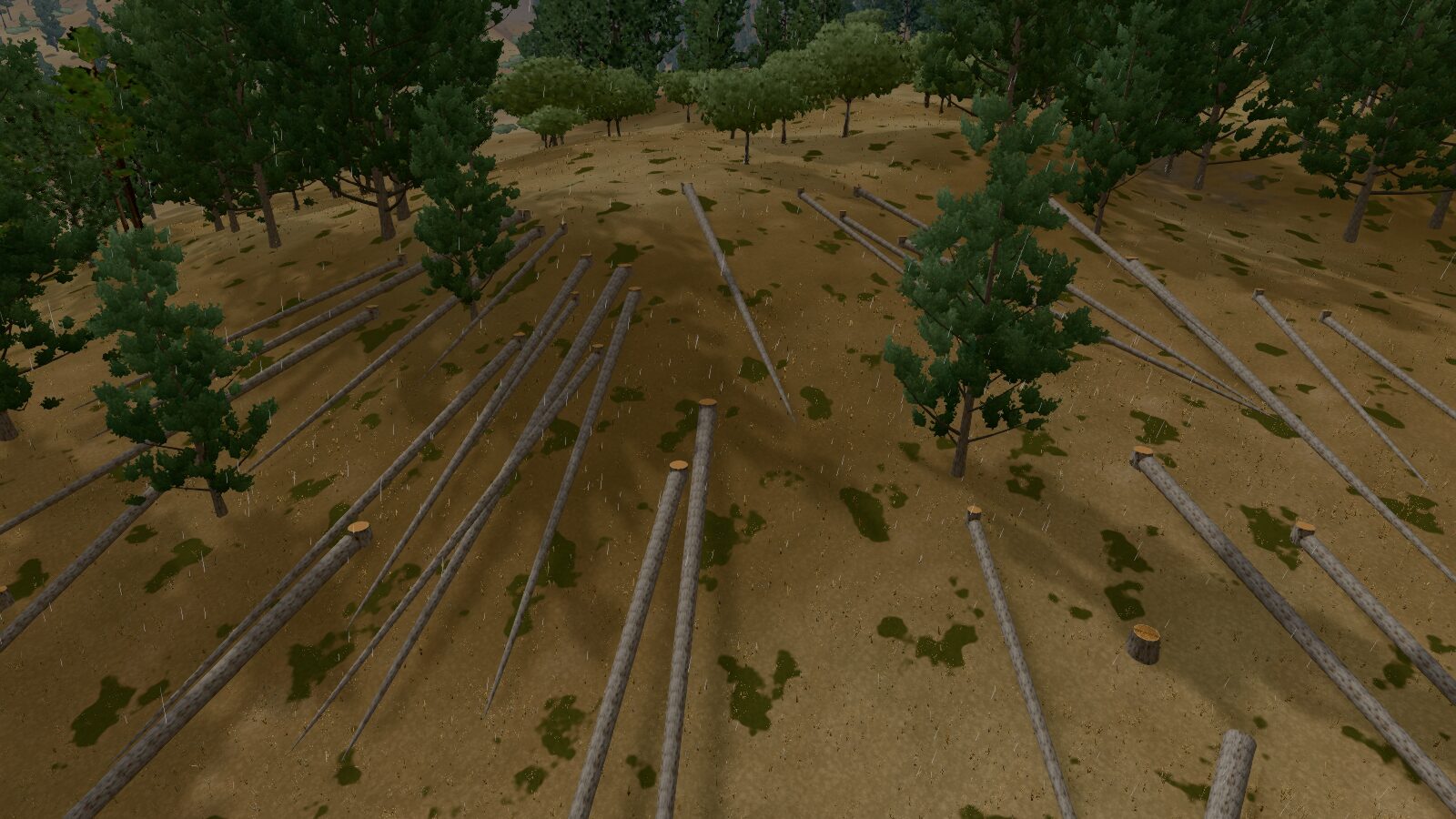
A few by hand, the rest in batches: making decades of work playable
The ark is about 350,000 separate jobs, and nobody can play them all. Why the game has a player do one job in thirty by hand and watch the rest as a short time-lapse, why the calendar still counts every hour of the real work, and what that comes to in hours of play.
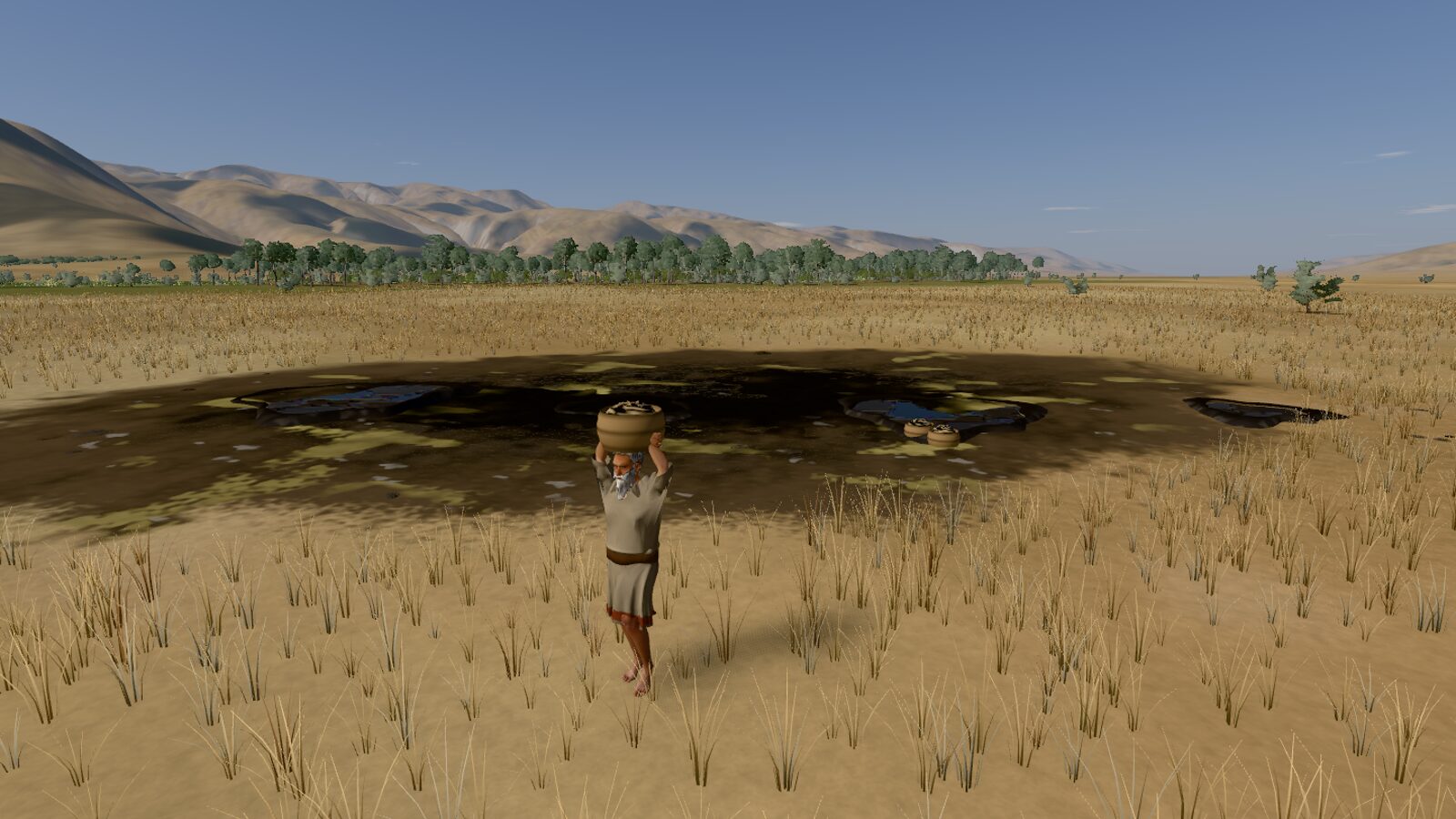
Bitumen from a seep, and pine tar from the hills
The ark's pitch can come out of the ground or out of the pines. Where the game's bitumen seep is, how crude bitumen was gathered by hand and melted into a mastic, how pine tar was burned out of resinous wood in an earth-covered pit, and what each costs a house.
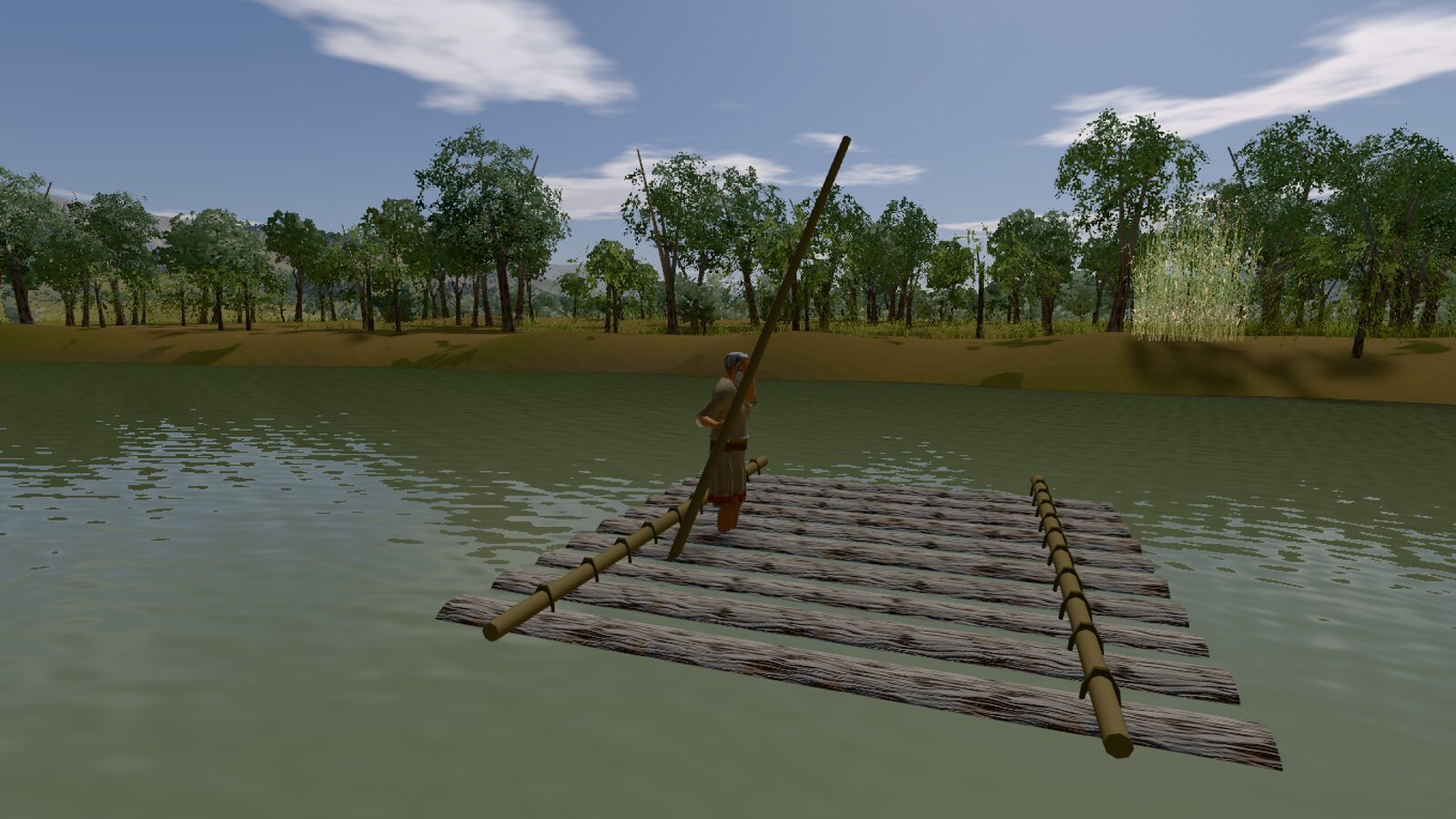
Down the river: does green cypress float, and how timber was rafted
A river carries for nothing what a crew drags for weeks, but only downstream, only when there is water, and only wood that floats. Which of the valley's woods float fresh-cut, how the ancient world rafted its timber, and how a house binds a raft and steers it down to the site in the game.
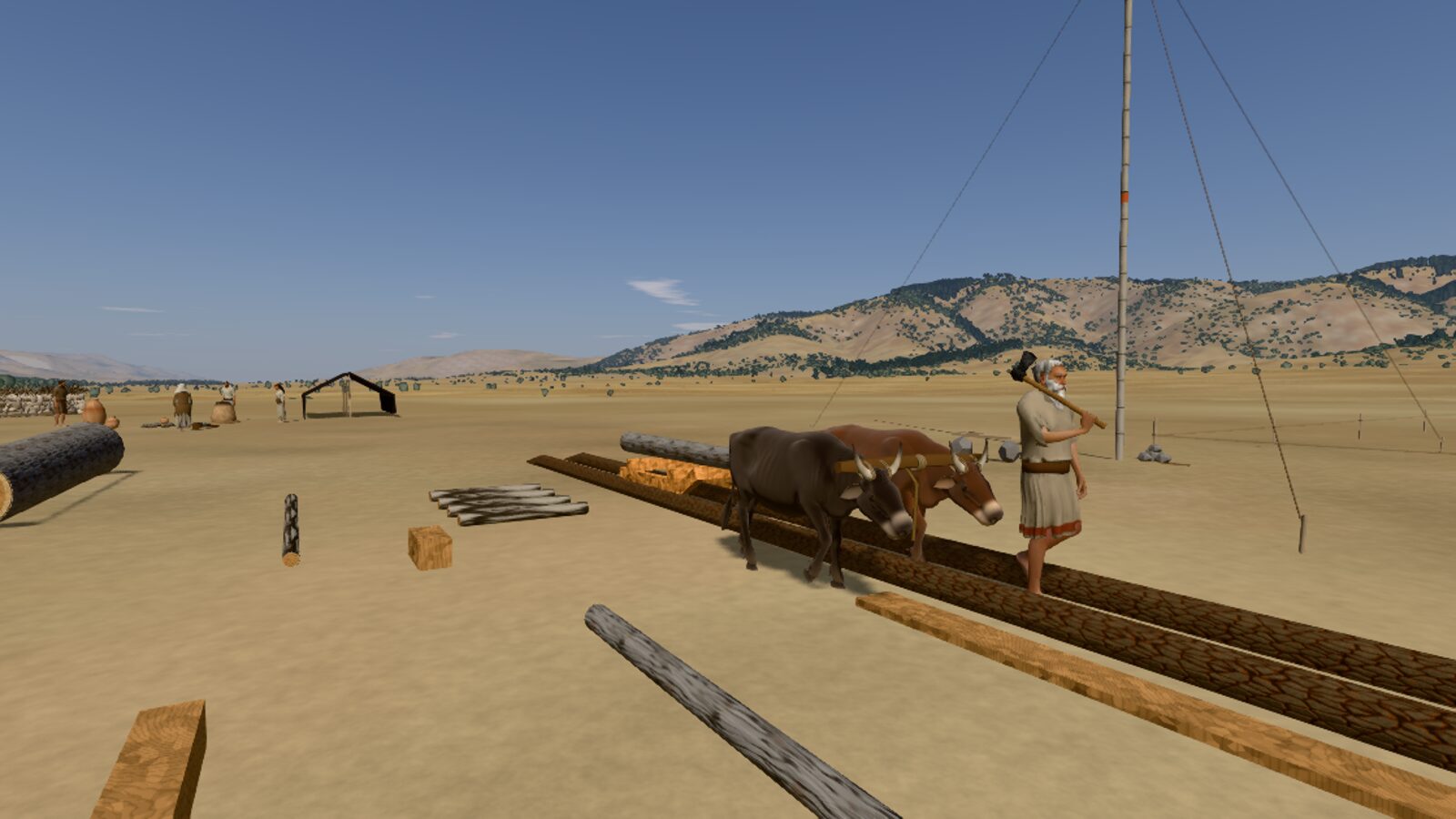
Oxen: “such as have cattle”
Genesis names cattle-keepers before the flood, and the game gives every house a pair of oxen. How hard an early ox pulls and for how long, what it eats and drinks, why the track under the load matters as much as the animals, and how a player leads, yokes and drives the pair.
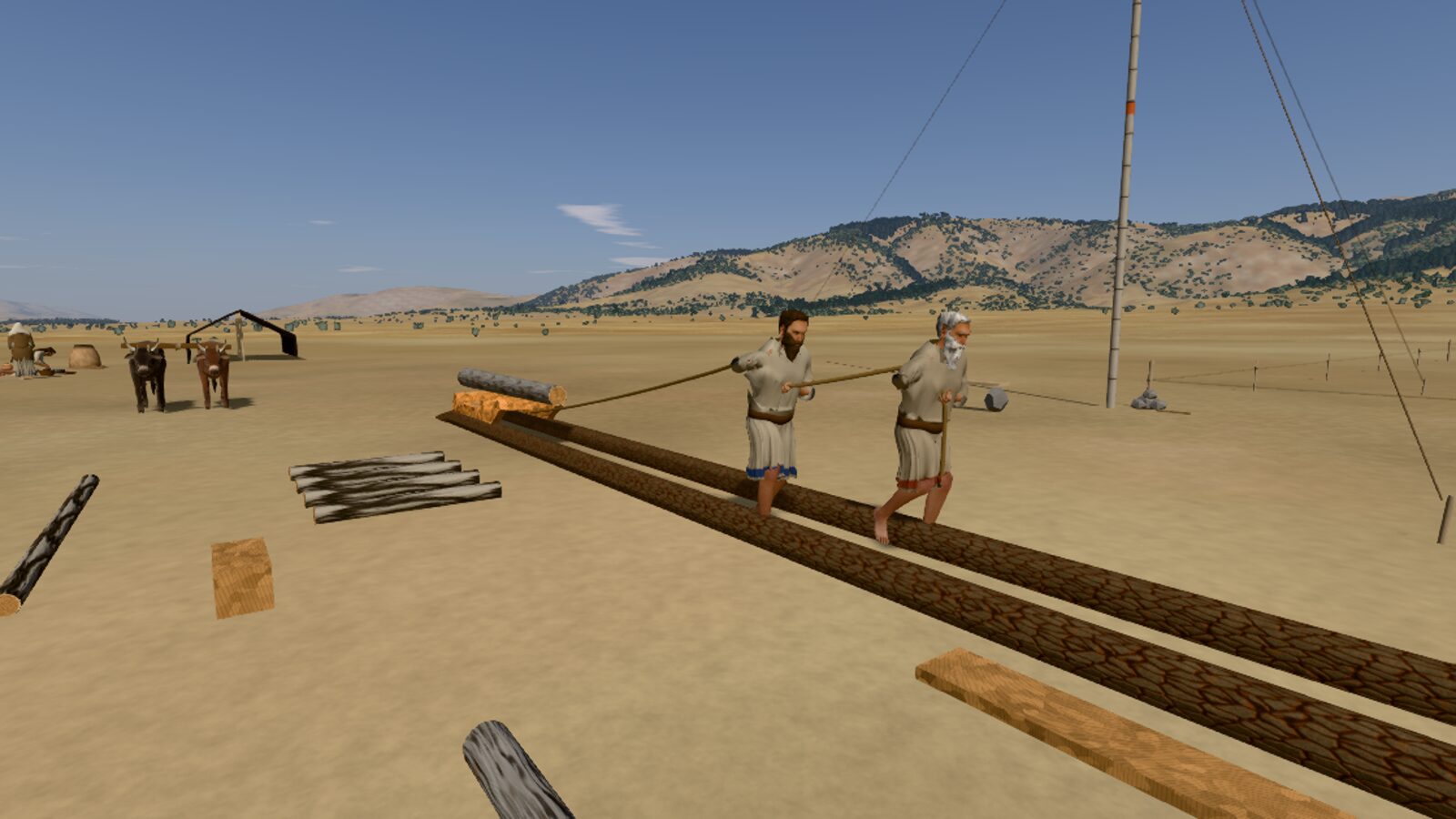
Rollers, sledges and tracks: moving timber without wheels
Dragged over the ground, the game's 2.5-tonne test log needs about 115 people to start it. On a sledge over greased rails it needs 14. How heavy timber was moved before carts, what experiments with rollers and sledges found, and how a house lays its own tracks in the game.
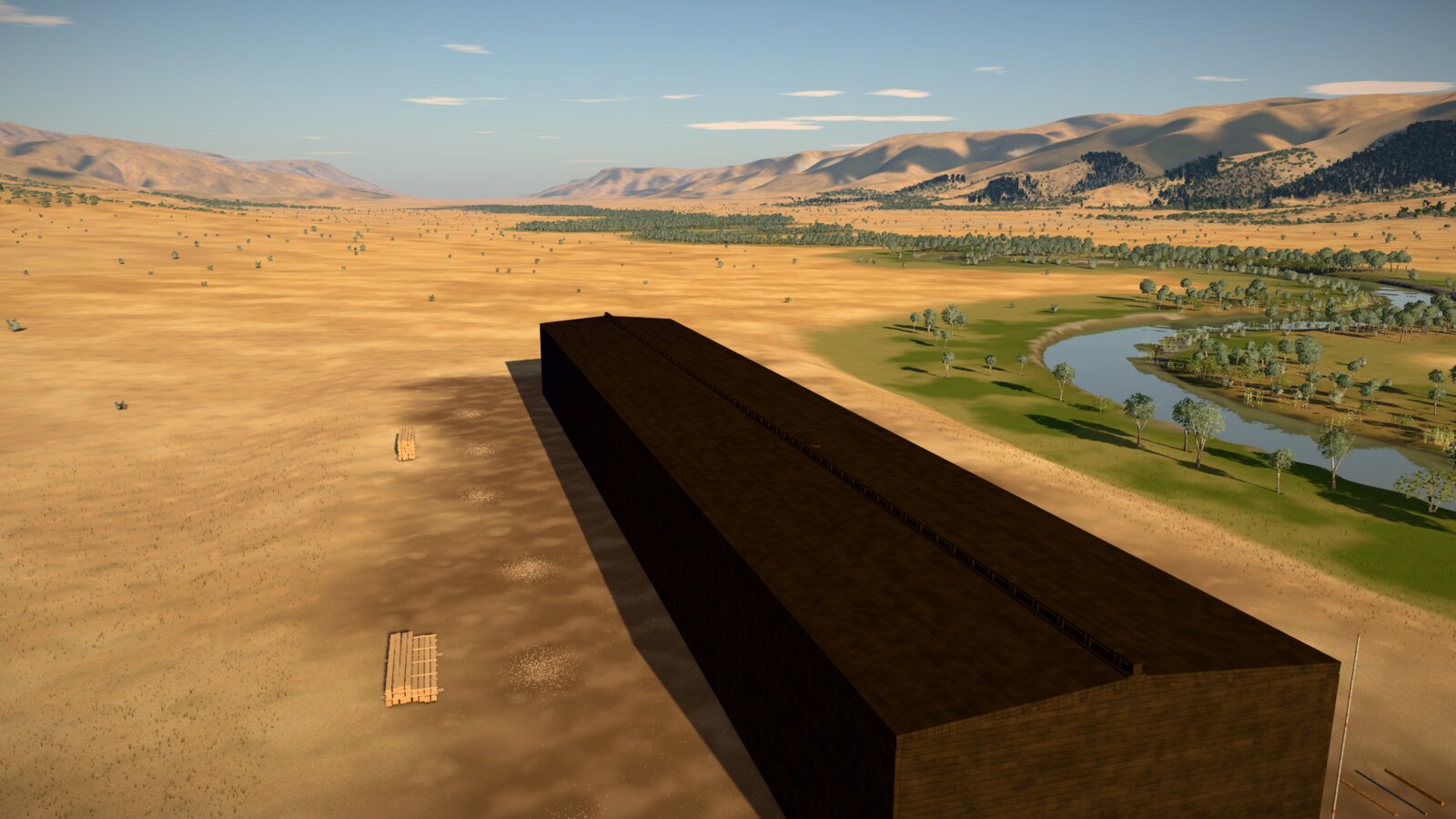
Water for a year at sea
Genesis tells Noah to take food aboard and never mentions water, the heaviest thing the ark would carry. How long it rained, by reading; whether the floodwater was fresh or salt, and whether the sea was fresher then; what the roof could catch, and how much the tanks must still hold.
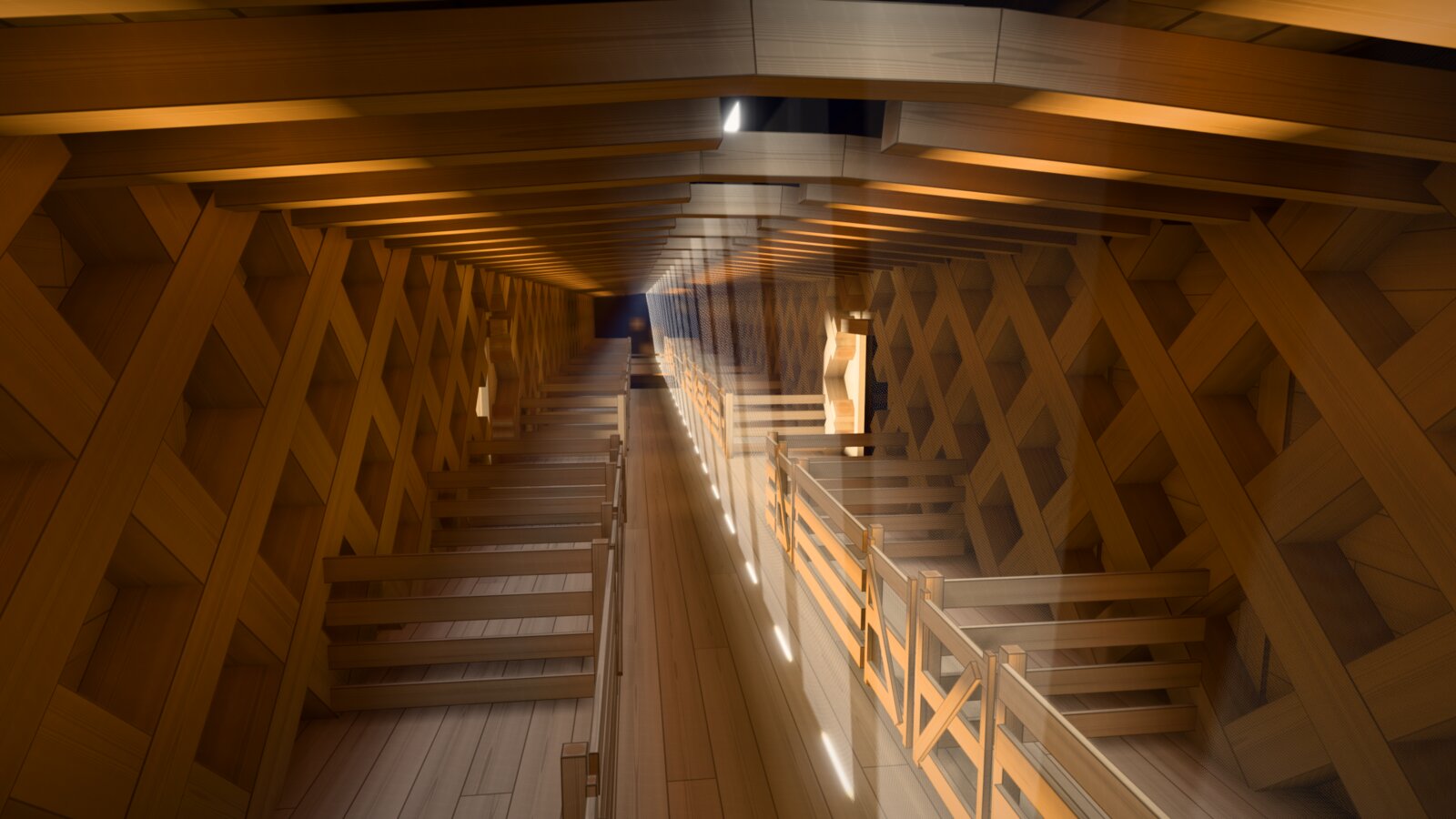
How many animals, and was there room?
Genesis gives the rule, two of every kind and sevens of the clean, but not the number. What a “kind” might be, three counts from about 1,400 kinds to 39,000, how many animals each puts aboard, and whether the game's sturdy reference ark has the floor for them and a year's food and water.
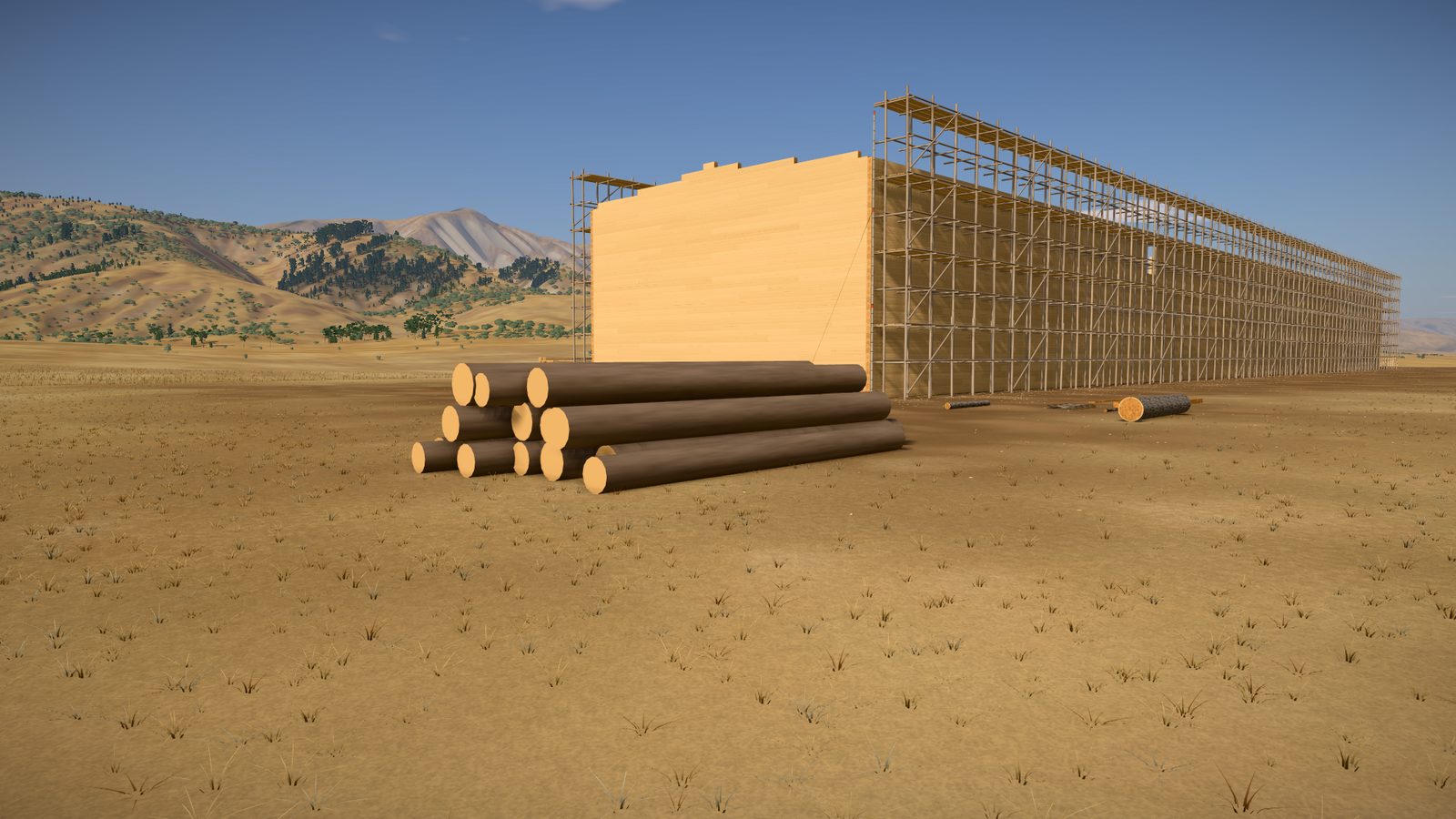
Hew in the forest, or haul the whole log?
Squaring a log where it falls sheds about a third of its weight. Whether to square timber in the forest or haul it whole to the yard was a real choice for timber trades from ancient Lebanon to nineteenth-century Canada, and in the game it is a choice for every house.
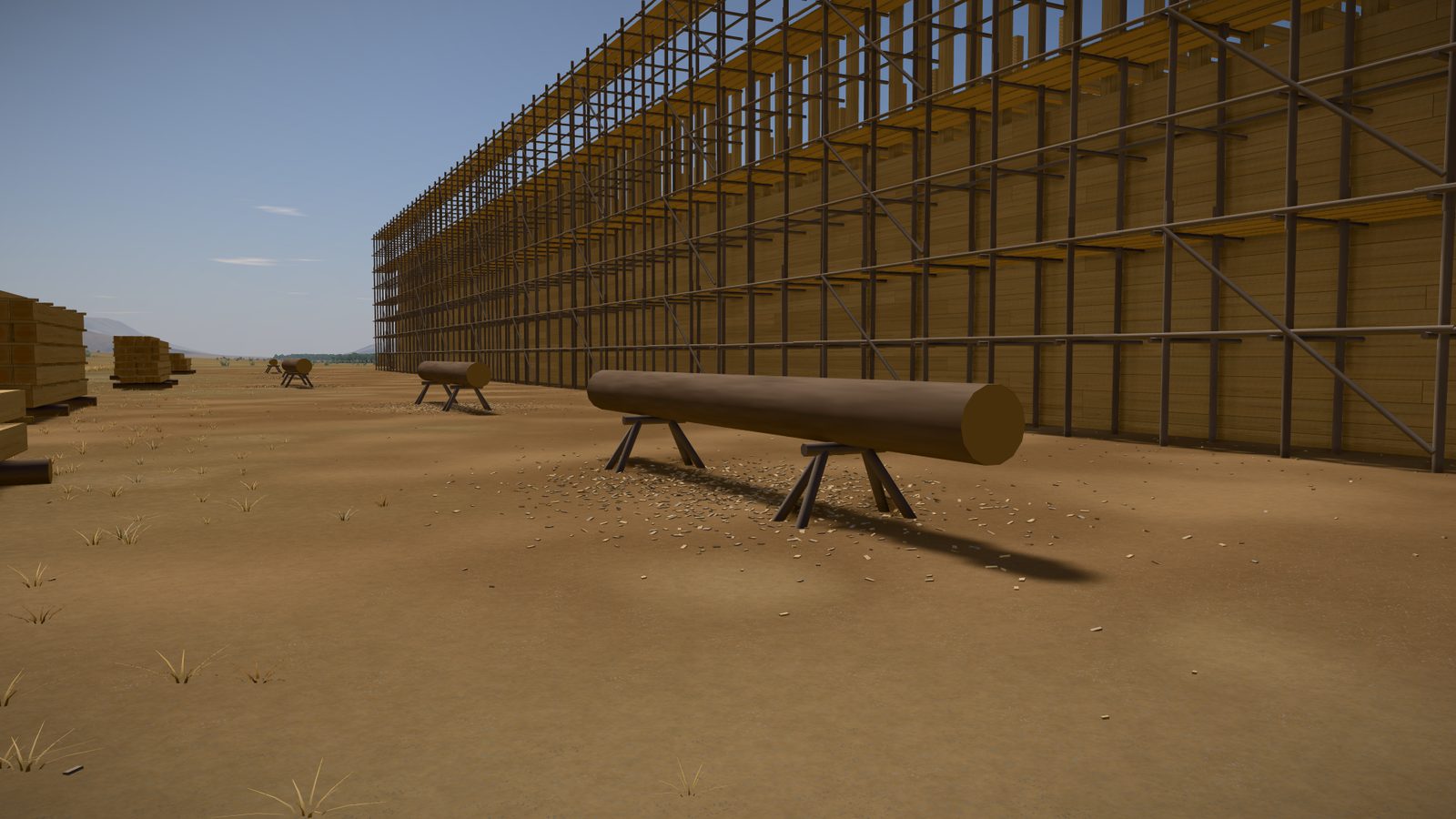
Splitting, hewing and the pit saw: from log to timber
A log is not yet a beam or a plank. The three old ways of turning one into the other, what each costs by the records of experiments, shipyards and sawyers, how much of the tree is left at the end, and how the game offers all three.
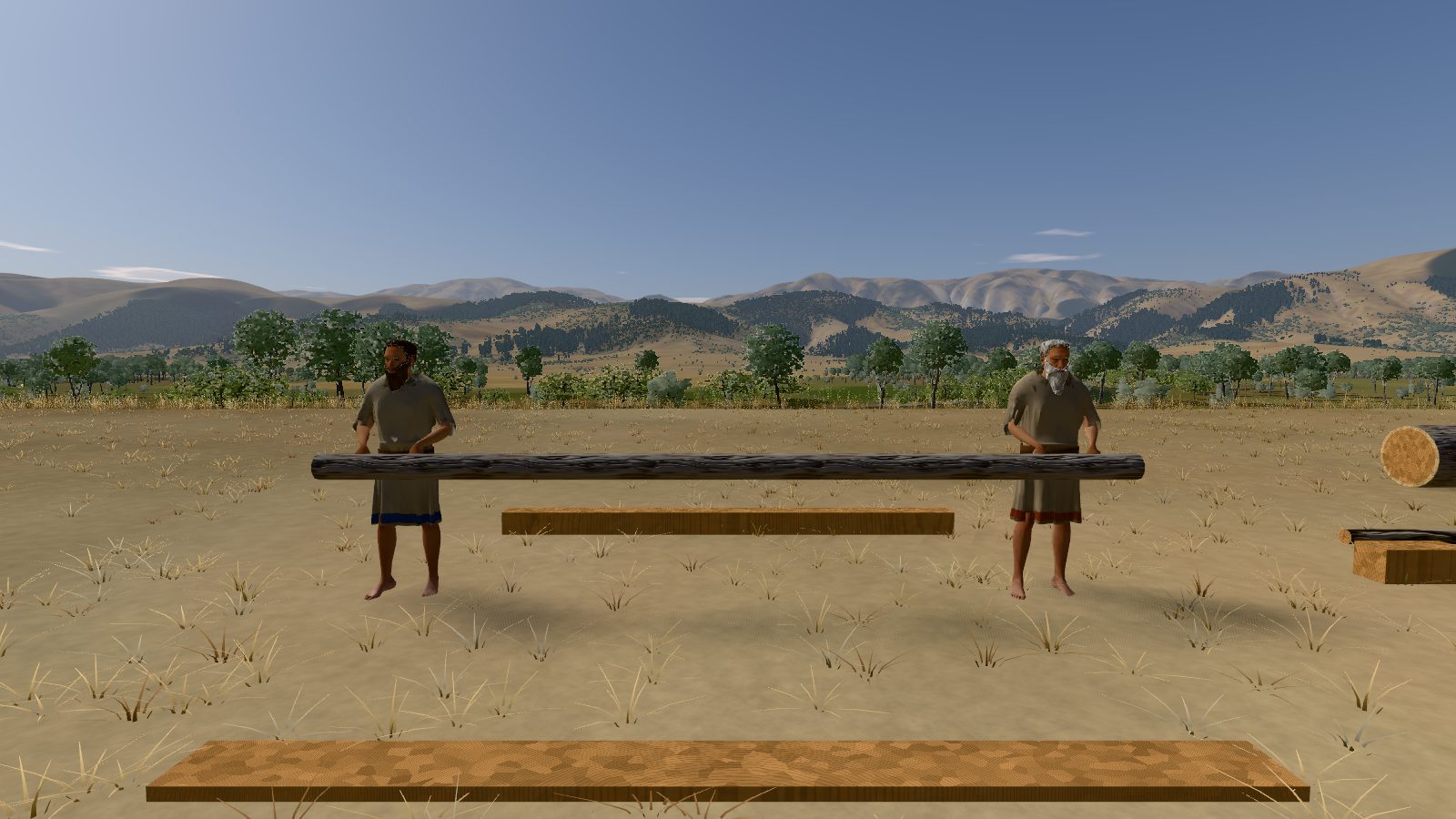
Lifting together on the count
A load that needs two people only comes up if both lift at once. How teams share a weight, why big crews pull less than the sum of their members, and how the game's preset calls let a house count to three without a word typed or spoken.
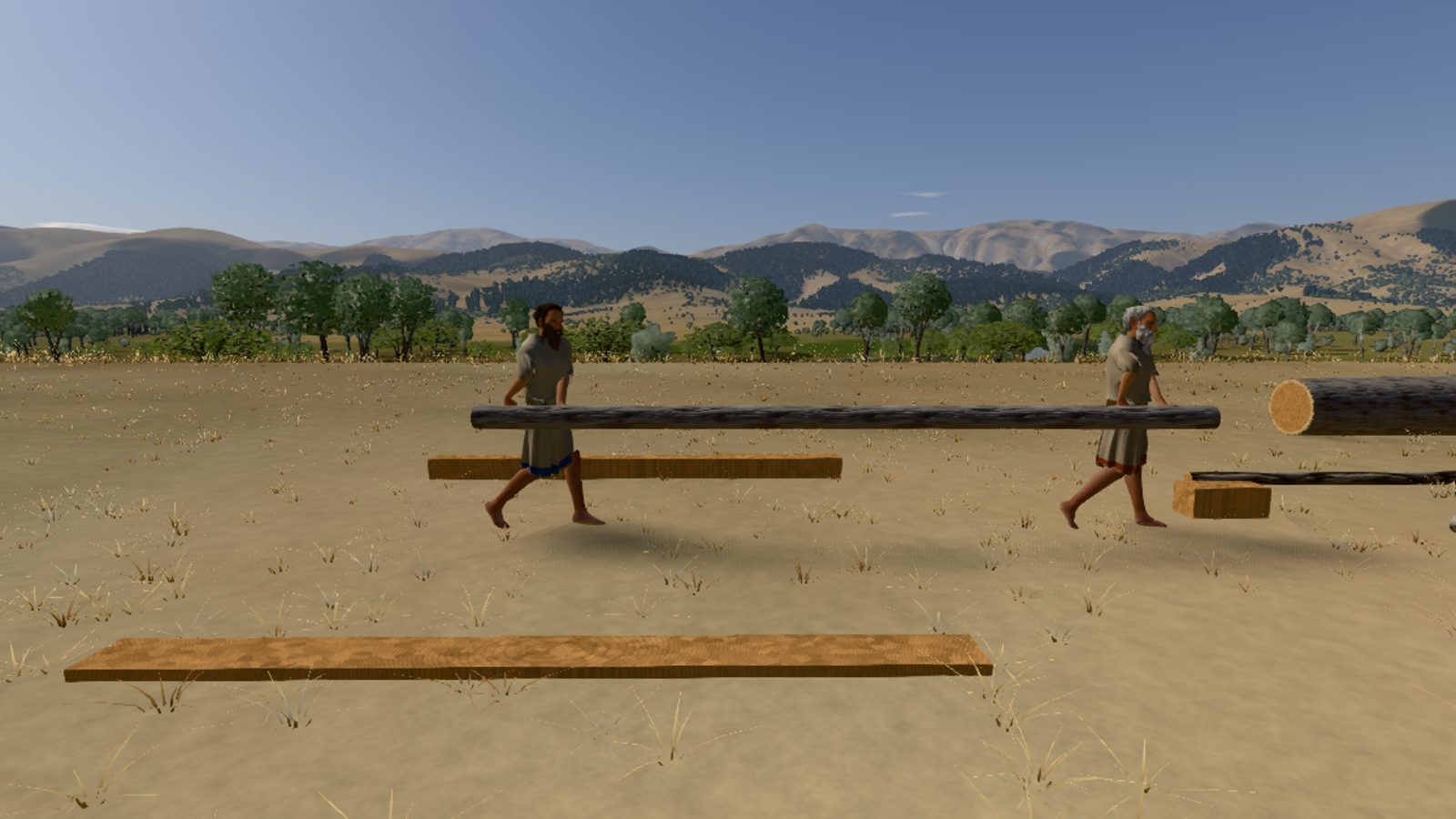
What a log weighs, and why some things need two
Fresh-cut cypress is heavy, and the ark is made of tonnes of it. How the game weighs every piece of timber, how much one person can lift, why a 90-kilogram pole needs two and a beam four, and why logs are never lifted at all.
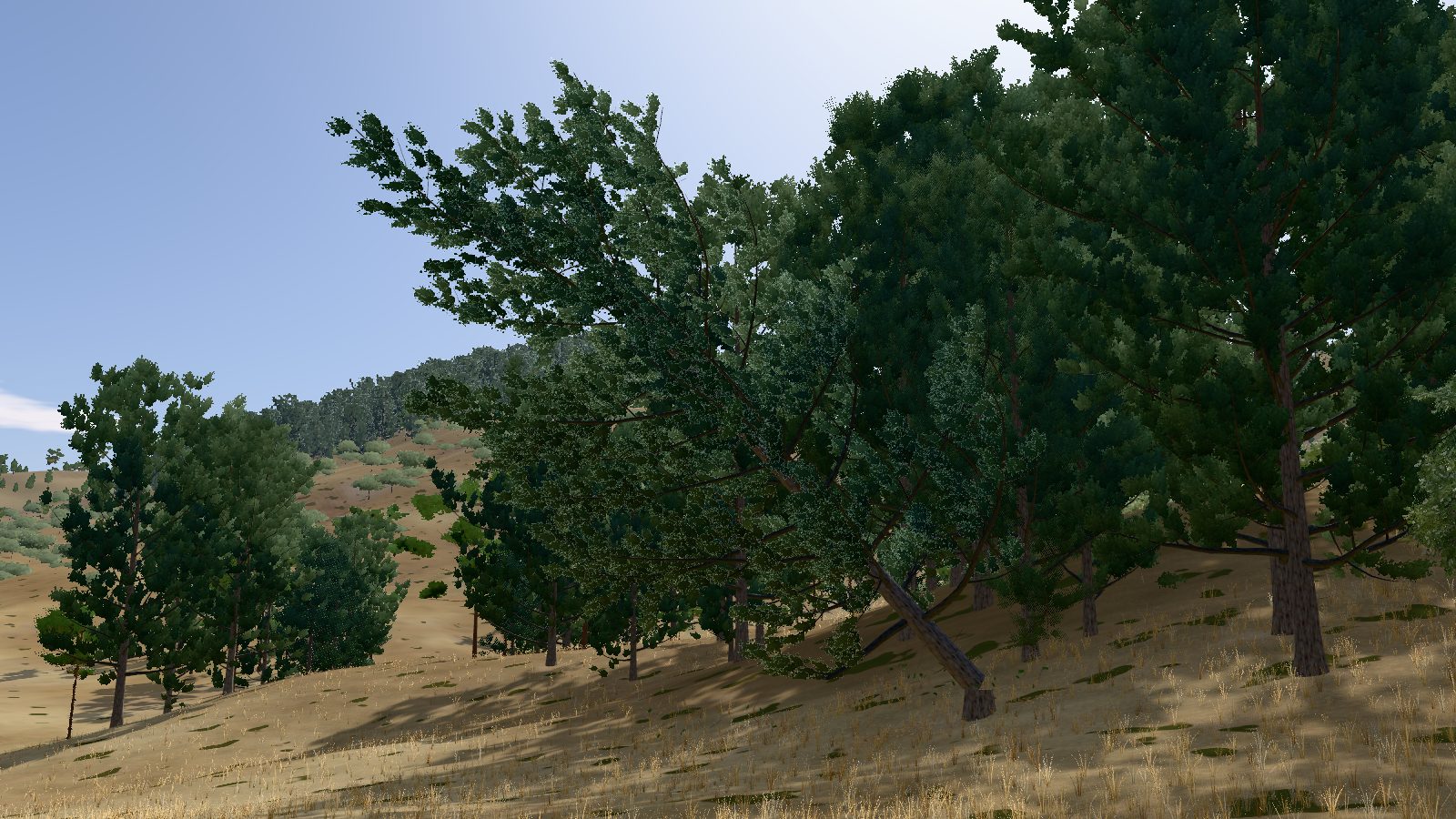
Notch, hinge and back cut: making a tree fall where you want
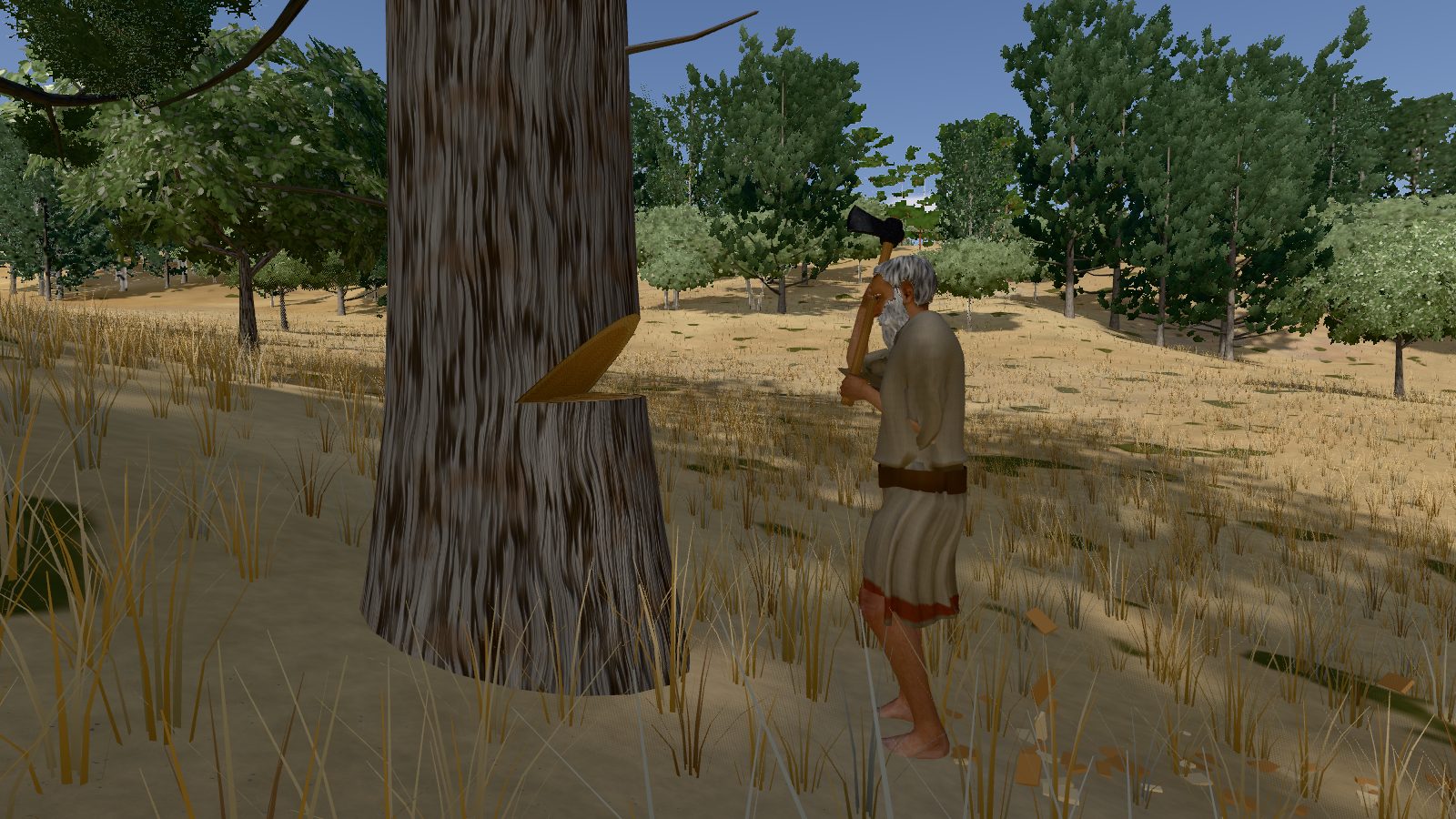
A tree felled with an axe goes where its cuts send it, or where its lean and the wind do. The faller's three cuts, what each one does, what goes wrong, and how the game works out every fall from the wood itself.
How long does it take to fell a cypress?
In the game a tree comes down in half a minute of play, and the calendar adds hours. Where those hours come from: felling experiments with replica axes, one formula fitted to them, and what it says the ark's 7,900 trees cost.
Bronze and iron before the flood: Tubal-cain and the first axes
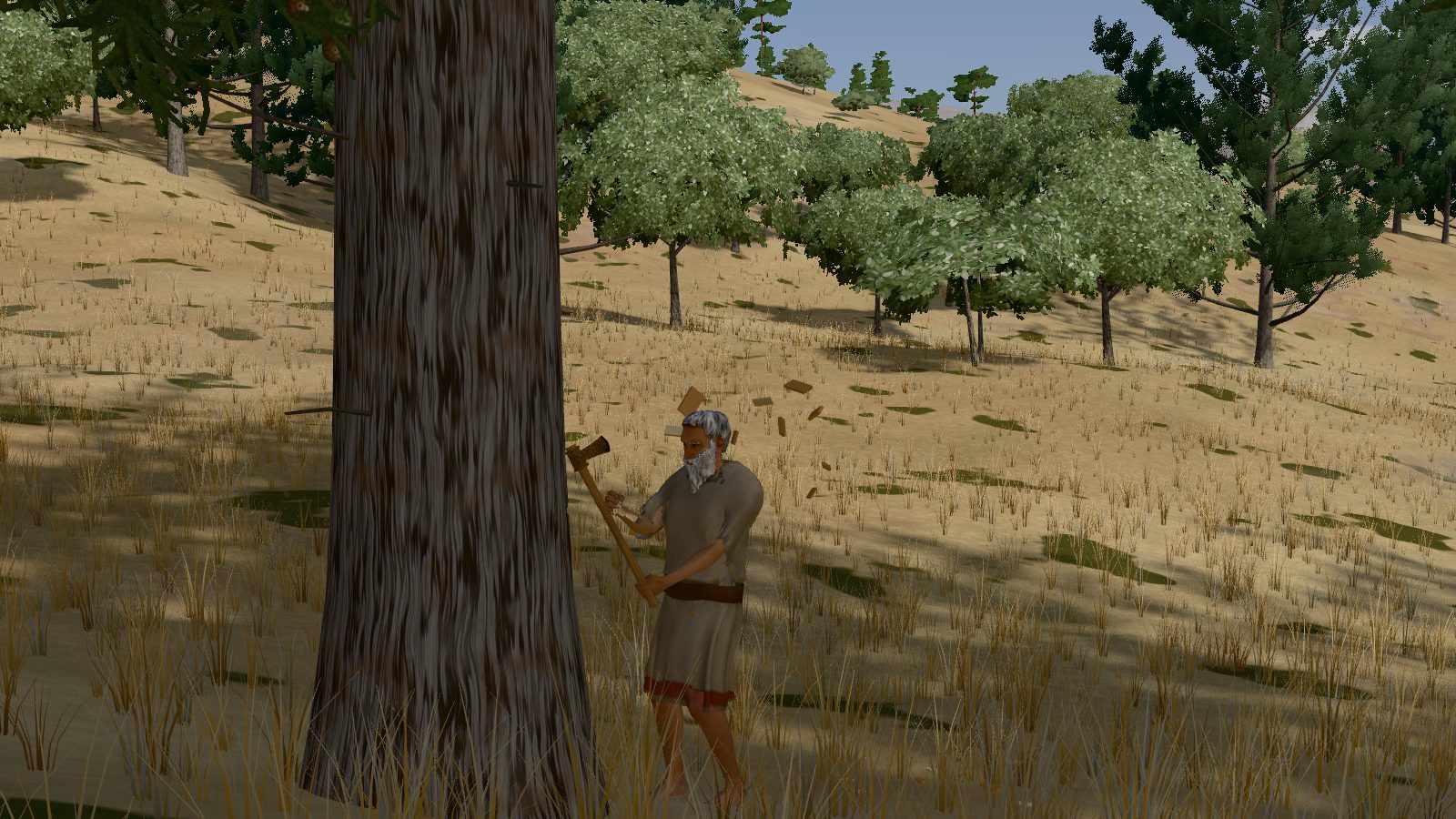
One verse in Genesis puts bronze and iron in the world before the flood. What it does and doesn't tell us, what the game's two axes are modelled on, and what replica-axe experiments say about how much slower bronze is than iron.
Dressing the family, and showing them with respect
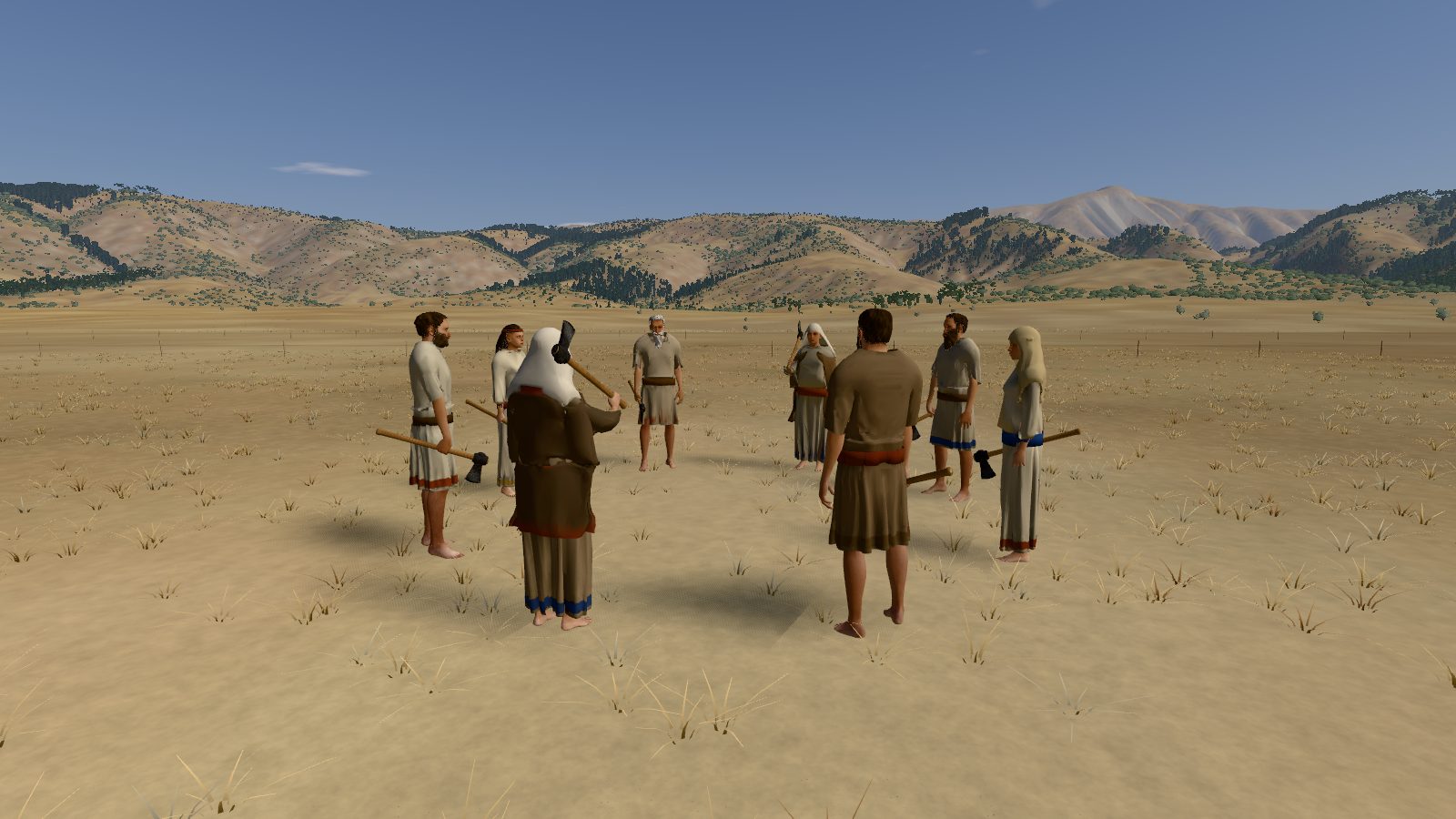
Genesis mentions a few garments and no fashions. How the game dresses Noah's house from the oldest pictures of West-Asian people, what it leaves out, and how it handles skin, faces and the picturing of Noah himself.
How tall were they? Bodies from Bronze Age bones
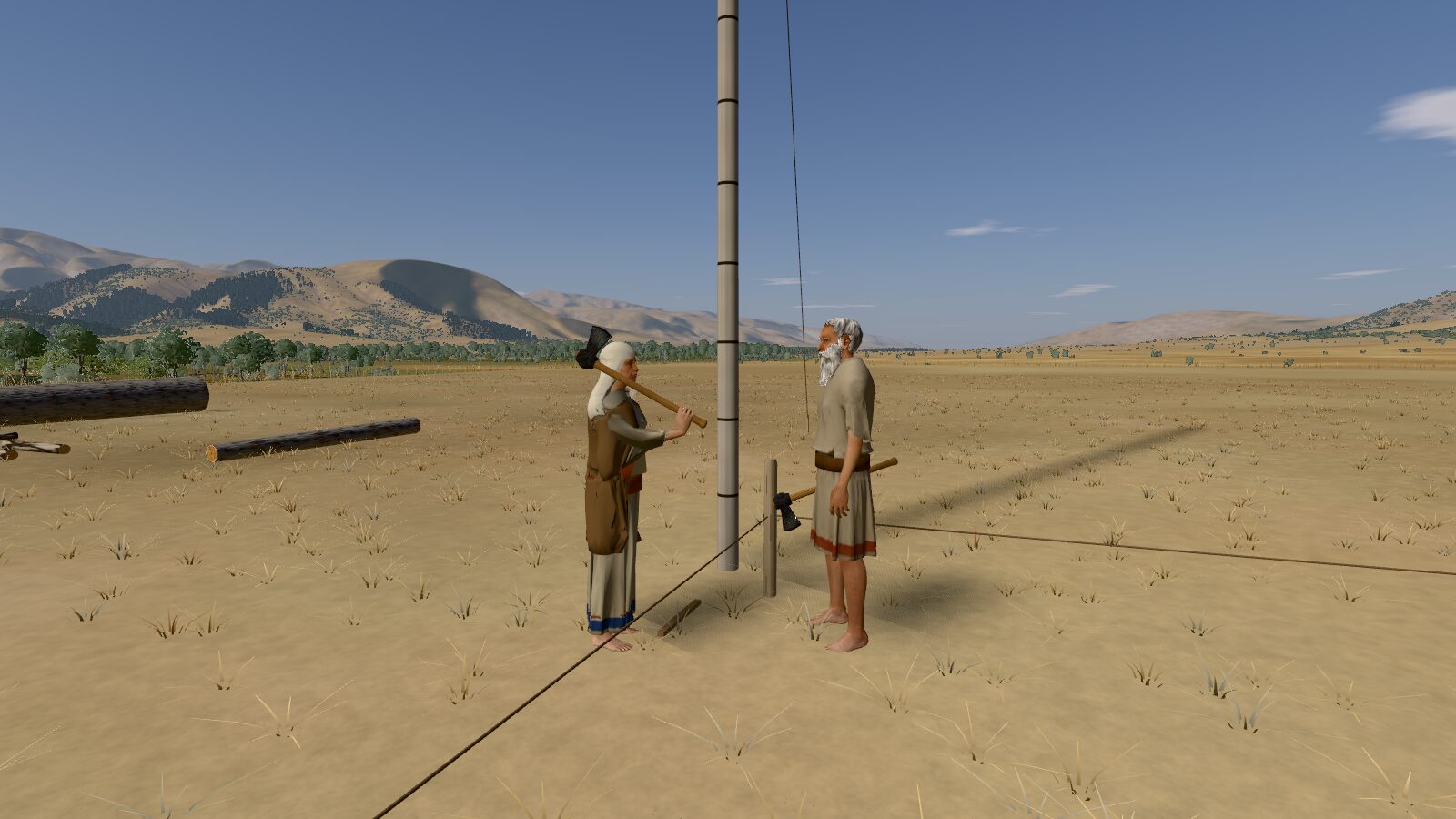
Genesis gives Noah's age, never his height. Why each of the game's eight people has a height of their own, from 1.51 to 1.69 metres, where those numbers come from, and what a body's height changes in play: the eye, the shoulder, the head room under a beam.
Year 1 is Noah's 480th: the 120 years and the family's calendar
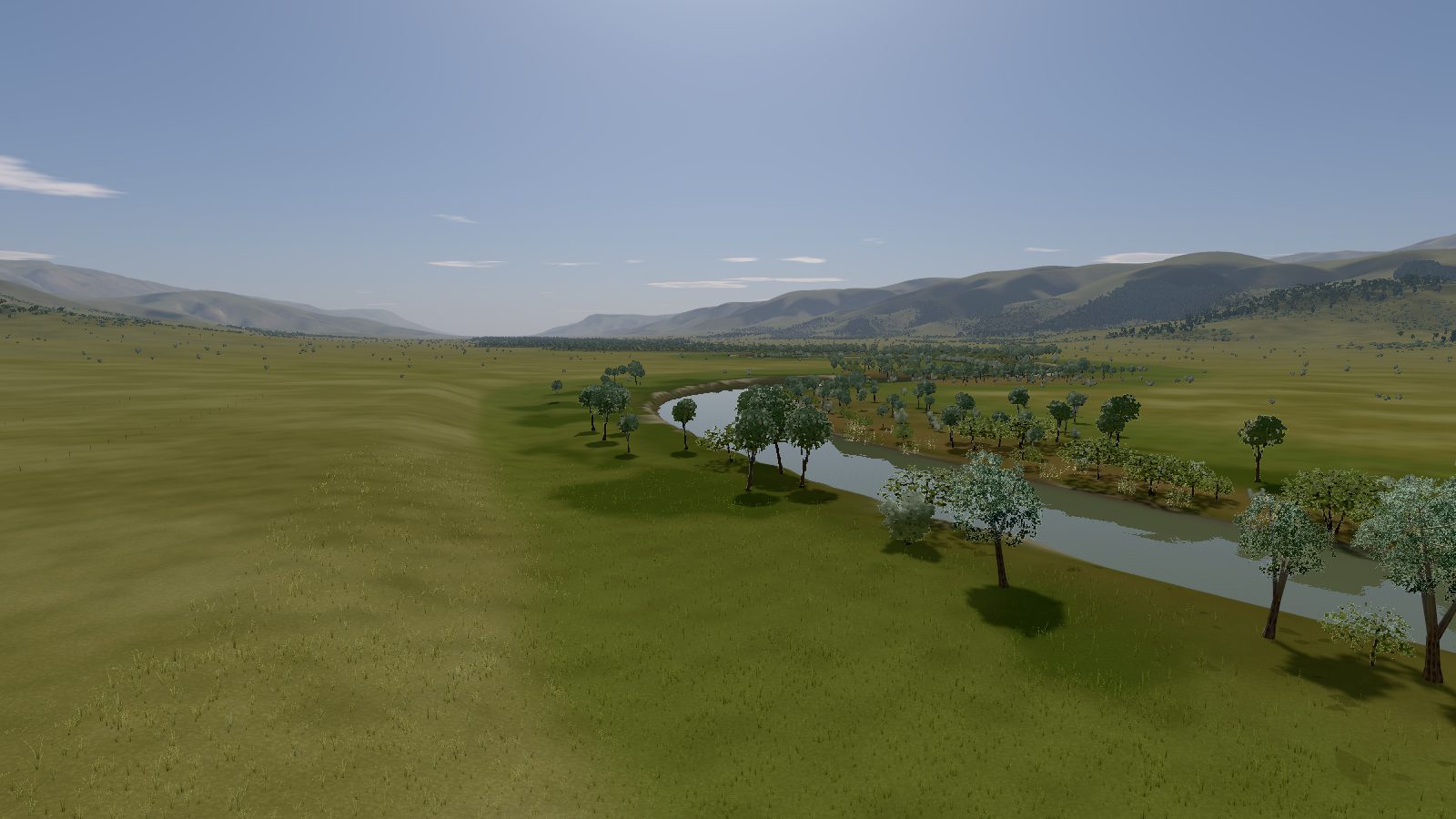
Genesis dates the flood by Noah's age, to the day. How the game sets its calendar from that: why the build begins in Noah's 480th year, how a year of twelve months of thirty days is counted, and which deaths and births stand on it as marks.
The house of Noah: eight people, and why players are roles
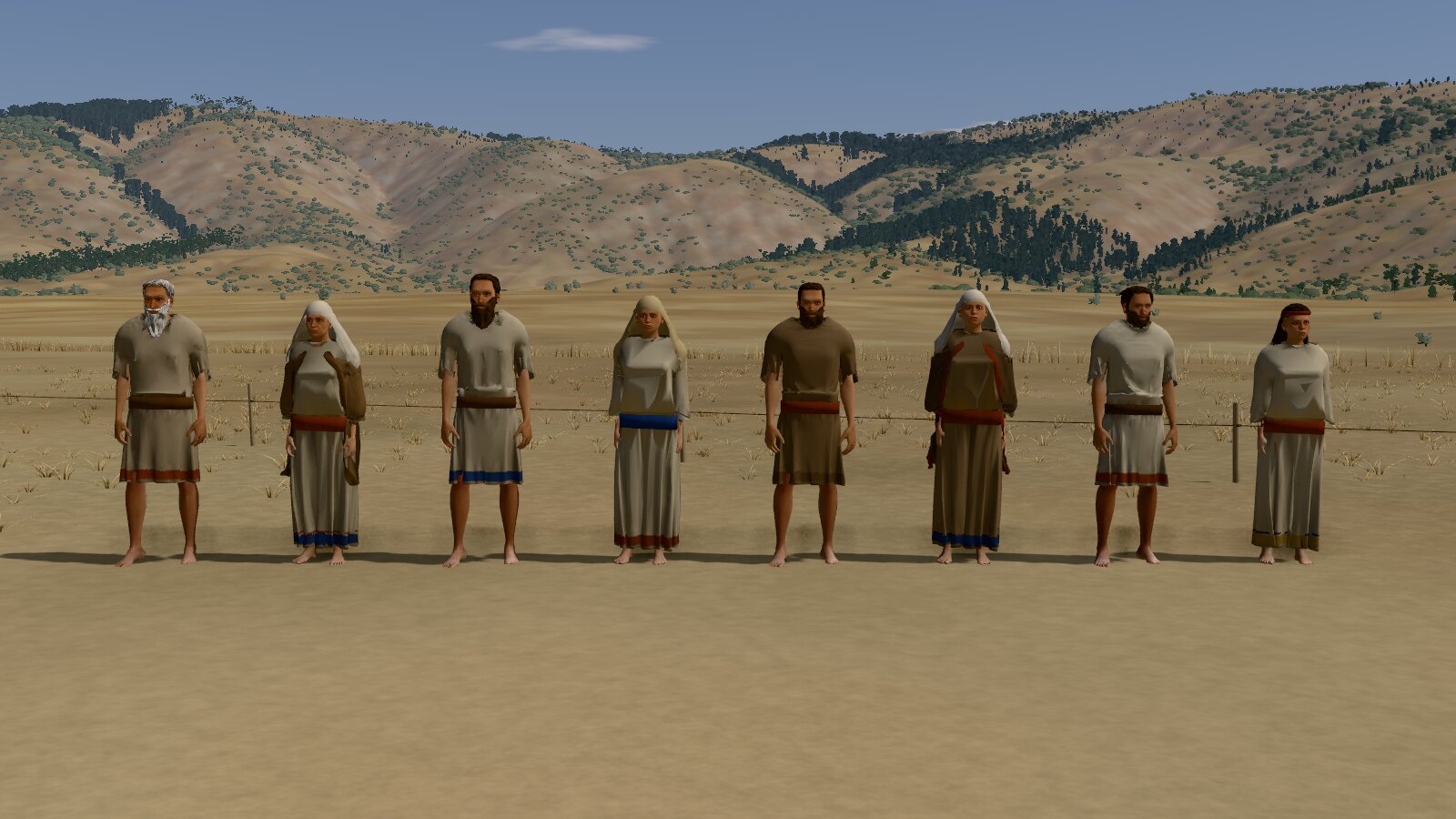
Genesis names the eight who went into the ark, but not the four wives. How the game builds its house from them: roles instead of player names, a family that grows over the 120 years, and work that needs more than one pair of hands.
Why our ark is a box: Durupınar, the text and the timber
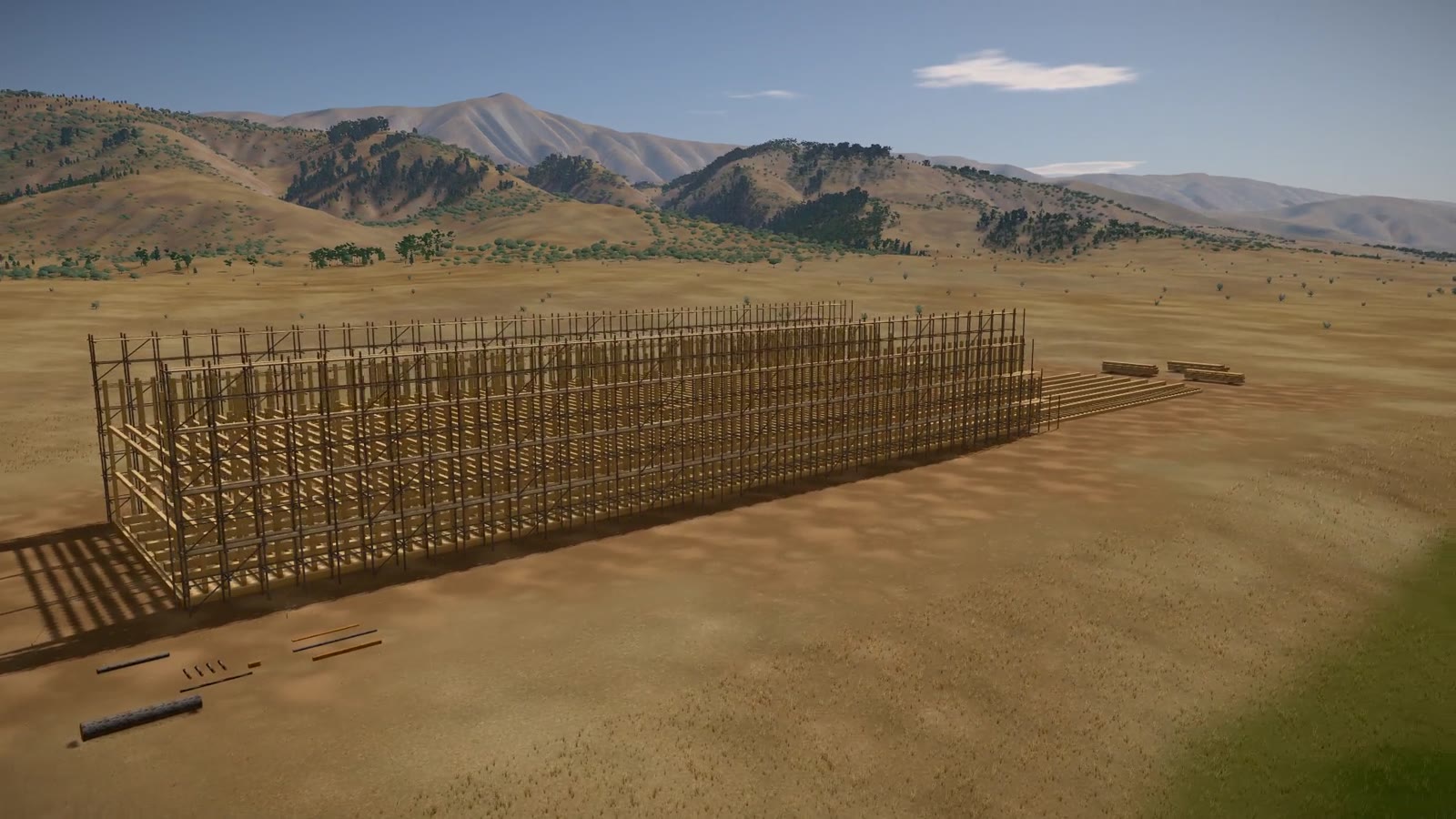
A boat-shaped formation near Ararat is in the news again, with radar, drilling and soil samples. How it compares with the numbers in Genesis, what geologists on both sides have concluded, and why the game's ark is a box of straight timbers.
The trees of the valley, and how to tell them apart
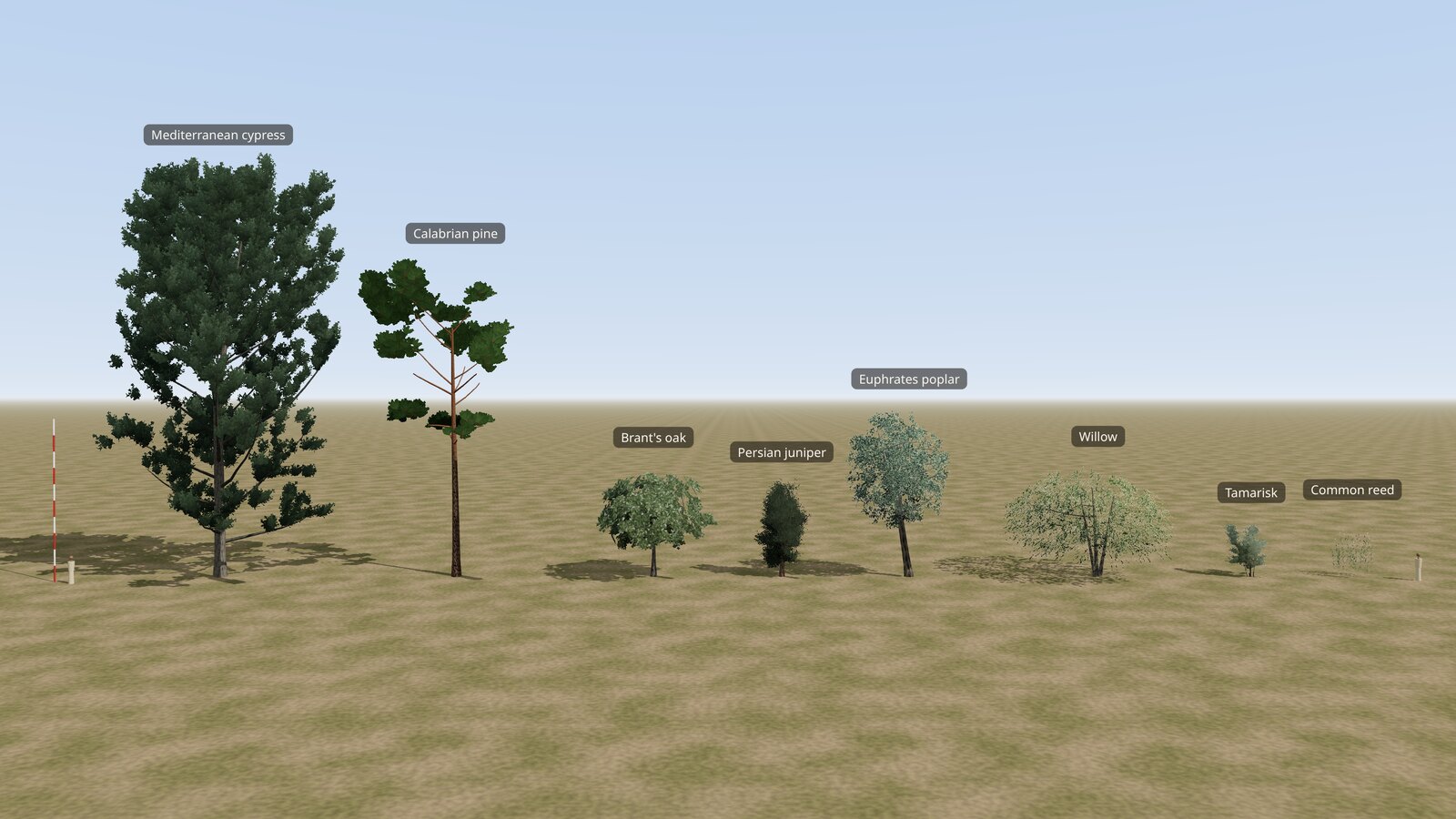
Eight plants grow in the game's valley, all native to the hills and rivers around Mesopotamia. Where each one grows, how to tell them apart by leaf, cone and bark, and why only one of them passes in the hull.
A valley that is almost real: why the world is seeded, not mapped
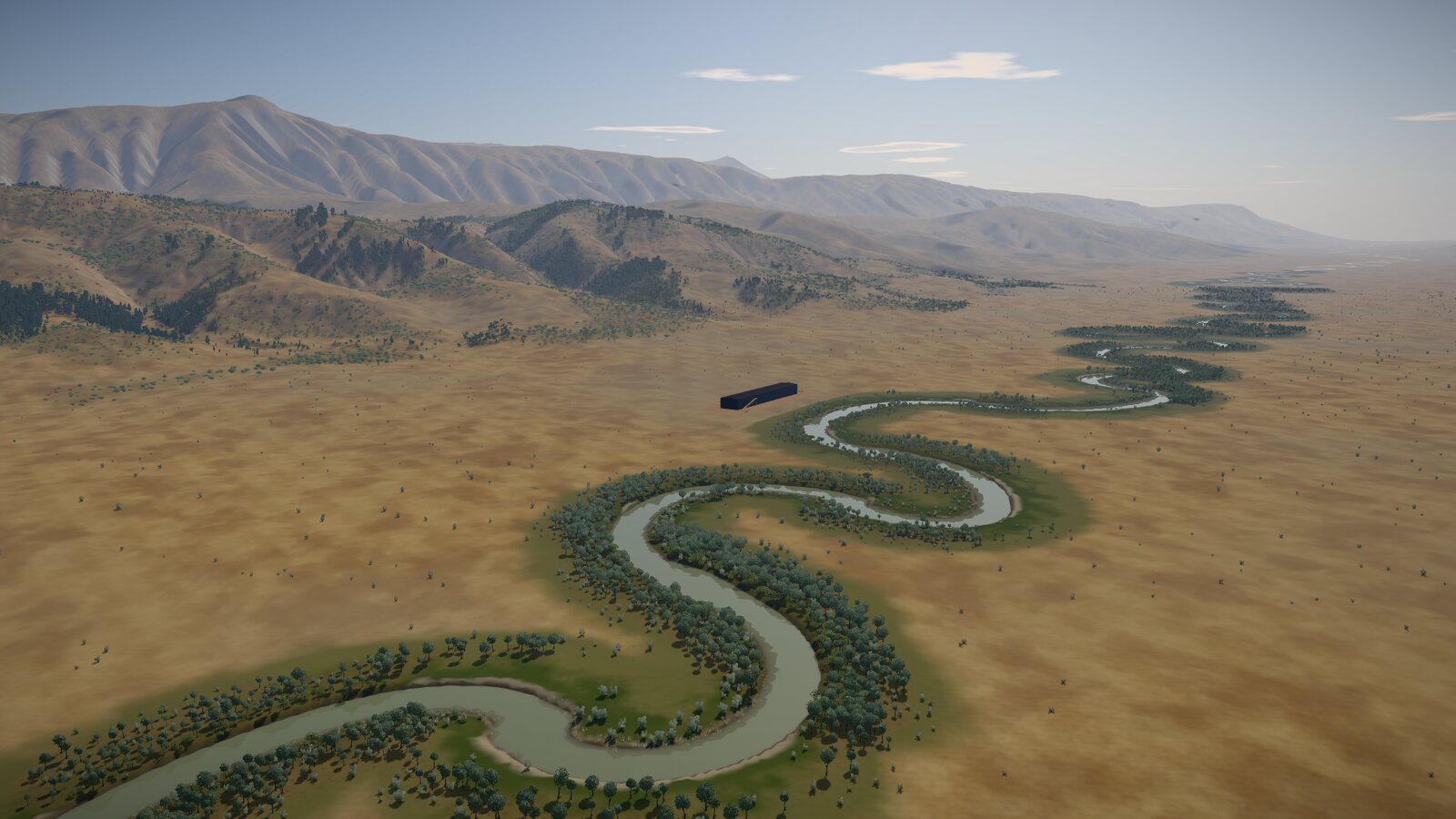
Genesis never says where the ark was built. Why the game's valley is grown from a single number instead of copied from a map, how it is made to look and behave like a real river valley, and why it is the same for every house.
A door in the side
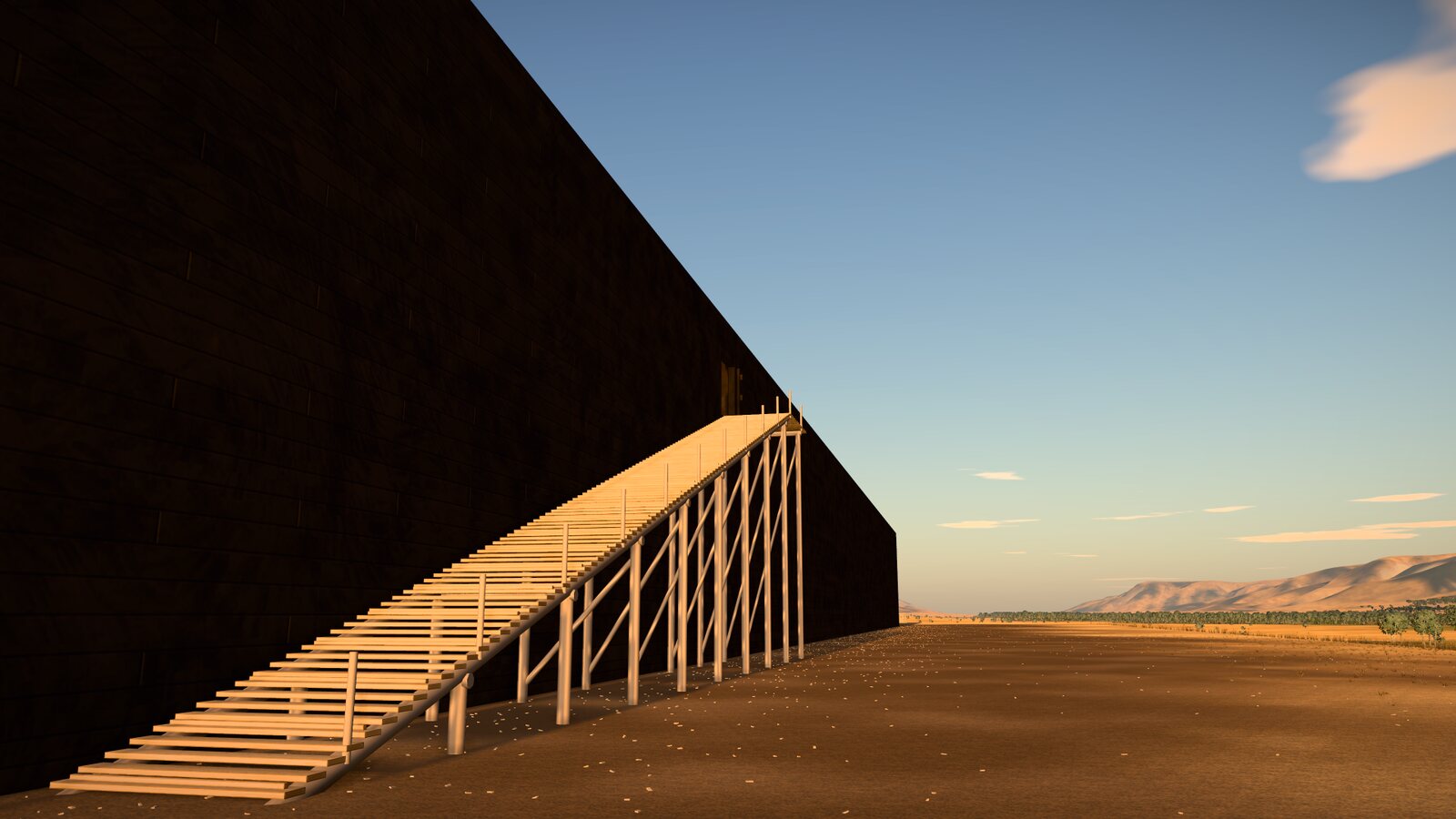
Genesis puts the ark's one door in its side and says nothing more. Rashi's reason for the side, and where, how big and how high the game's reference ark sets its door, above the water it would float in.
Three storeys, and what went where
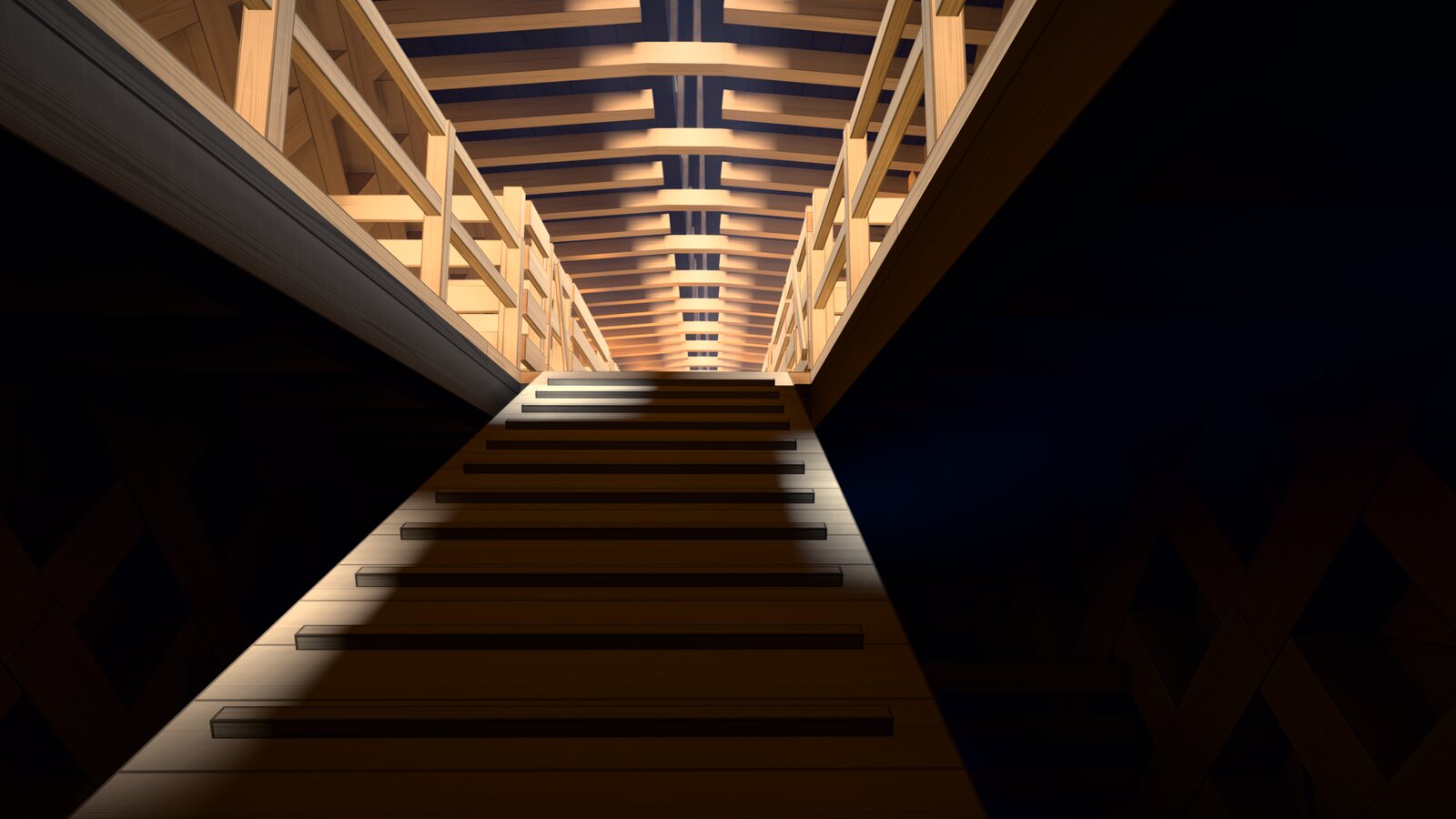
Genesis gives the ark three storeys and says nothing about their heights or their uses. Rashi's reading of what went where, how the game's reference ark lays its decks, and what the final check asks.
Rooms, or “nests”: what qinnim means, and how a house can lay them out
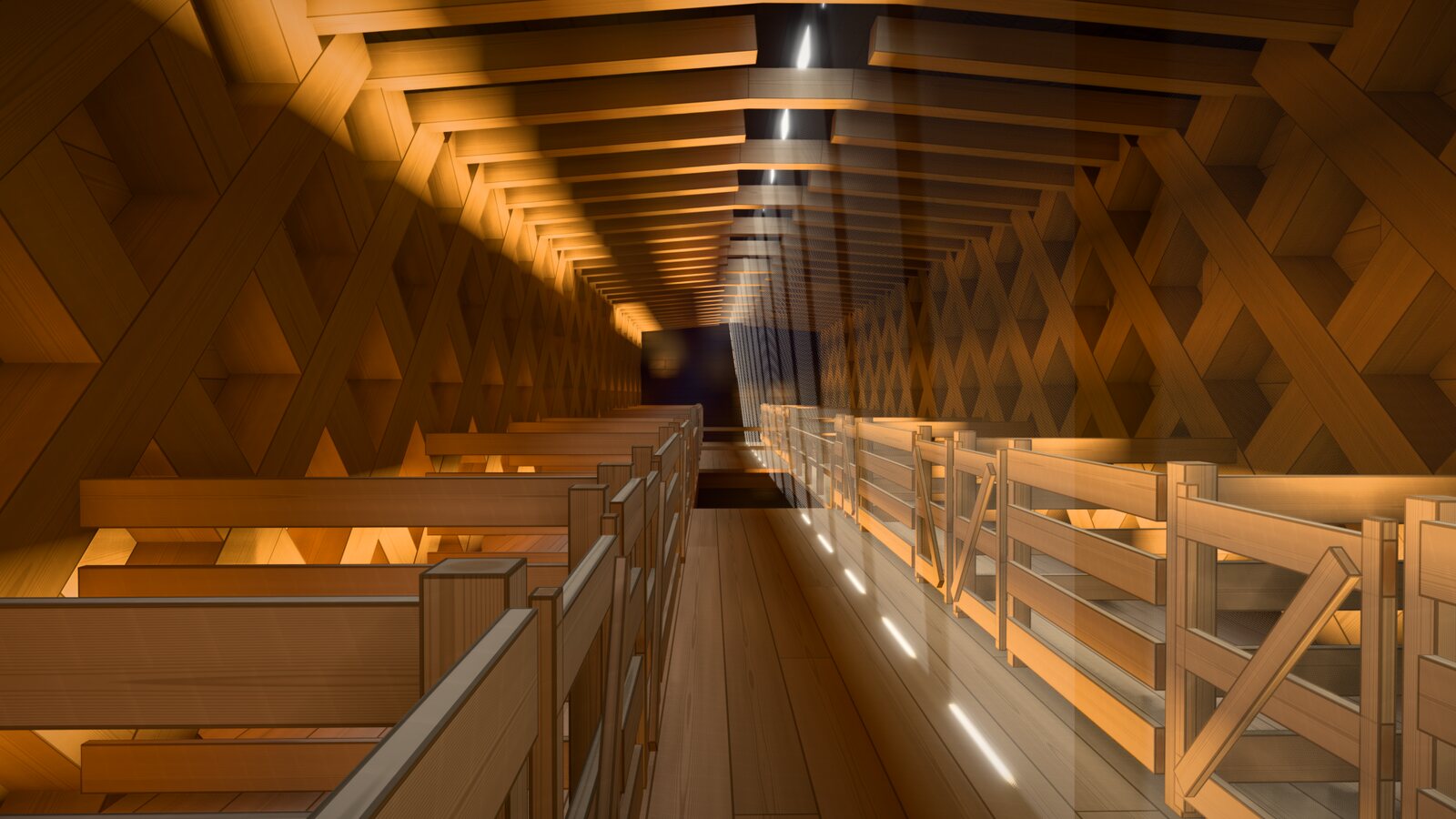
Genesis asks for rooms in the ark, with a Hebrew word that means nests, and says nothing about how many, how big or where. What the word gives us, how the game's reference ark lays the rooms out, and why its walls also hold the hull together.
Pitch within and without: kopher, kupru and the bitumen of Mesopotamia
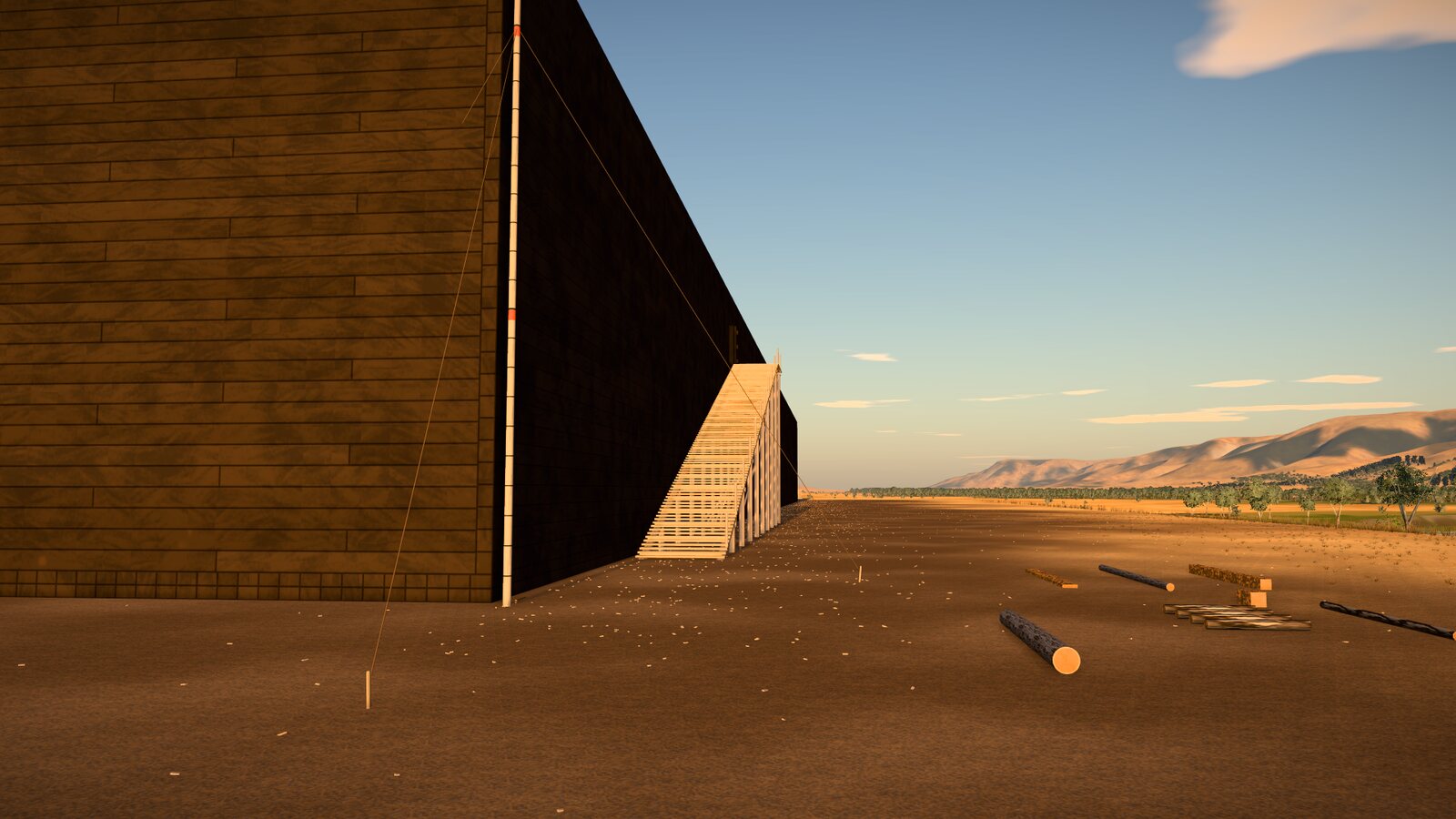
Genesis asks for the ark to be pitched inside and out, and its Hebrew word for pitch is the Akkadian word for bitumen. What Mesopotamian boat bitumen was, what the Ark Tablet says, why pine tar is the other real option, and how the game's reference ark is pitched.
A roof that sheds the rain
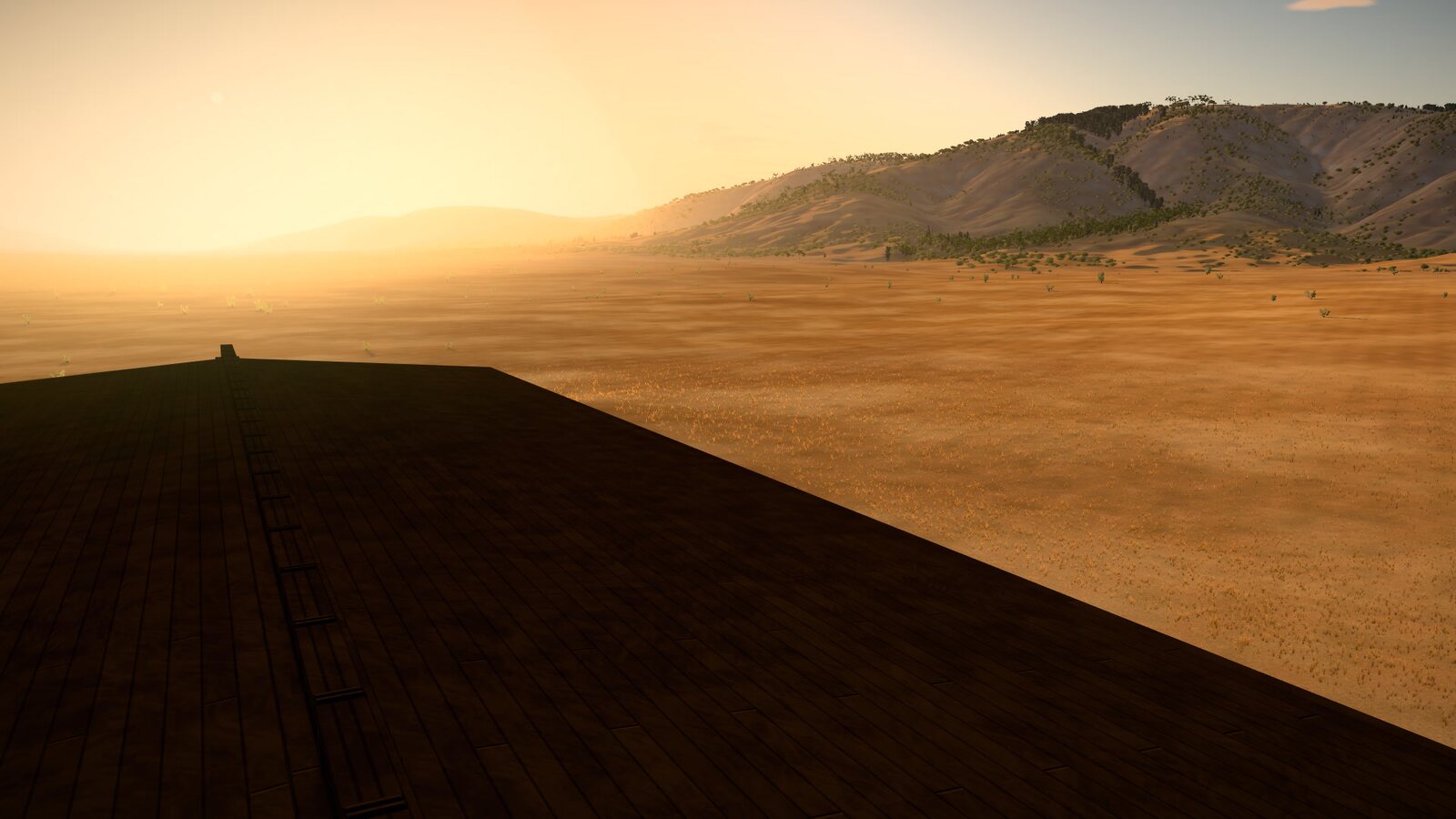
Genesis says the ark was finished “in a cubit … above”. What that might mean, why the game's reference ark has a gently sloping roof after Rashi, and what the slope cost the hull.
How big was the ark? The long cubit and the real size
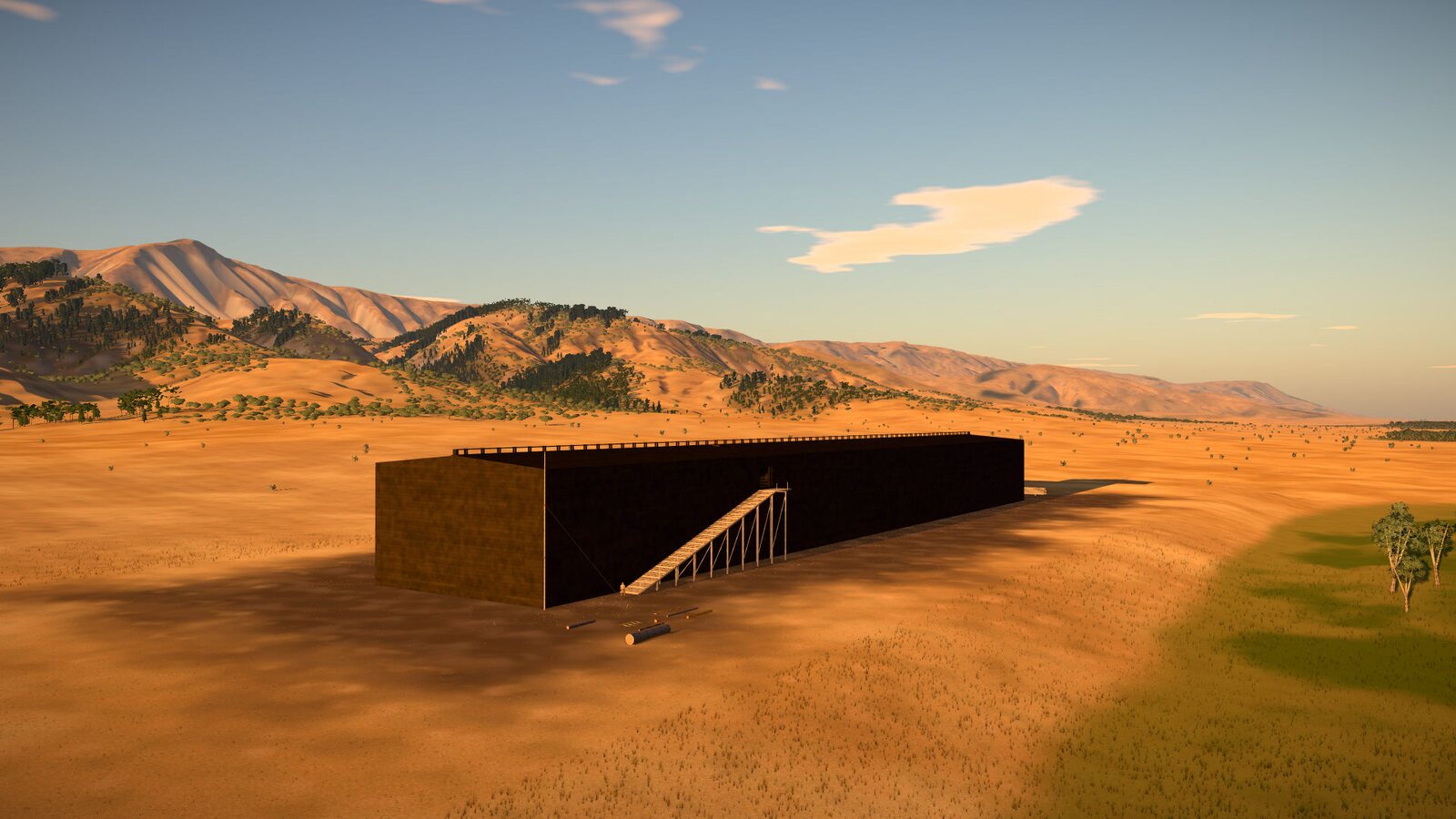
Genesis gives the ark in cubits, but which cubit? Why the game uses the oldest measuring rod ever found, and what 155 metres of ark looks like beside things we know.
What was gopher wood?
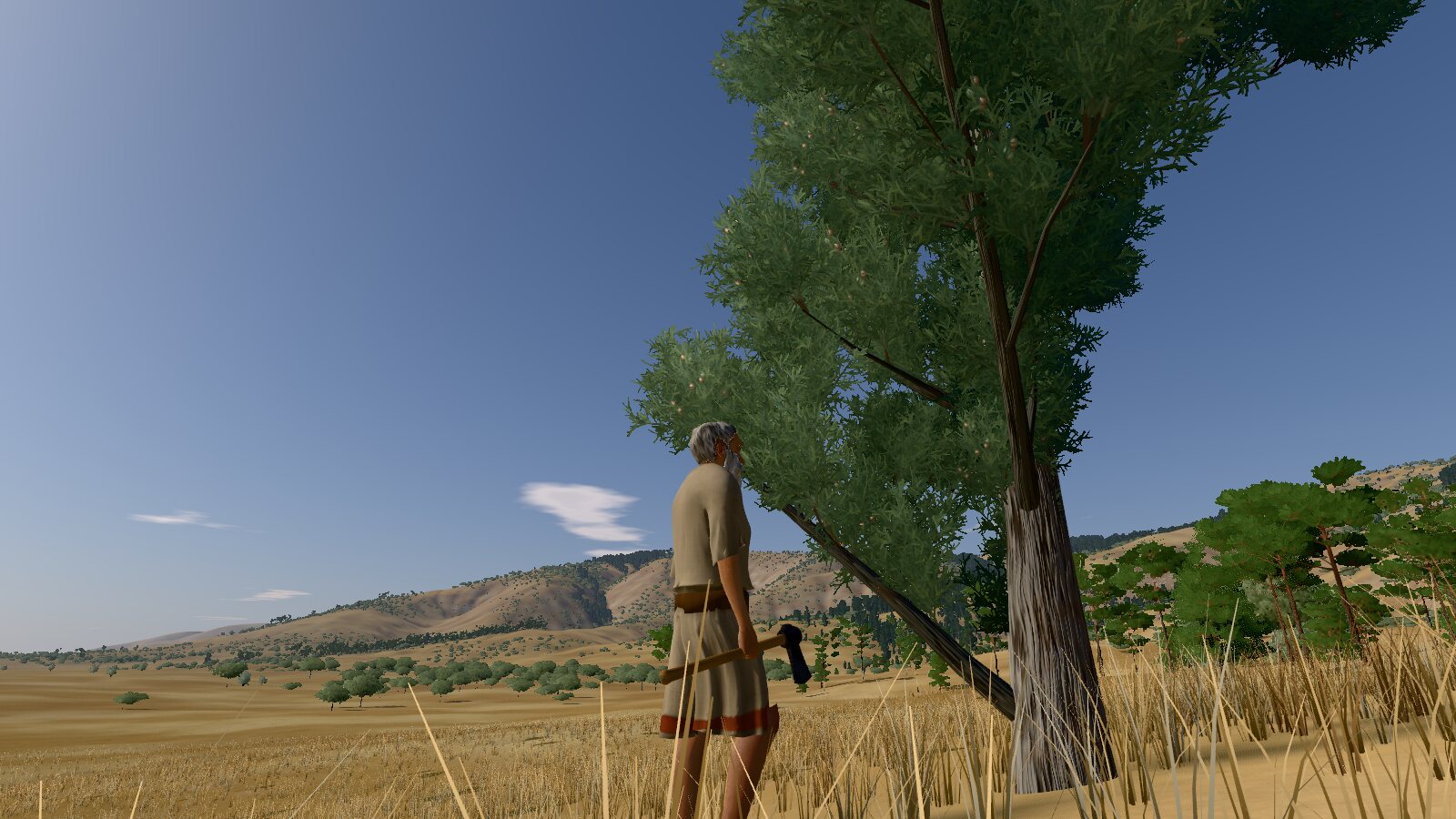
The Bible names the ark's wood once, with a word nobody can translate for certain. What the oldest translations, the rabbis and the scholars say, and why the game builds in cypress.