Bitumen from a seep, and pine tar from the hills
The ark's pitch can come out of the ground or out of the pines. Where the game's bitumen seep is, how crude bitumen was gathered by hand and melted into a mastic, how pine tar was burned out of resinous wood in an earth-covered pit, and what each costs a house.
Genesis asks for the ark to be pitched "within and without" text, and its word for pitch is the Akkadian word for bitumen study. Pitch within and without looked at what that coat was and how thick it was laid. This page is about getting it: where a house finds its pitch, and what each way costs in the game.
There are two ways, and the valley has both. Bitumen rises out of the ground at a seep, and has to be gathered, carried and melted with mineral and reed into a mastic. Pine tar is burned out of resinous pine wood in a pit, and boiled down to pitch.
The seep
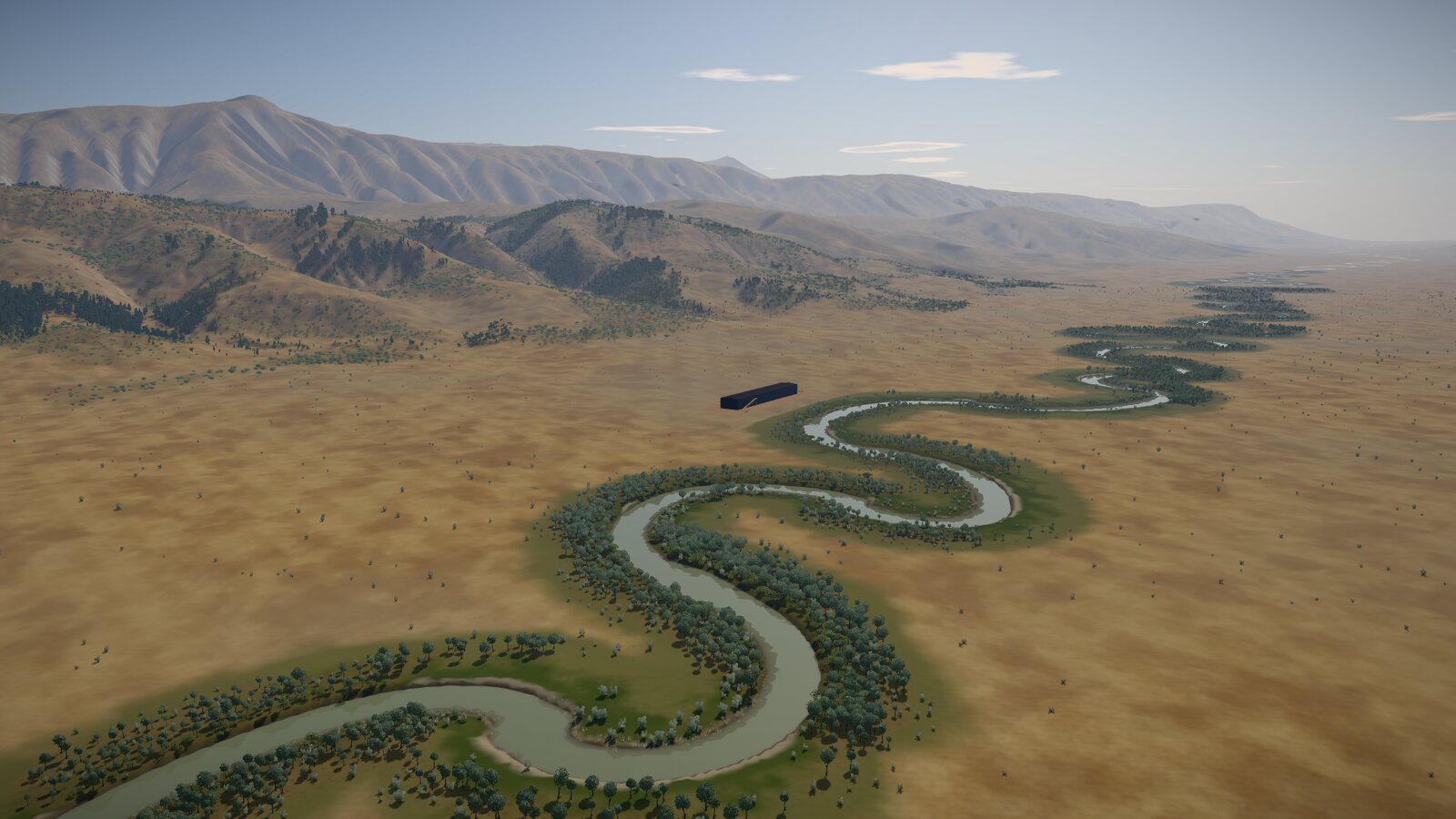
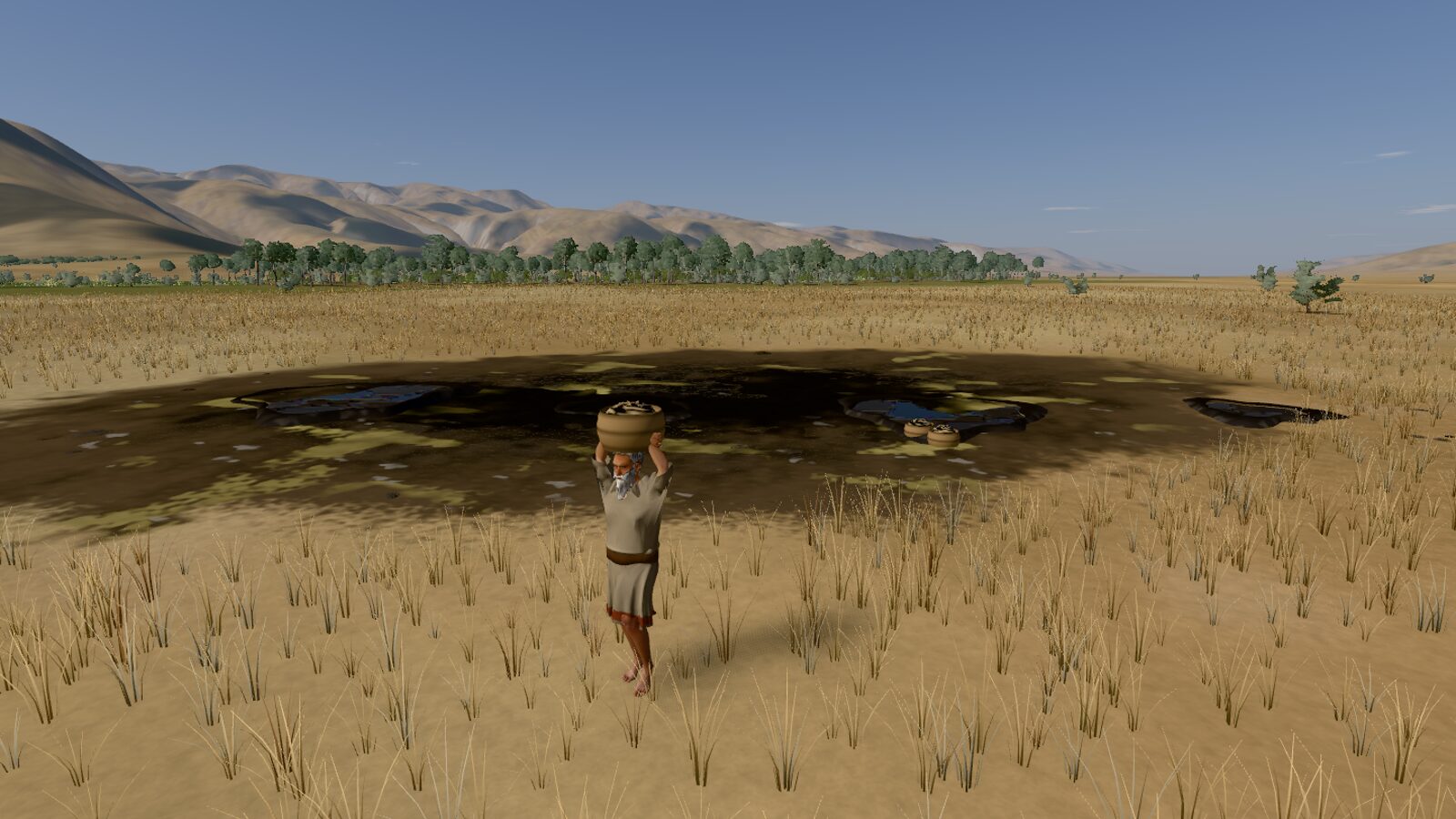
In the game's valley the seep lies on the site's own bank, on the floodplain 150 metres from the water, 2.64 kilometres up the valley from the building site modelled. It is a patch of black, cracked, tarry ground about 28 by 16 metres, with four pools of soft bitumen 1.6 to 3.4 metres across modelled. Real seeps look much like it. Of one spring at Ma'mûreh near Hit on the Euphrates, Gertrude Bell wrote in 1911 that its pitch "flows out over the desert and dries into an asphalt pavement about half-a-mile square" historical.
Bitumen was gathered by hand. At Hit, "snakes" of asphalt floating on the water "collect together and are consolidated by the natives by hand-pressure into lumps"; the lumps were pressed to get the water out, rolled in desert sand so they would not stick, and carried away in baskets study. A 10-kilogram lump from Ur turned out to be 70 % bitumen, the rest wind-blown dust archaeology.
In the game a player at a pool's edge kneads a load of 30 kilograms, pressing the lump on a beat. A steady hand gets crude of up to 90 % bitumen, a careless one about 70 % modelled. Gathering is counted at 0.03 person-hours a kilogram, so a load is about an hour of work on the calendar modelled. No source we found times this work at a seep; the rate is the game's estimate modelled.
Then it has to be carried. A load goes on the head in a basket, at 4 kilometres an hour loaded, the pace of an army's marching load, and a brisk walk back study modelled, or on the sledge, with the pair, or aboard a raft from the seep's landing modelled. Clay and sand for the mastic lie closer: a clay bed 0.42 kilometres from the site and a sand bar 0.37 modelled.
The pot
Boat bitumen was not pure bitumen but a mastic archaeology. The game's recipe is 35 % bitumen, 50 % clay or sand and 15 % chopped reed, melted together in an earthenware pot of 40 kilograms over a fire modelled. Forbes found such mixtures "in the correct thickly fluid, trowellable condition" at 120 to 160 °C once the chopped straw was in study. In the game the player keeps the fire there, a stick at a time: over 180 °C the reed chars and the mastic spoils, and at 230 °C the pot catches fire, the temperature at which an oxidised bitumen flashed in a safety study study modelled. The fire burns reed, or the bitumen itself, as Bell saw at Hit, where the workers "fed the flames with the same bitumen" historical.
Melting is counted at 0.04 person-hours a kilogram modelled. Two tablets from Ur III record it: 55 workmen for one day to heat 16,860 litres of dry bitumen, and 5 workmen for 1,190 litres, which comes to about 0.035 historical modelled. The hot mastic is spread as a coat 2 centimetres thick, about 30 kilograms a square metre, or cast into cakes of 10 kilograms, as ancient bitumen was cast in baskets that left their marks archaeology modelled. No pitch is laid in the rain modelled.
All told, a tonne of mastic with its crude carried down the 2.6 kilometres takes about 80 person-hours and 300 kilograms of reed to burn modelled.
Pine tar
The other way starts a year ahead. Theophrastus describes it:
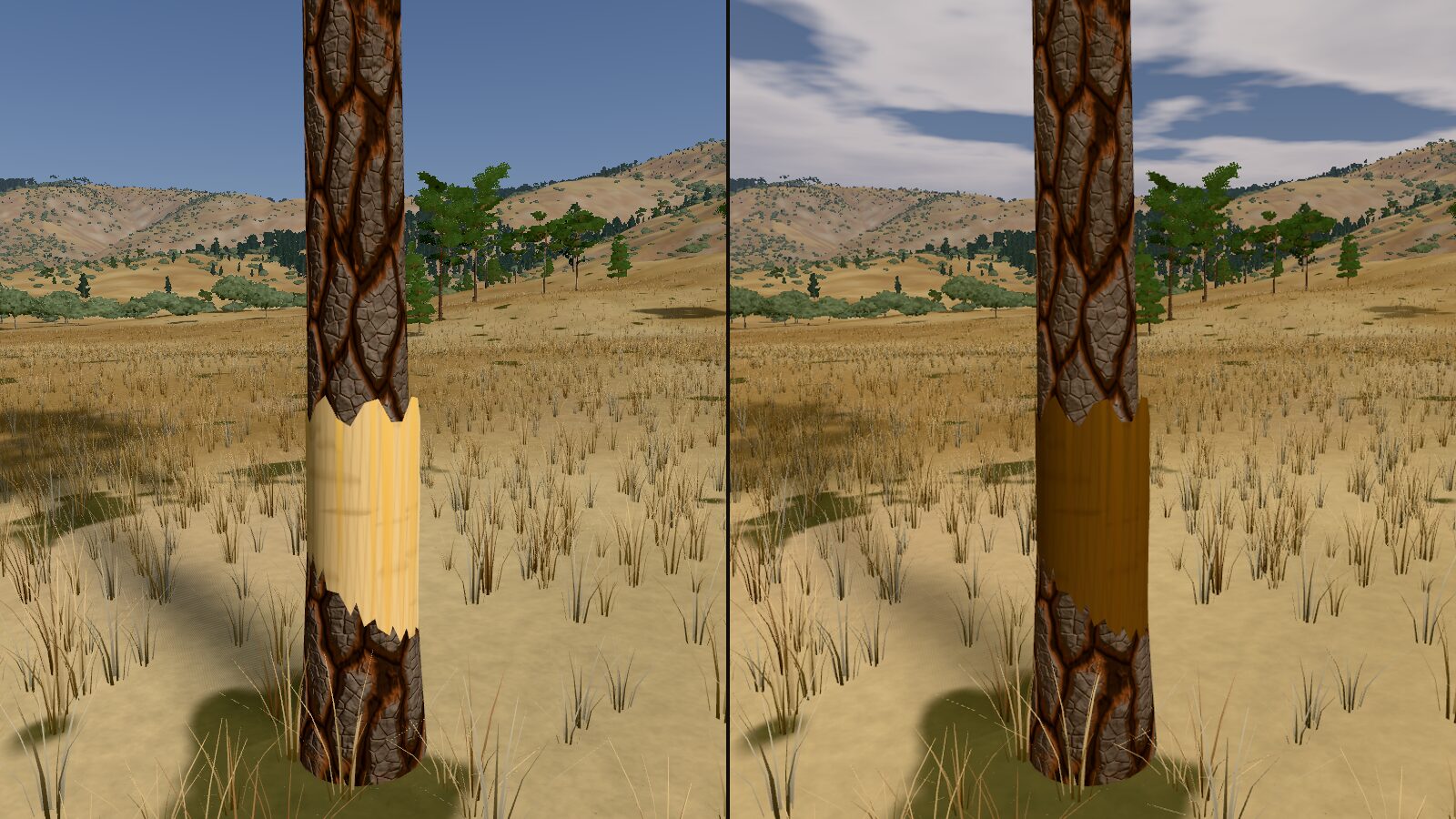
When they bark the stem, — and they bark the side towards the sun to a height of two or three cubits from the ground, — the flow of pitch takes place in that part, and in about a year the wood becomes full of pitch.
Theophrastus, Enquiry into Plants 9.2.7
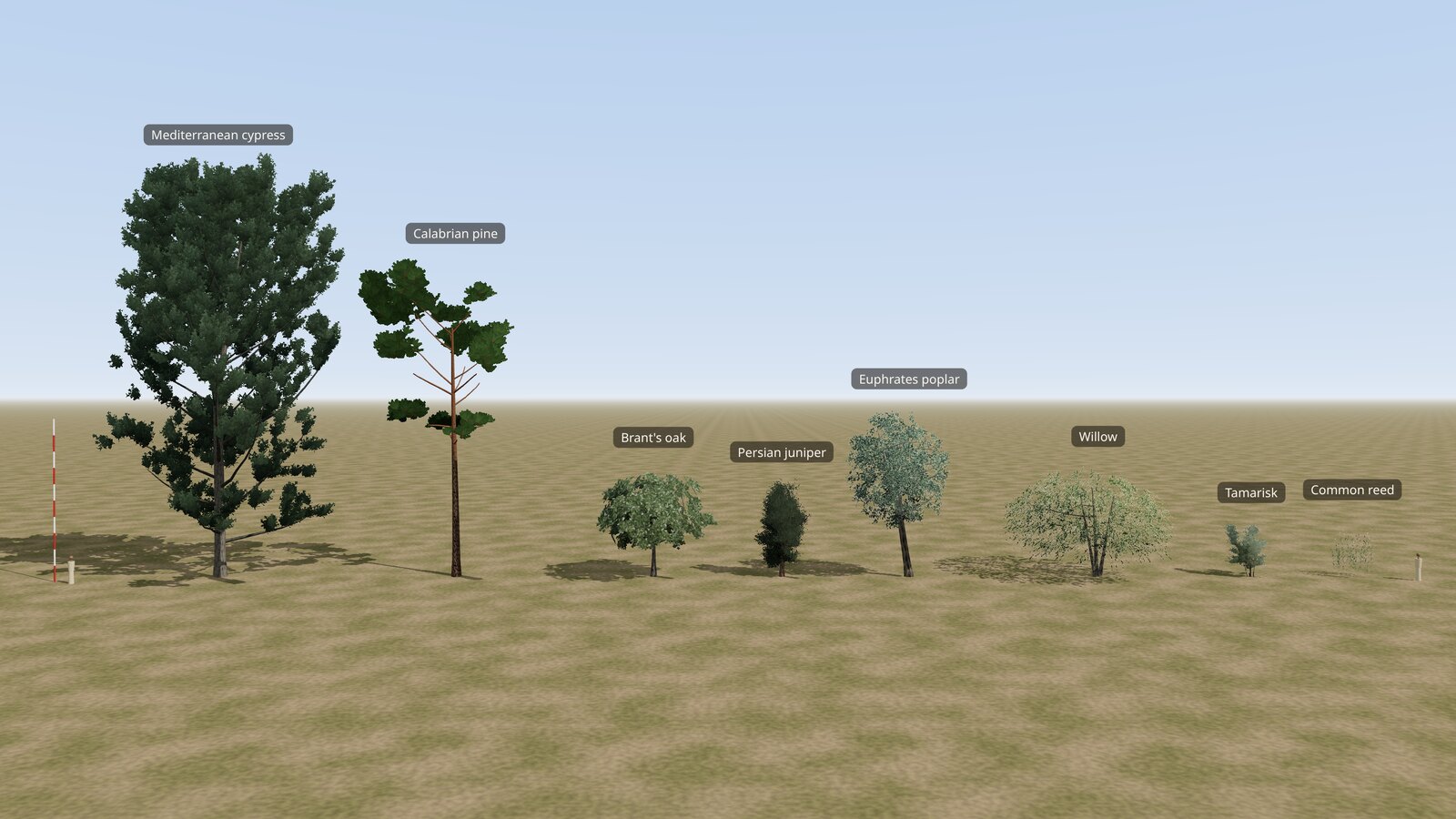
The game follows him. A Calabrian pine barked on its sunny side to two and a half cubits fills its butt with resin in a year, and wood not barked gives half the tar historical modelled. An 18th-century writer on tar-burning in Ostrobothnia reported the same doubling from barking historical. Barking is 0.1 person-hours a square metre of bark modelled.
The pine is felled, split and riven into billets of tar-wood, and the billets are stacked upright in a pit with a dished floor that slopes to a conduit, covered with earth and lit modelled. Theophrastus again: the watchers "mount a ladder and watch wherever they see the smoke pushing its way out, and keep on piling on the earth", and the kiln "burns for nearly two days and nights" historical. In the game a pit takes 8 stacked cubic metres, its two days and nights pass in 45 seconds of play, and it needs two people to keep the watch; one of the family kept by the game can be the second modelled. A vent left to break into flame costs tar: a pit gives 15 to 30 litres a stacked cubic metre, by how well it was kept to a smoulder modelled.
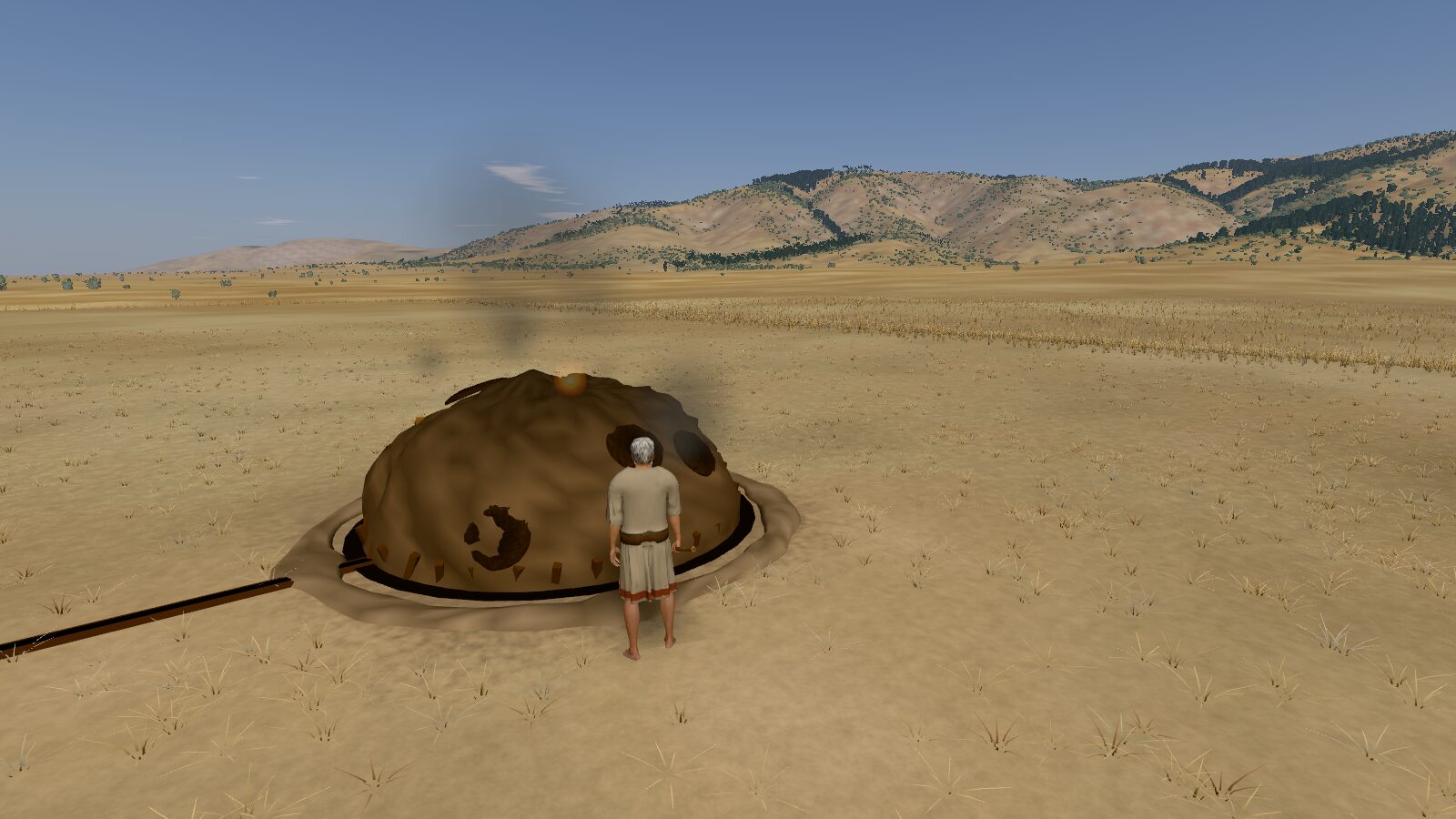
A small batch can be burned instead in a big pot turned mouth down onto a buried one, by one person in about six hours, giving more tar a cubic metre, 50 to 70 litres archaeology modelled. The tar runs into jars of 20 litres and is boiled down to pitch, which keeps about two-thirds of it historical modelled.
What each costs
| Bitumen mastic | Pine pitch | |
|---|---|---|
| A tonne, all in | about 92 person-hours | about 1,500 person-hours |
| A square metre of coat, all in | about 3 person-hours, 2 cm thick | about 2.3 person-hours, 1.25 mm thick |
| What it needs | the seep, a long carry, clay, sand and reed | pines barked a year ahead, a pit watched by two |
The Nordic tar burners' accounts show where tar's hours went: barking, felling, splitting and above all carrying the wood to the pit; a Swedish study notes that the burning itself took only a few days and was the smaller part of the work historical study. The game comes out at about 1.06 person-hours a litre of tar all in, about half the Nordic burners' figure, because it counts no barrels and no carting to a buyer modelled.
What it means for the ark
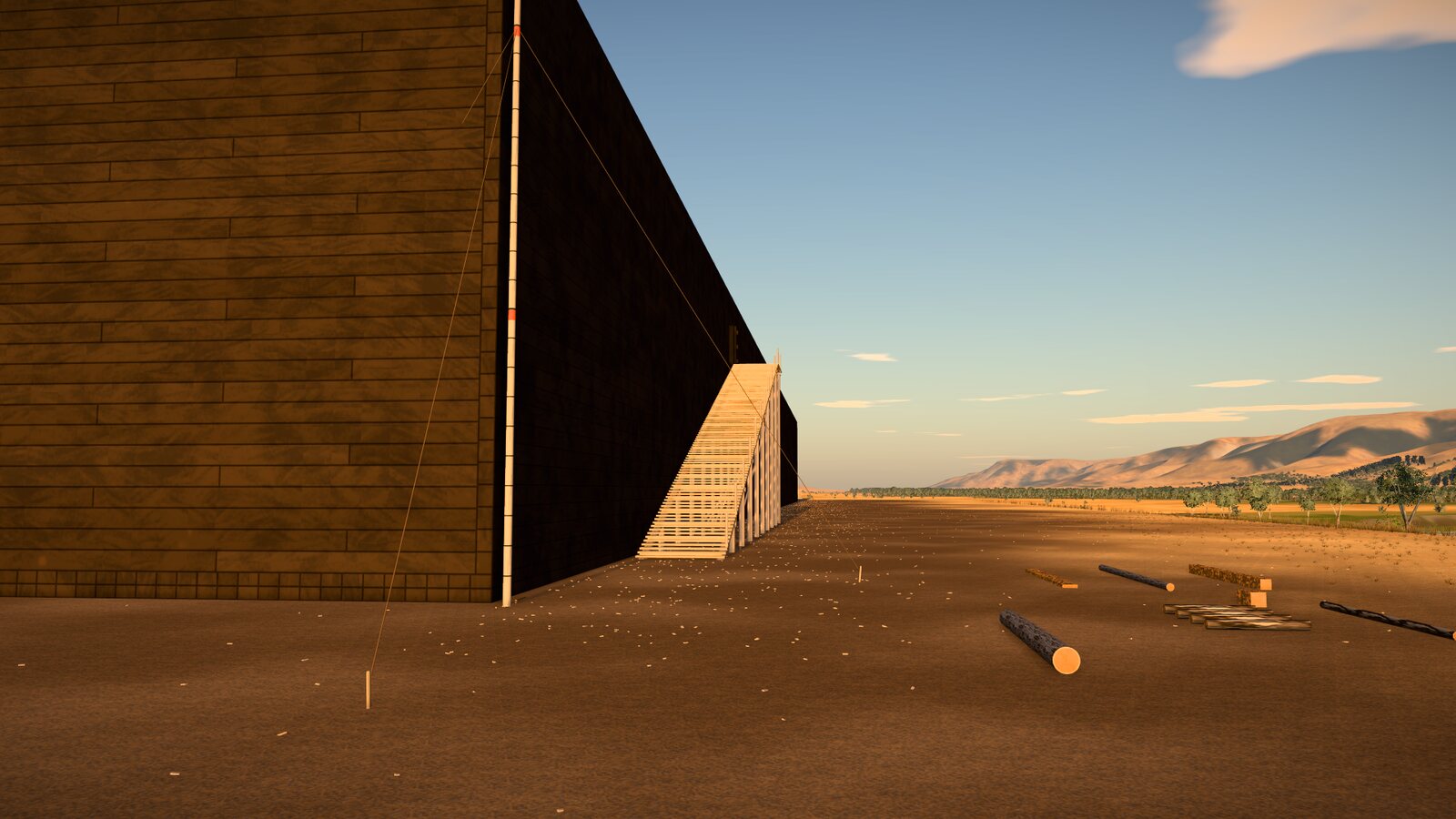
Pitching the reference ark with bitumen takes about 800 tonnes of mastic over about 26,800 square metres, 270 tonnes of it bitumen modelled. In the game's labour study, pitching it with pine tar instead changes the whole build by only about 2 % modelled.
A newer research note on coats adds a caution for both. On a planked hull the coat is not what makes the seams tight: the fit of the planks' edges, the timber swelling shut once afloat and fibre driven into any wider seam do that, and the coat keeps the water and the sun off them historical study. Thin pine pitch over caulked seams was ordinary practice, and on planked boats bitumen was laid a few millimetres thick; the 2-centimetre mastic is the practice of reed boats archaeology. How the final check weighs each coat is still to be decided modelled. The choice is mostly about place and time: a seep 2.6 kilometres off and a long carry, or pines on the hills, barked a year ahead and burned two days and nights at a time.