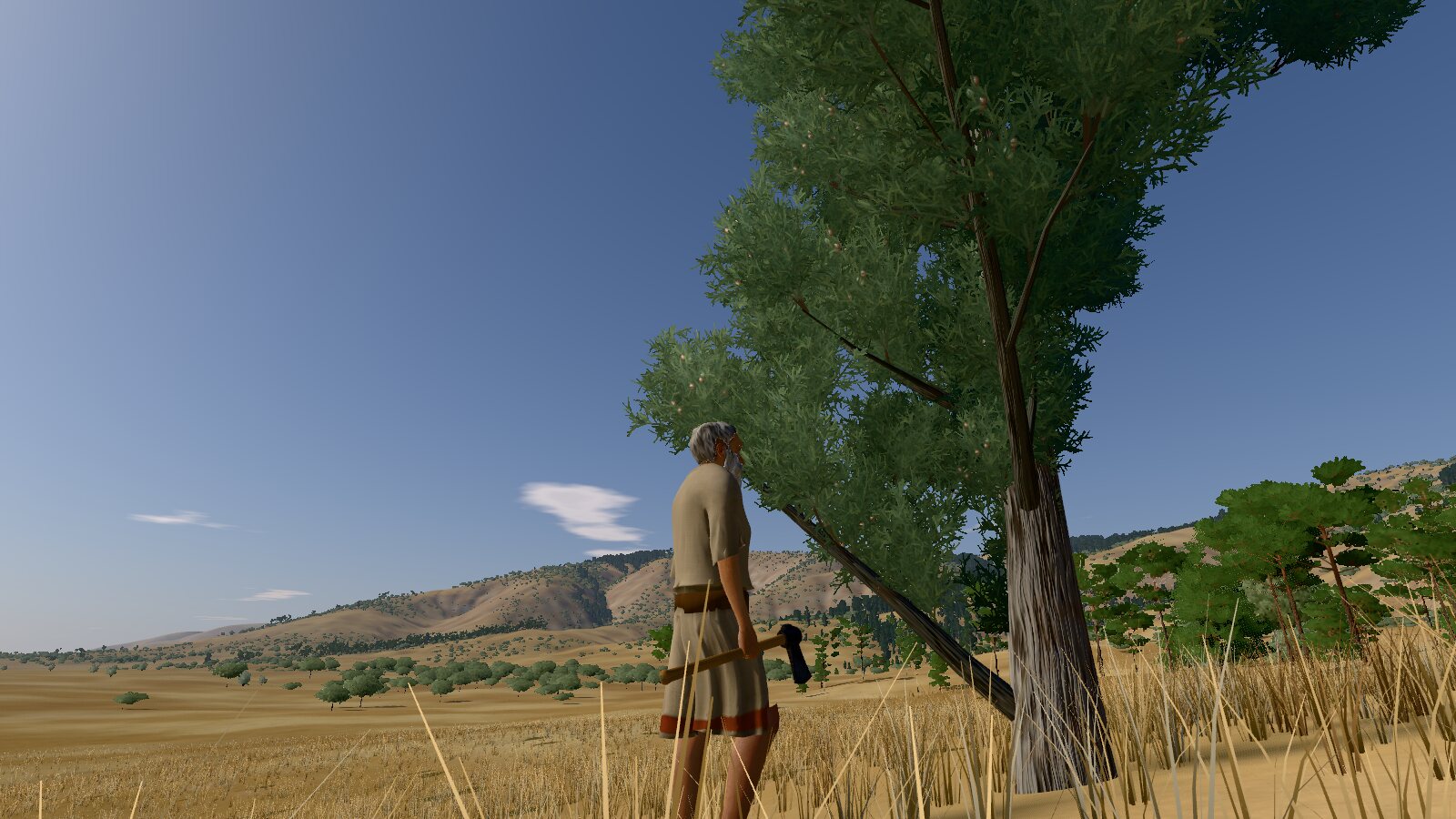
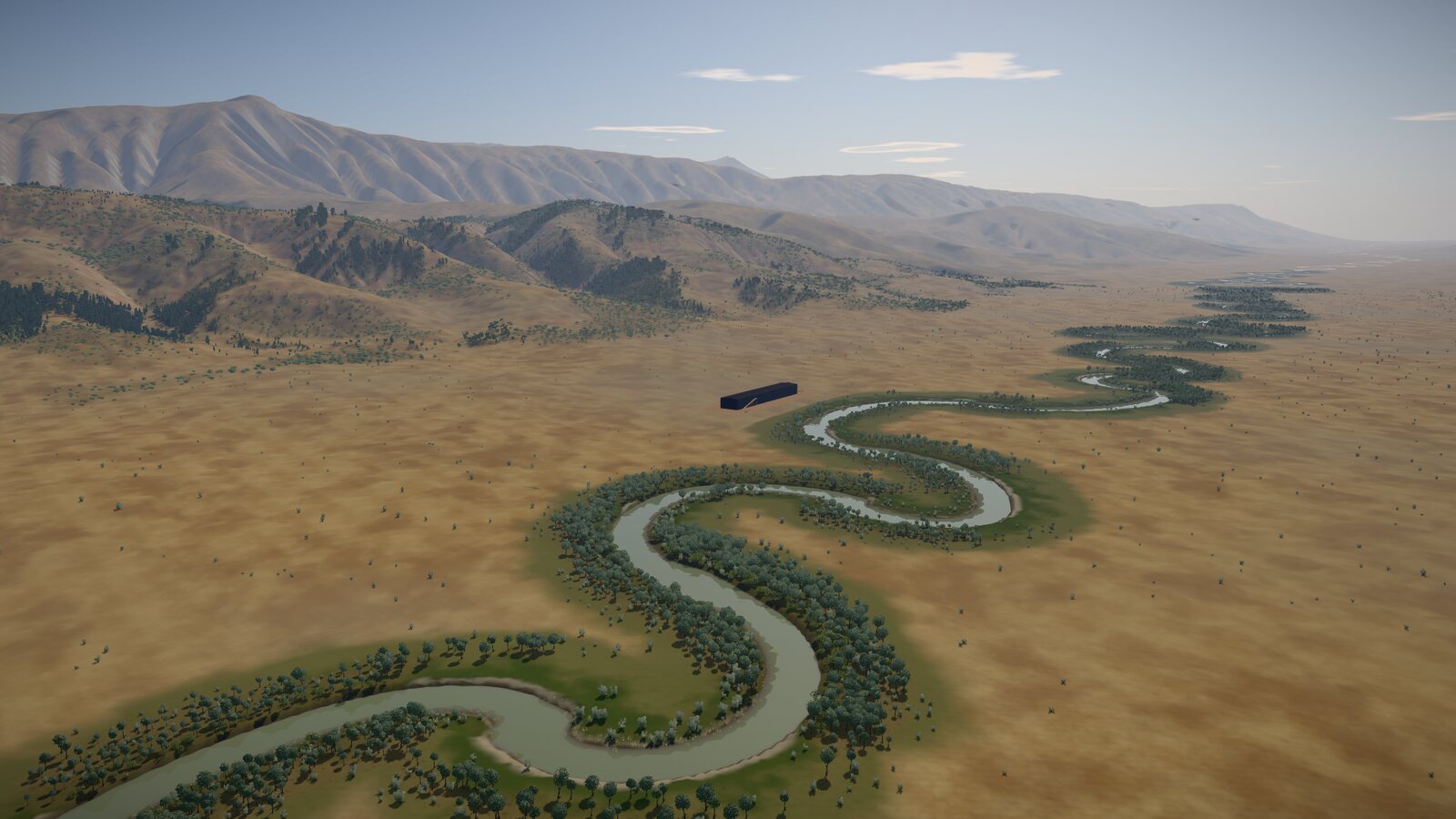
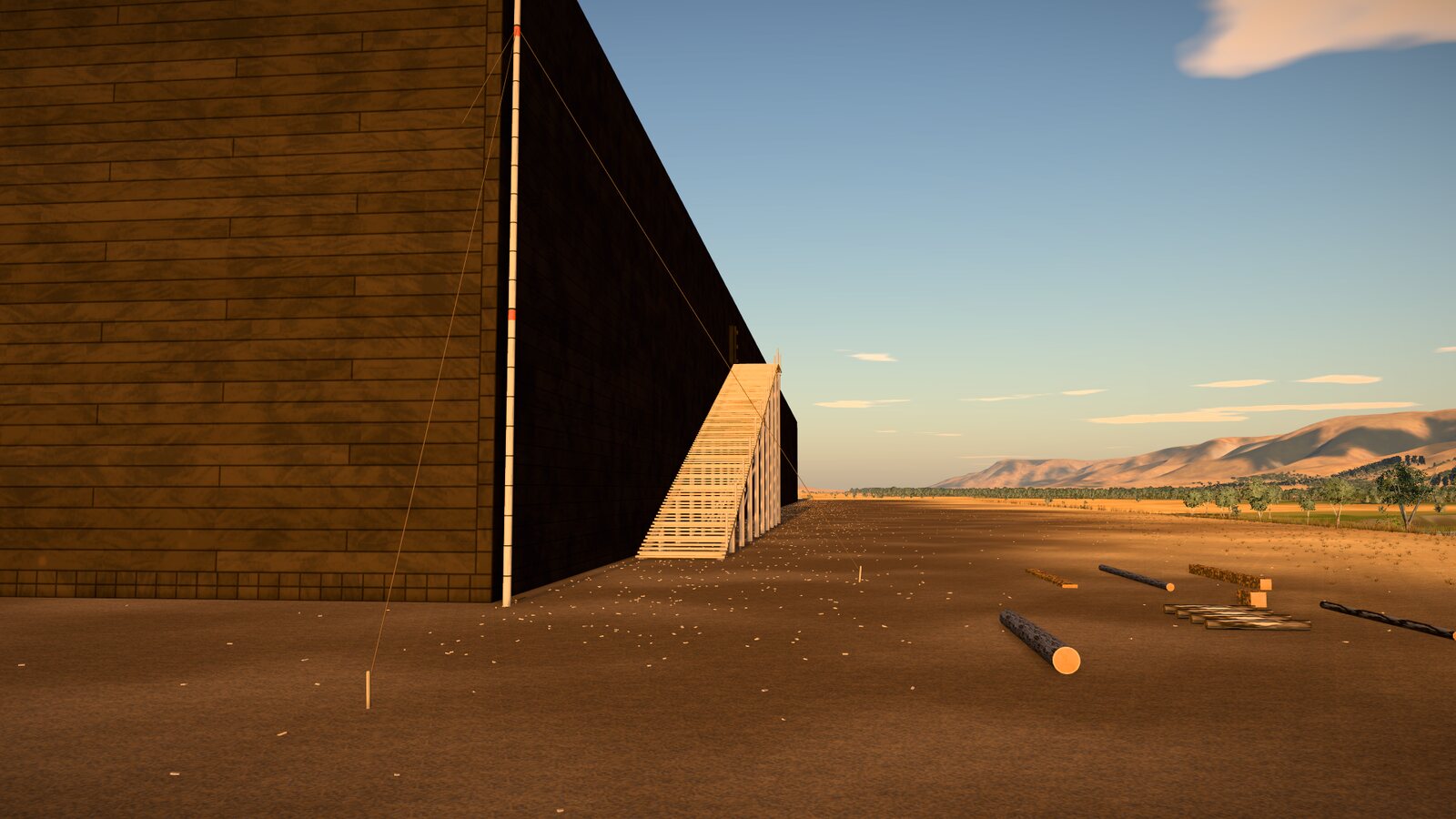
The trees of the valley, and how to tell them apart
Eight plants grow in the game's valley, all native to the hills and rivers around Mesopotamia. Where each one grows, how to tell them apart by leaf, cone and bark, and why only one of them passes in the hull.
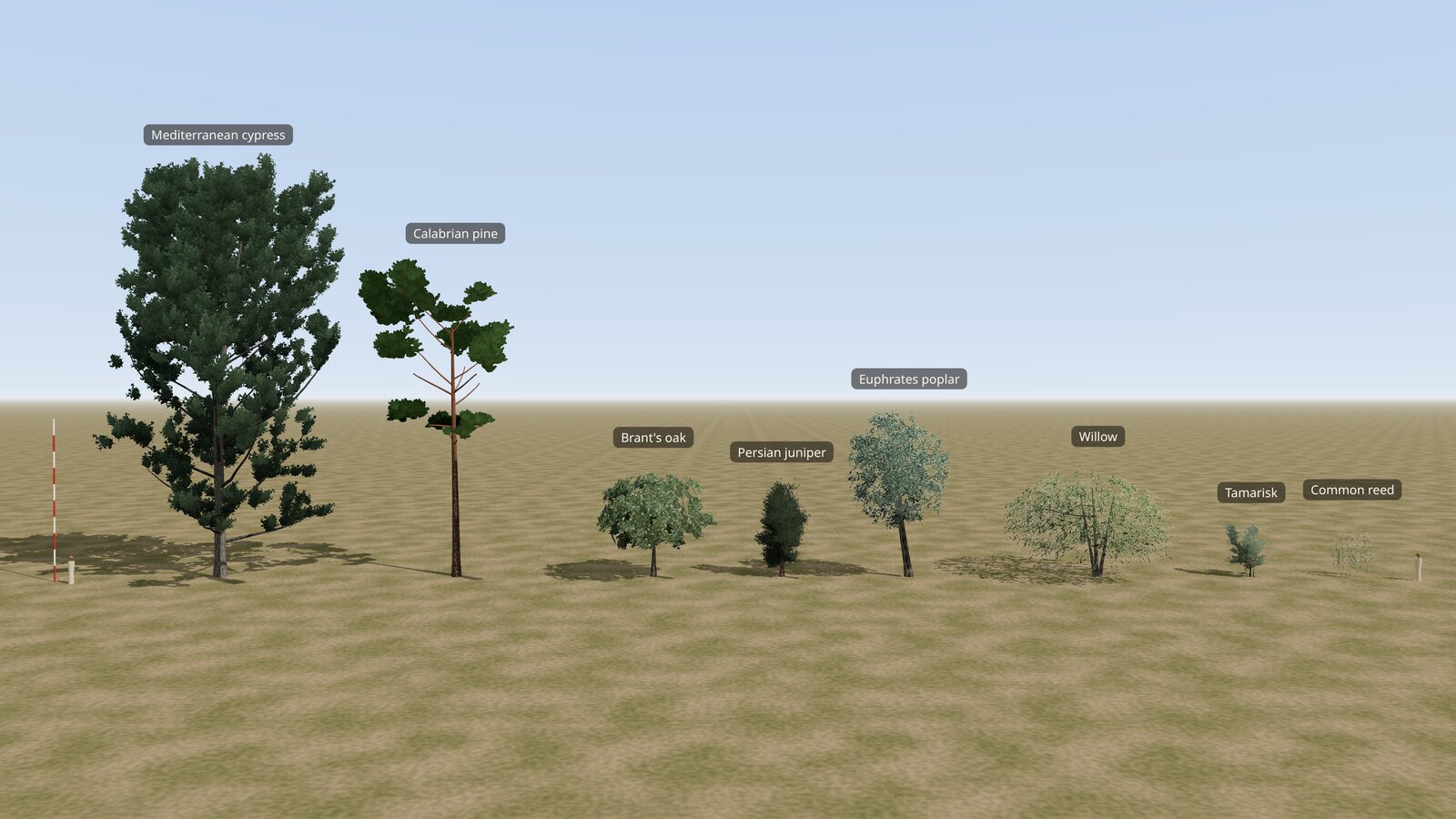
Genesis names one wood for the ark, in the verse that opens God's instructions:
Make thee an ark of gopher wood; rooms shalt thou make in the ark, and shalt pitch it within and without with pitch.
Genesis 6:14 text
That word has a page of its own. But an ark takes far more wood than goes into its hull: scaffolding, ramps, rollers, sledges, tool handles, and the fires that heat the pitch. So the valley in House of Noah holds a whole forest. Here are its eight plants, where to find them, and how to tell them apart.
Why these eight
Genesis does not say where the ark was built text. The game's valley is not a real place, but it looks like one, set at about 36° north, the latitude of the foothills north of Mesopotamia modelled. Its trees had to belong there, so every plant in it is native to the hills and rivers around Mesopotamia modelled, by Kew's world checklist study.
That left out a famous tree. The cedar of Lebanon grows wild only in Lebanon and the Taurus of southern Türkiye, not in Iraq, Iran or the Caucasus study. The oldest Jewish translations of Genesis say the ark was cedar text, but to grow it here the game would have to plant it outside its real range modelled.
Even the gopher wood is not quite at home: the cypress grows wild in Iran and Türkiye, but not in the lowlands of Iraq study, so in the game it keeps to the hills.
On the hills
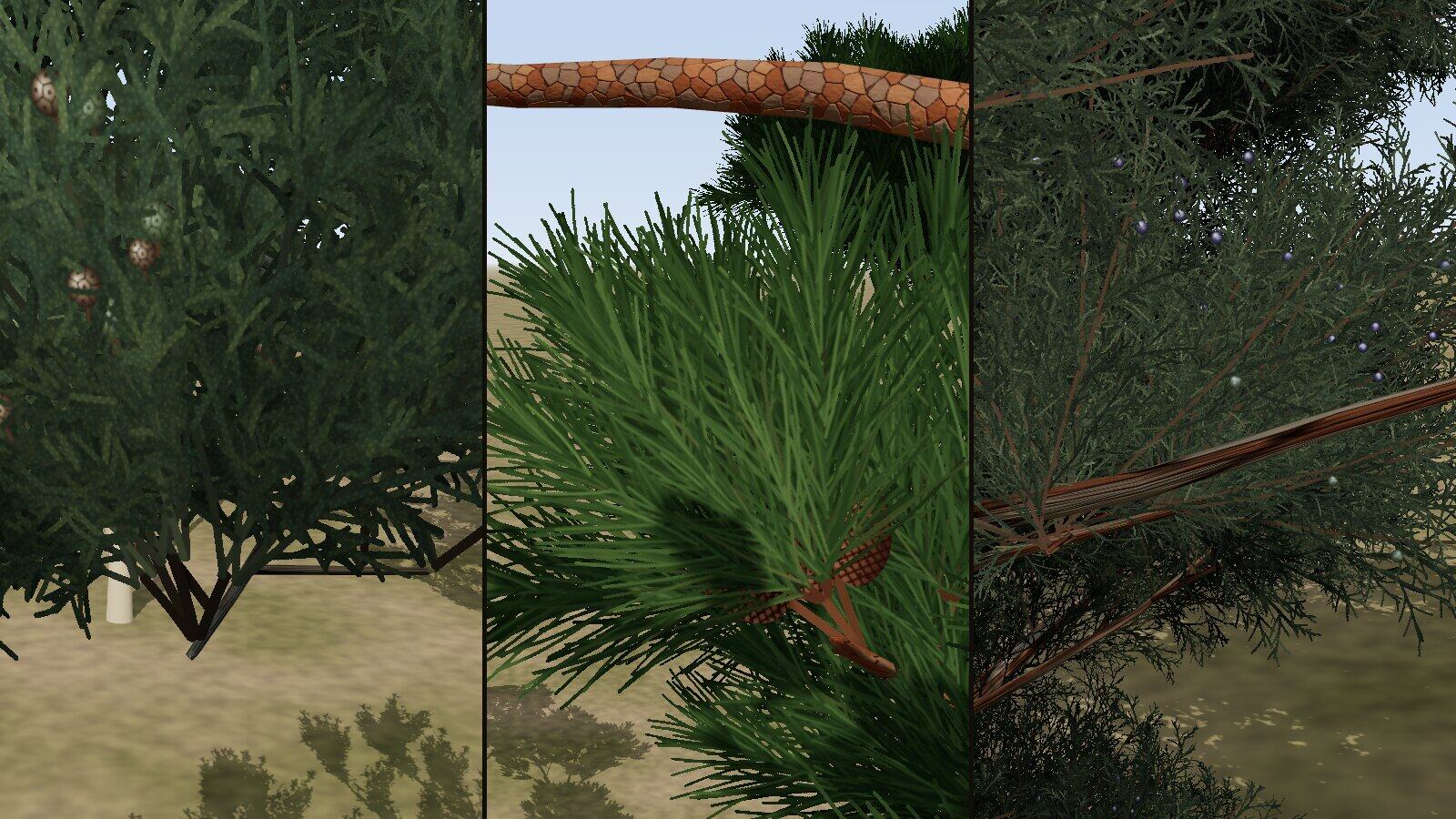
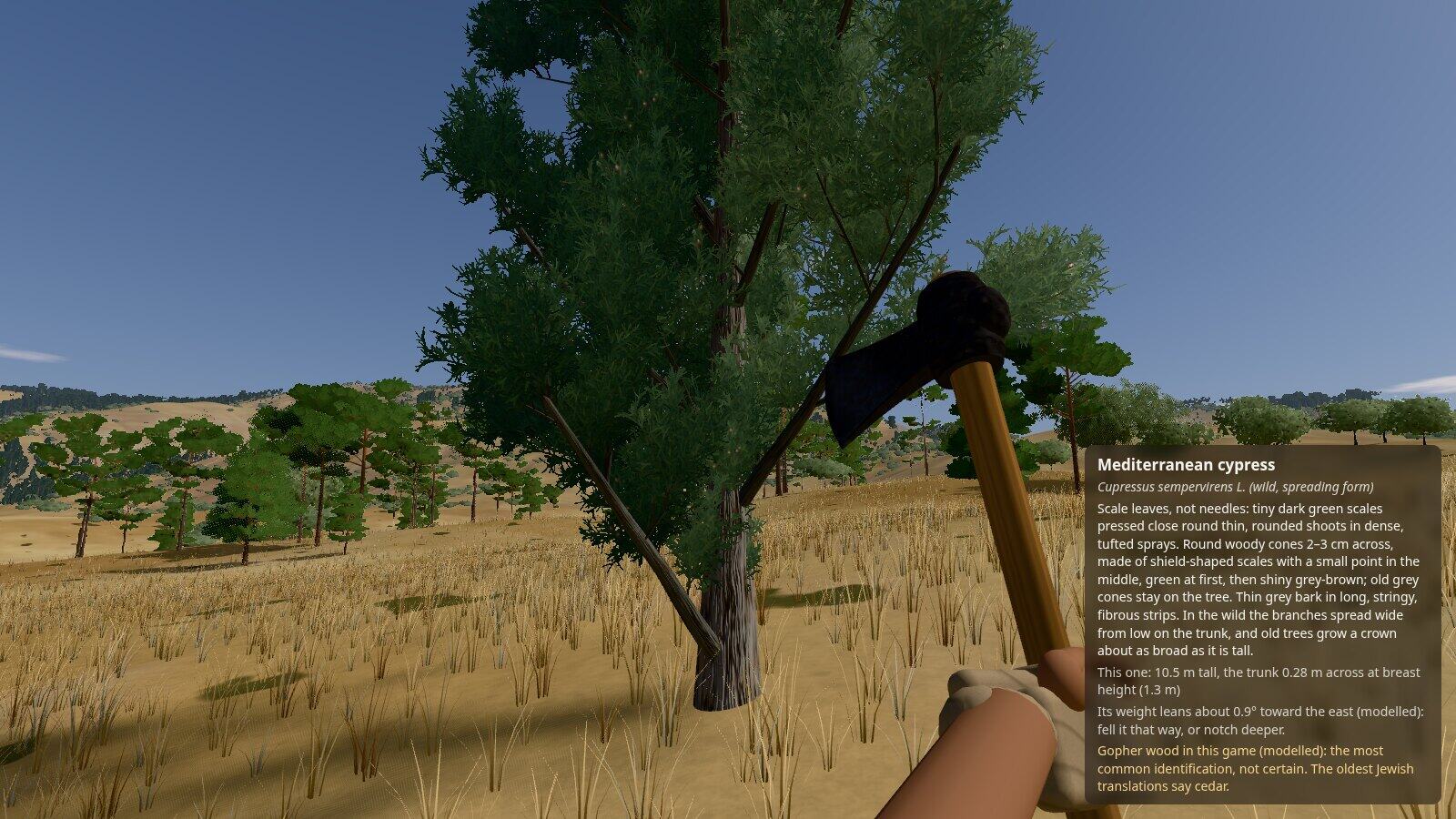
Wild Mediterranean cypress (Cupressus sempervirens), the game's gopher wood modelled, stands in groves on steep, shaded limestone and in ravines modelled, usually 20 to 30 metres tall study. The wild tree spreads its branches wide; the narrow garden column is a cultivated form study.
Calabrian pine (Pinus brutia) grows among the cypress modelled. Of the conifers proposed for gopher wood, only this one is native to Iraq, where a few remain in the north study. It can reach 35 metres and is tapped for resin study: the valley's source of pine tar, the other real way to pitch the ark modelled.
Brant's oak (Quercus brantii), native to north Iraq and the Zagros study, makes an open woodland over the hills, about 65 trees to the hectare modelled, within the 40 to 92 counted in Zagros woodland today study. It is usually 6 to 12 metres tall study.
Persian juniper (Juniperus polycarpos) takes the high, dry ground modelled. Native to the uplands of Iran, the Caucasus, Türkiye and the Levant, but not confirmed in Iraq study, it reaches only about 7 metres; the junipers of 15 to 25 metres are its relative, the Greek juniper study.
By the river
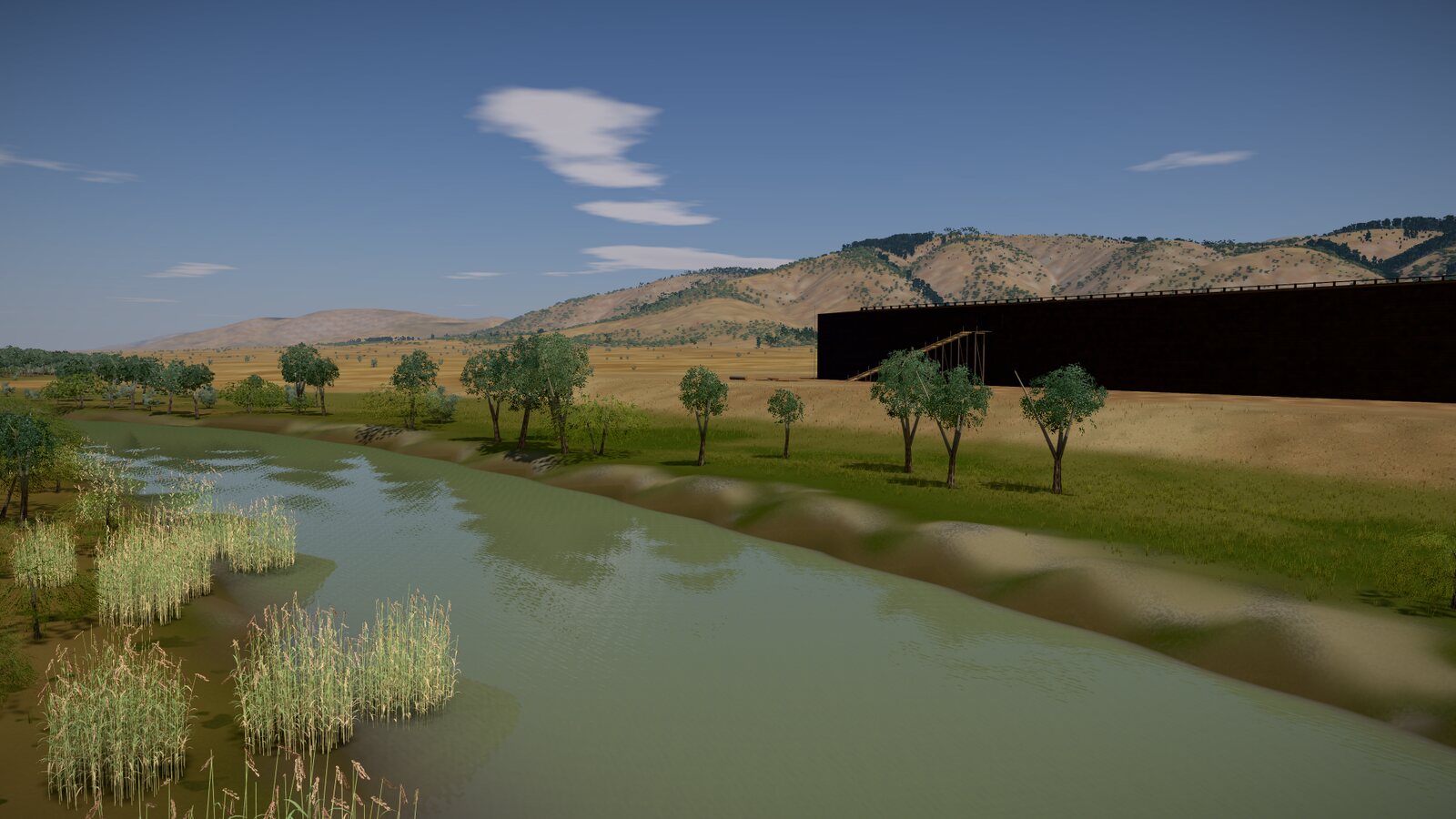
Euphrates poplar (Populus euphratica), the native river tree of lowland Iraq study, grows along the valley's river modelled. It reaches about 15 metres, with "rarely a straight stem … often bent and nearly always forked", as a forestry database puts it study.
Willow (Salix acmophylla), native to the Mesopotamian plain study, grows at the water's edge modelled. It is not a weeping willow but a broad dome whose outer twigs arch down, usually 5 metres tall or less study.
Tamarisk (Tamarix, four species), all recorded in Mesopotamia study, grows by the river too modelled. Most are 2 to 5 metres tall; only Tamarix aphylla grows into a tree of 13 to 18 study.
Common reed (Phragmites australis) is a grass study that grows in dense beds in the shallows modelled, its canes usually 1.5 to 3 metres tall, sometimes 6 study. It is the one plant that cannot be felled modelled.
How to tell them apart
Each plant is drawn to look like itself modelled, after the botanical descriptions study:
| Leaves | Cones or flowers | Bark and form | |
|---|---|---|---|
| Cypress | Tiny dark green scales pressed to the shoot | Round, woody, 2–3 cm (rarely 4); old ones stay on | Grey, in long stringy strips; branches spread from low down |
| Calabrian pine | Needles in pairs, 10–18 cm | Red-brown, 6–11 cm (up to 12), stalkless, pointing out and forward | Reddish and flaky above, grey-brown plates below |
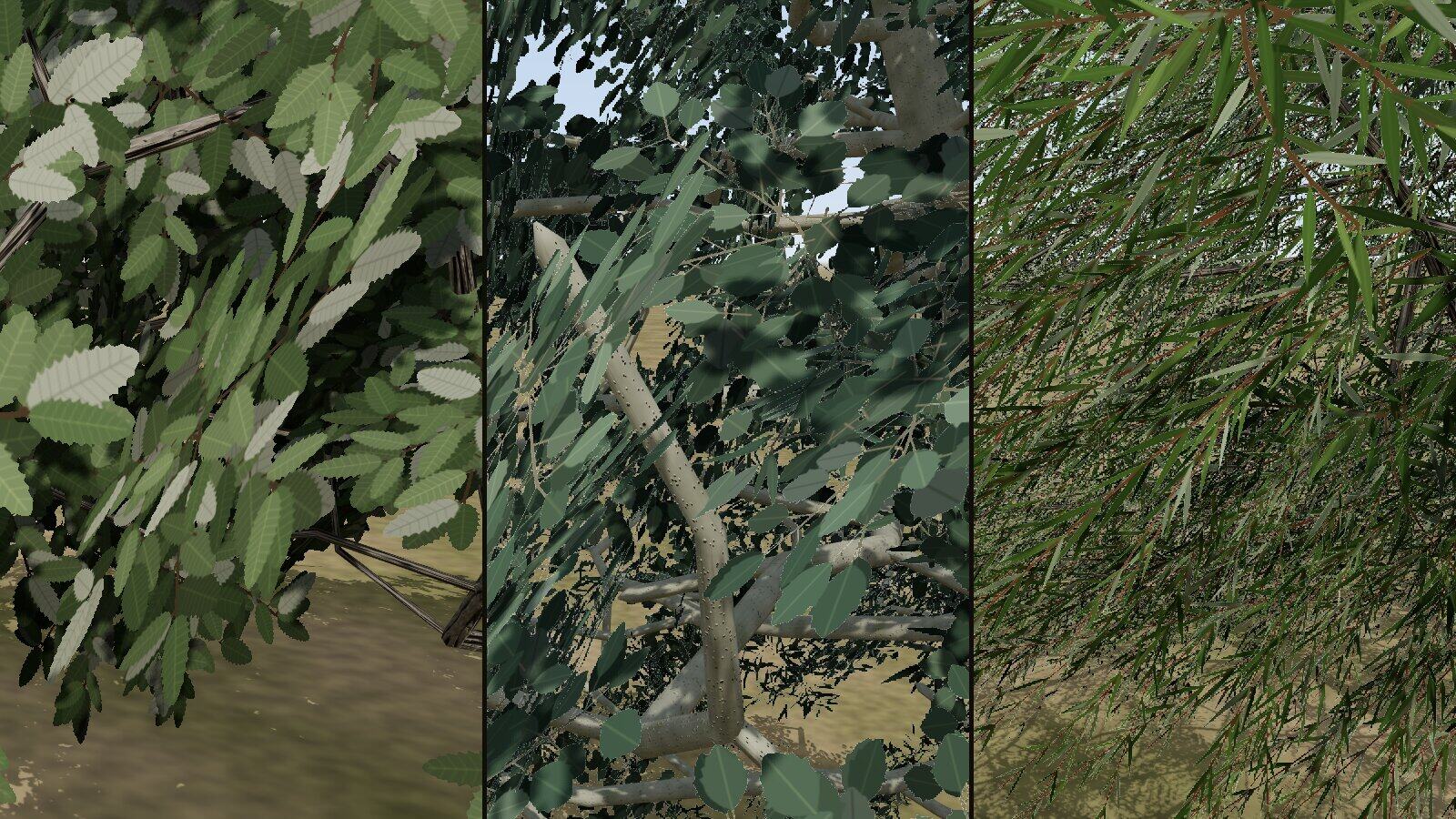
| Brant's oak | Oval to oblong, with bristle-tipped triangular teeth | Acorns 3–5 cm in a cup of curling scales | Grey-brown, deeply furrowed; often several stems |
| Persian juniper | Tiny scales on four-angled shoots | Berry-like, 1–1.4 cm, purplish-black with a whitish bloom | Reddish-brown, peeling in strips; a short, twisted trunk |
| Euphrates poplar | Grey-green, leathery: broad in the old crown, narrow on young shoots | Grey, deeply furrowed; a leaning, forked trunk | |
| Willow | Long, narrow, pointed, pale beneath | Grey, in a net of crossing furrows | |
| Tamarisk | Feathery grey-green sprays of tiny scales | Spikes of tiny pink-white flowers | Many arching reddish-brown stems |
| Common reed | Long, flat, grey-green blades | A purplish plume, turning tan | Straight, hollow canes |
Three plants have scale leaves: cypress, juniper and tamarisk. Learn these first: only one is gopher wood. The cones settle it: woody balls on the cypress, berry-like cones on the juniper, only flowers on the tamarisk study. So does the ground: cypress on the slopes, juniper on the high dry ground, tamarisk by the river modelled.
Poplar and willow both grow by the water, and young poplar shoots have willow-like leaves. In the old crown the leaves are broad, often wider than long, on stalks as long as the leaf study.
Every tree has a use
Every tree can be felled and used modelled, and the woods differ. By our estimate, freshly felled oak weighs about 1,090 to 1,180 kilograms a cubic metre, so a green oak log sinks; juniper weighs only 530 to 650 modelled. Poplar is easy to saw, and tamarisk, a dense wood, is used for tool handles study. "Willow-wood is light from the first, even when it is green," wrote Theophrastus historical. And in the Ark Tablet, an Akkadian telling of the flood, the builder says "I loaded [my] kilns evenly with tamarisk wood(?)", though the reading is uncertain historical.
So the other woods serve for everything but the hull modelled. Genesis asks for a hull of gopher wood text, and only cypress passes there. A house can build its hull of another wood; the ark just won't pass the final check.
A close look
Look at a tree within 6 metres, and after a quarter of a second its card appears; hold E or the right mouse button for one up to 40 metres off modelled. The card gives the tree's names, what to know it by, its own height and trunk width, the same numbers the felling uses, and which way its weight leans modelled. On a cypress it adds: "Gopher wood in this game (modelled): the most common identification, not certain. The oldest Jewish translations say cedar."
What it means for the game
The valley holds about 131,500 trees and reed clumps, seeded so that every house gets the same forest modelled. About 19,900 cypress stand within 3 kilometres of the site, at least twice the 7,932 the reference ark needs, and that ark is only one sound way of building among several modelled. Near the site the trees are small; the big ones stand further out modelled. Which to fell, and how far to go, is the house's choice.
No count of trees per hectare was found for wild cypress, willow or tamarisk, nor any measure of how much water these woods hold when fresh, so those stands and every green weight are our estimates modelled. And our first descriptions needed correcting: the willow is a dome, not a weeping tree, and the juniper and most tamarisks are small. The valley changed with the sources.
A house that knows its trees sends its axes to the right ones. That is the first test of the build.