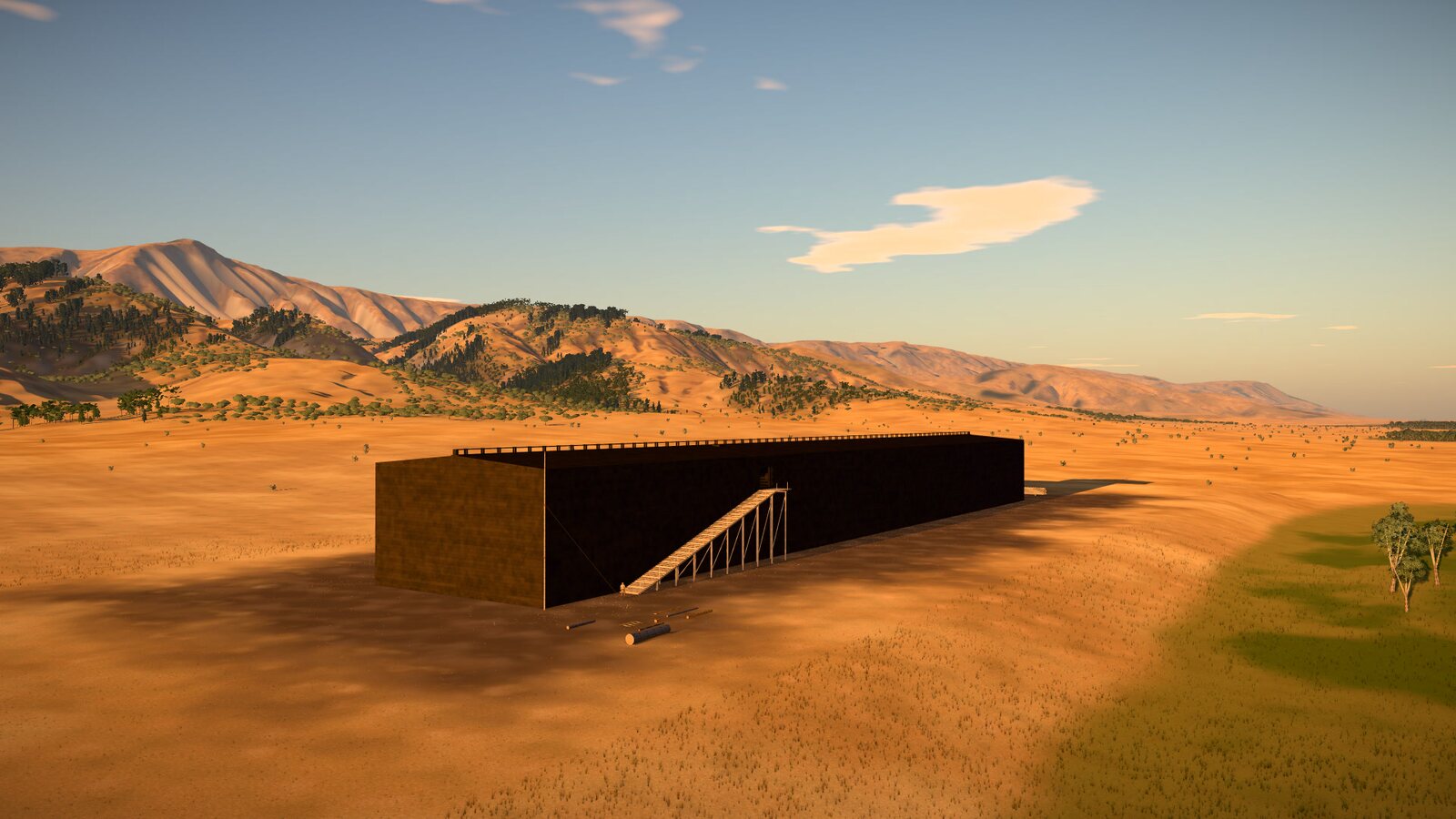
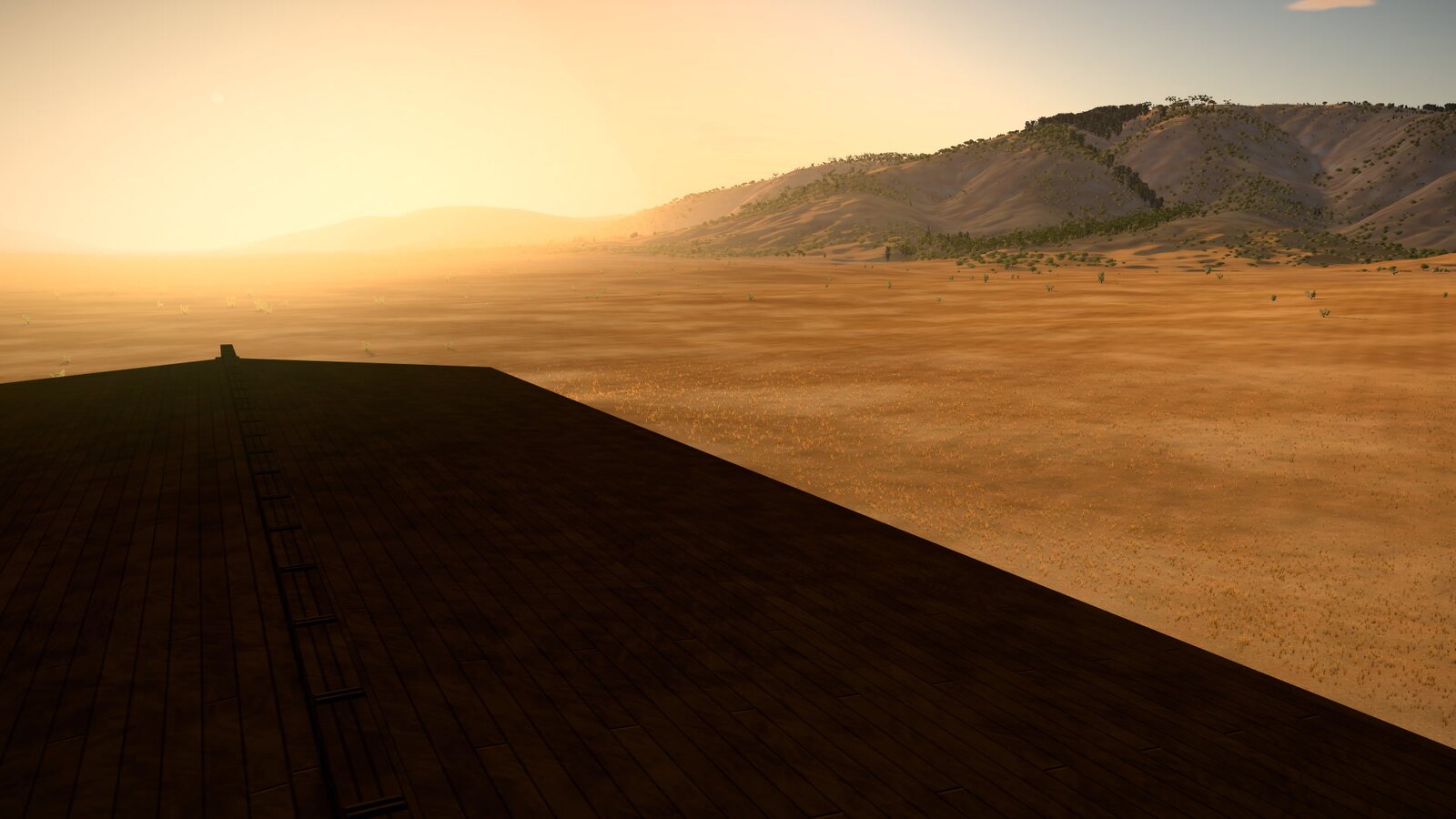
What was gopher wood?
The Bible names the ark's wood once, with a word nobody can translate for certain. What the oldest translations, the rabbis and the scholars say, and why the game builds in cypress.
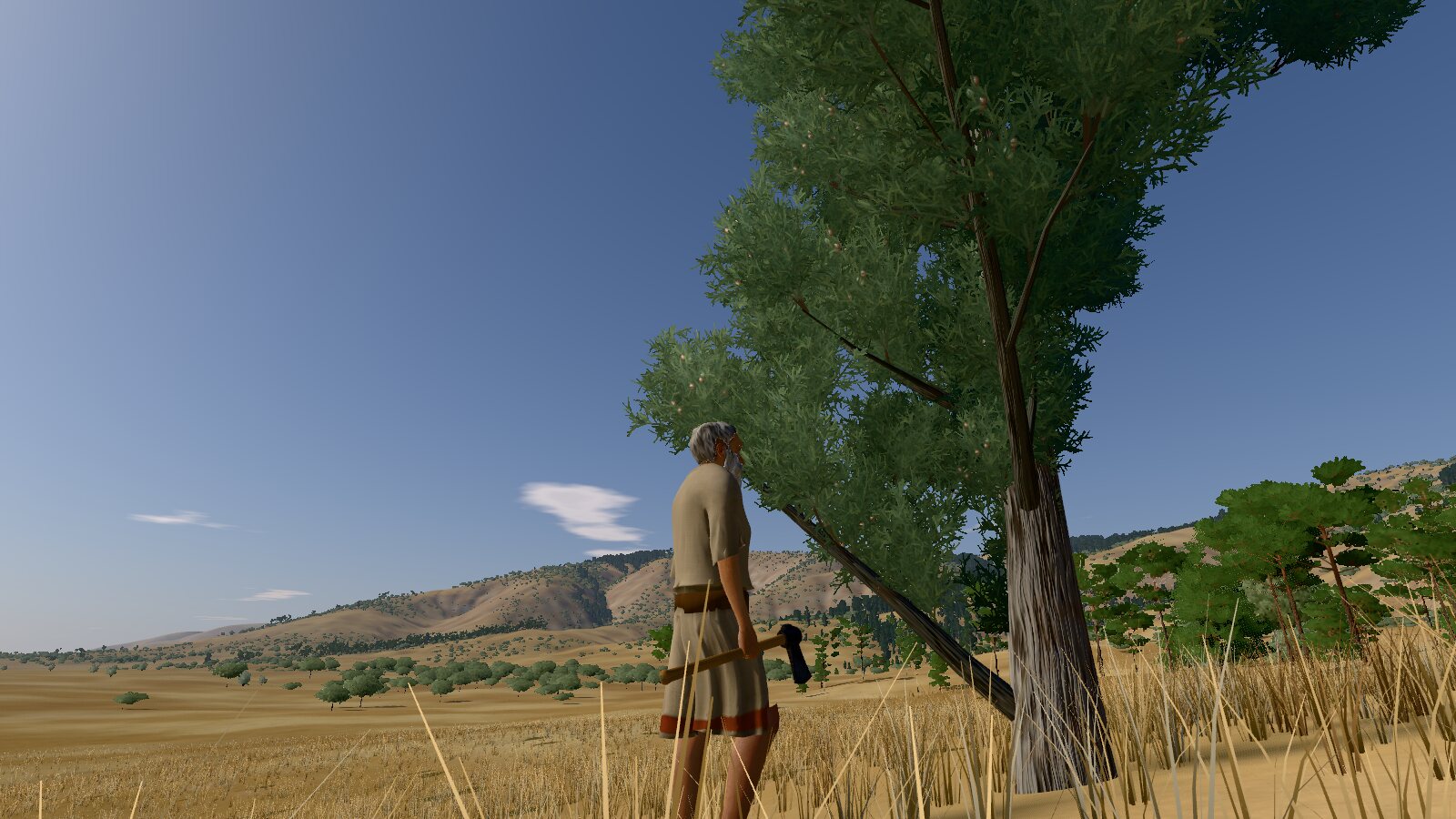
God's instructions for the ark begin with its material:
Make thee an ark of gopher wood.
Genesis 6:14 text
It sounds like a plain answer, until you ask what gopher wood is. Then it turns into one of the oldest puzzles in the Bible, and one we had to solve, or at least decide, before a single tree could fall in House of Noah.
A word that appears once
In Hebrew the phrase is ʿăṣê-gōper, "timbers of gopher" text. The word gōper occurs in this one verse and nowhere else in the whole Bible text. It has no clear relative in Hebrew or in the languages around it, so there is nothing to compare it with. The great modern dictionaries are frank about it: one calls it an "unknown species of tree used for building the ark", another marks it as doubtful study.
The oldest translators did not know either
You might hope that the first people to translate Genesis, more than two thousand years ago, still knew. They did not, and you can watch them guess text:
- The Greek Septuagint (3rd century BC) says "of squared timbers": a shape, not a tree.
- The Latin Vulgate (about AD 405) says "of smoothed" or "planed timbers".
- The Aramaic Targums, read in the synagogues, say cedar.
- The Syriac Peshitta uses a word that may mean juniper, cypress or boxwood; scholars disagree.
Jerome, who made the Vulgate, noted that the Hebrew could be read as "bitumened" historical. Saadia Gaon's Arabic translation of the 10th century says boxwood historical. As the Jewish Encyclopedia put it in 1904, "the word was just as obscure when they were made as it is to-day" study.
What the rabbis said
The Jewish tradition is the most consistent. The Talmud asks "What is gopher?" and answers with two names, mavliga and gulmish, both kinds of cedar (Sanhedrin 108b) historical. Genesis Rabbah has Rabbi Natan say the ark was of cedar wood historical. The medieval commentator Ibn Ezra adds a useful detail: gopher is "a wood that is light on the water" historical. Rashi, the best-loved commentator of all, does not identify the tree; he hears in gōper an echo of gofrît, the sulphur by which the world was to be judged historical.
Put together, the tradition points to a light, resinous wood of the cedar family. The rabbis' "cedar" was a broad family, though, and could include cypress and juniper too.
The case for cypress
The most common modern answer is the Mediterranean cypress, Cupressus sempervirens. It goes back at least to the English scholar Nicholas Fuller in 1616, and the French scholar Samuel Bochart made it widely known in 1646 study. Their case has three parts.
The sound. Drop the ending of the Greek kyparissos or the Latin cupressus, Fuller wrote, and what is left, cupar, is close to gopher study. It is a likeness, not a proof.
The wood. Ancient writers prized cypress above almost every other timber for lasting. Theophrastus, Aristotle's pupil, wrote that "the wood of the cypress seems to last longest", and Pliny agreed historical.
The ships. This is the strongest piece. When Alexander the Great was in Babylon in 323 BC, he "cut down the cypresses in Babylonia and with them built another fleet; for in the land of the Assyrians these trees alone are abundant" (Arrian, Anabasis 7.19.4) historical. The geographer Strabo tells the same story historical. It is the only ancient record we found that names the wood of a wooden fleet built in Mesopotamia. Assyrian kings had planted cypress in their parks and felled it for their palaces archaeology.
The case against, and the other answers
No ancient translation says cypress text, and the 1904 Jewish Encyclopedia called the sound argument a "mere assumption" study. The other readings each have something going for them:
| Reading | For | Against |
|---|---|---|
| Cedar | The oldest tradition: the Targums, the Talmud, Genesis Rabbah. The best-attested ship timber of the ancient Levant. | Hebrew already has a word for cedar, ʾerez. True cedar grows only in Lebanon and southern Türkiye. |
| Pine, or "resinous wood" | Fits the pitch in the same verse; Calabrian pine grows in north Iraq and gives pine tar. | Names a kind of wood, not a tree; pine lasts less well. |
| Linked to kōper, pitch | kōper, "pitch", is the next noun in the same verse, and matches the Akkadian kupru, bitumen. | Explains the word, not the tree. |
| Squared or planed timber | The Greek and Latin translations. | A translators' guess. "Laminated wood" has no scholarly basis at all. |
| Reeds | Reed boats coated in bitumen are real, from 5300 BC on. | ʿăṣê means timber, and the Akkadian word once offered as its source does not mean reed. |
| Boxwood | Saadia, and one Greek variant. | Too dense to float well, as Fuller already said; a small tree. |
Along the way we checked several popular claims and found they did not hold up study. Saadia says boxwood, not teak. Theophrastus does not list cypress among ship timbers, only for houses. The Talmud's gulmish is a cedar, not a willow. And the famous Egyptian record of "forty ships" of cedar describes ships filled with cedar, not built of it.
Why the game uses cypress
Nobody can prove what gopher was. But a game has to grow real trees, so we chose, and we chose cypress modelled for four reasons:
- It has the widest support among modern scholars, with a documented history from 1616 to today.
- It fits Mesopotamia. It is the only wood named for a fleet built there, and it was planted and felled in Assyrian parks.
- It suits a hull. The wood resists rot, especially in water, and is easy to work study, and by our estimate fresh-cut logs float modelled. Its properties are published, so the game's numbers can be sourced: about 600 kg per cubic metre when air-dry study, and about 900 when freshly felled, our estimate from its measured density and moisture modelled.
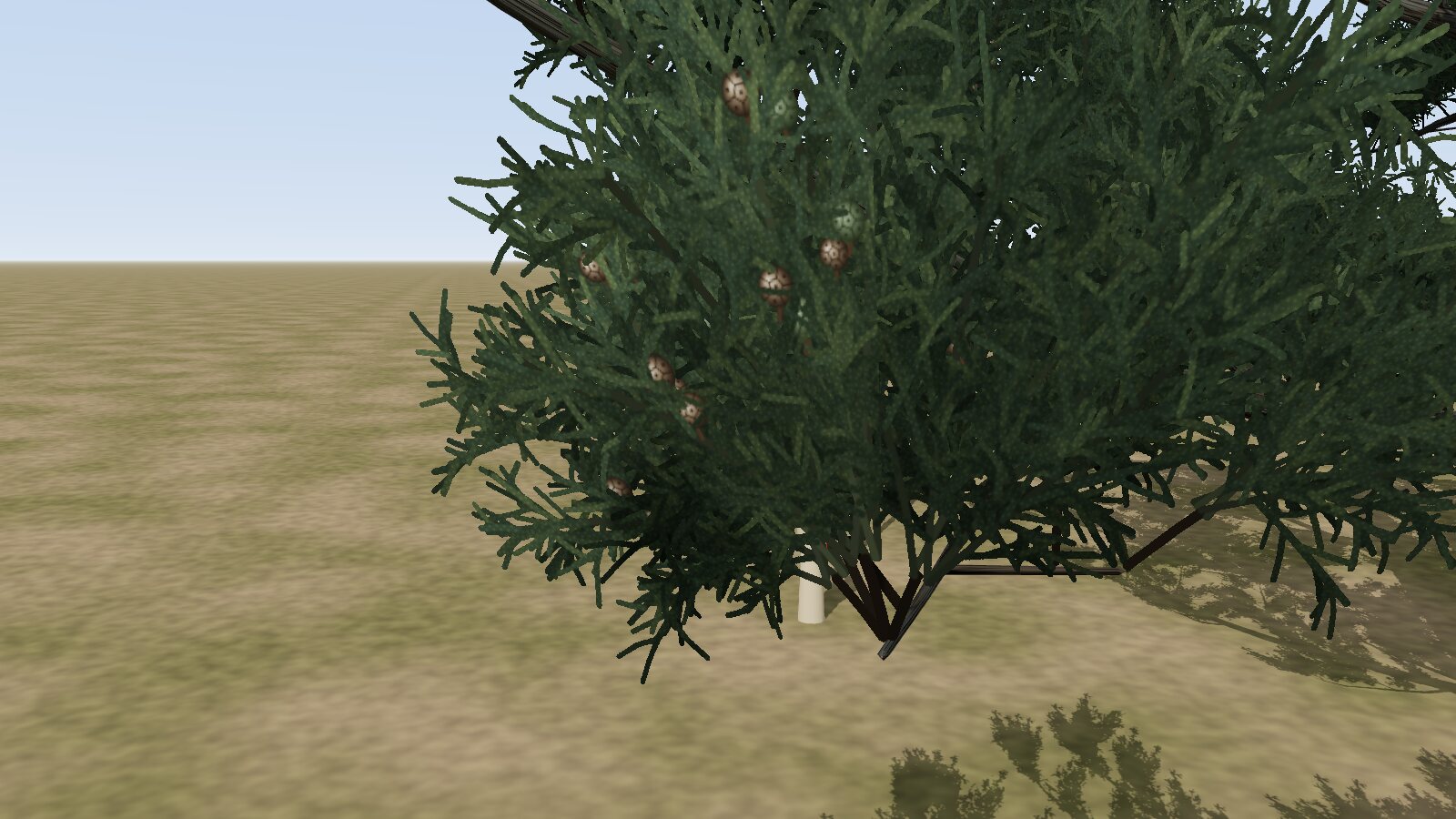
- You can recognise it. Cypress grows wild in the hills around Mesopotamia, in Iran and Türkiye, though not in the Iraqi lowlands study. It has tiny scale leaves pressed to the twig, round cones 2–4 cm across, and grey-brown bark in long stringy ridges study.
In the valley
In House of Noah, cypress grows in its wild form, with a broad crown on spreading branches. The narrow dark column you see in gardens is a cultivated variety, and would be wrong for the setting study. The cypress stands on the valley's slopes, a good walk from the building site, among Calabrian pine, Brant's oak, Persian juniper and, by the river, poplar, willow and tamarisk. Cedar of Lebanon is left out, because it never grew wild there modelled.
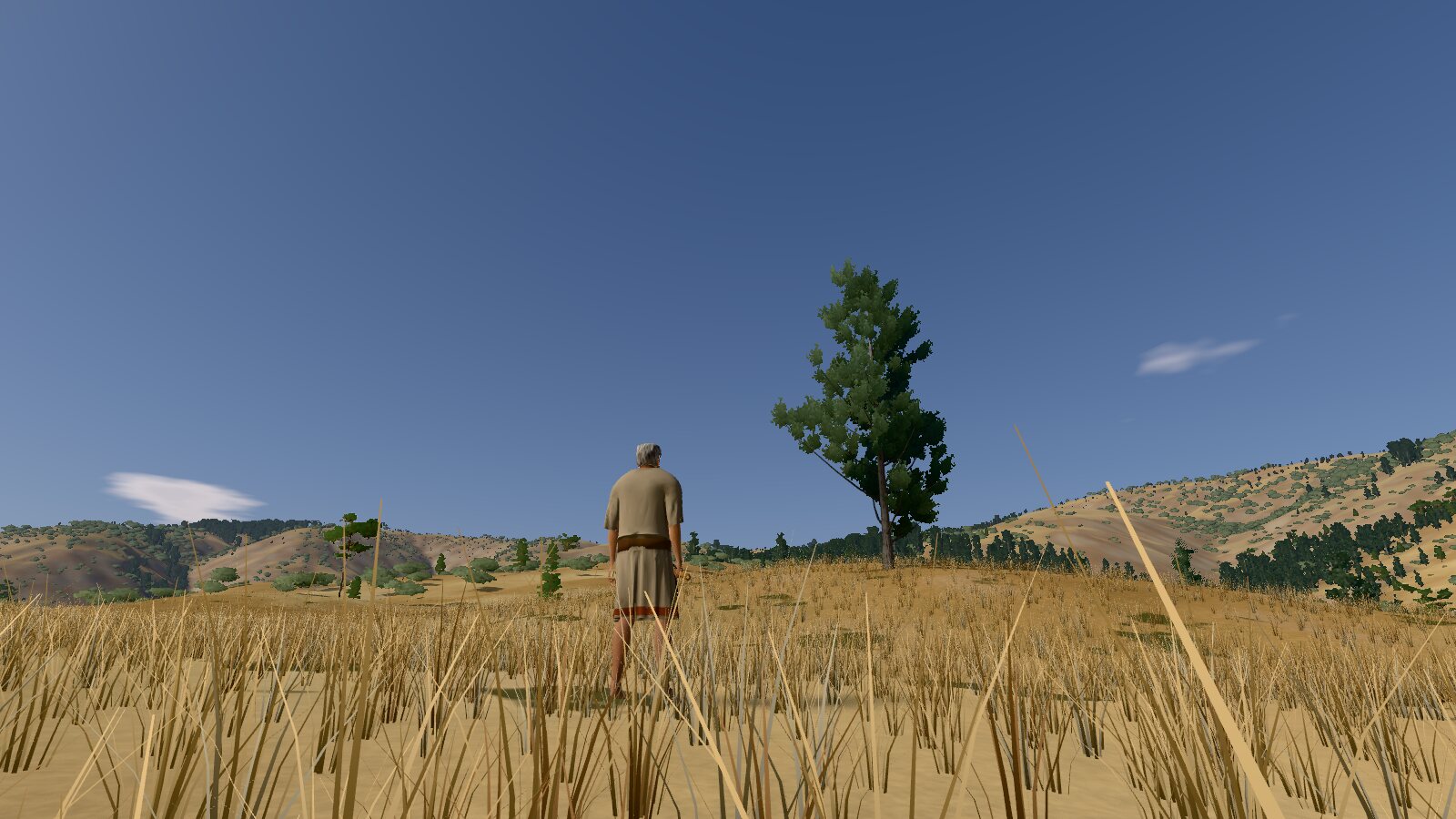
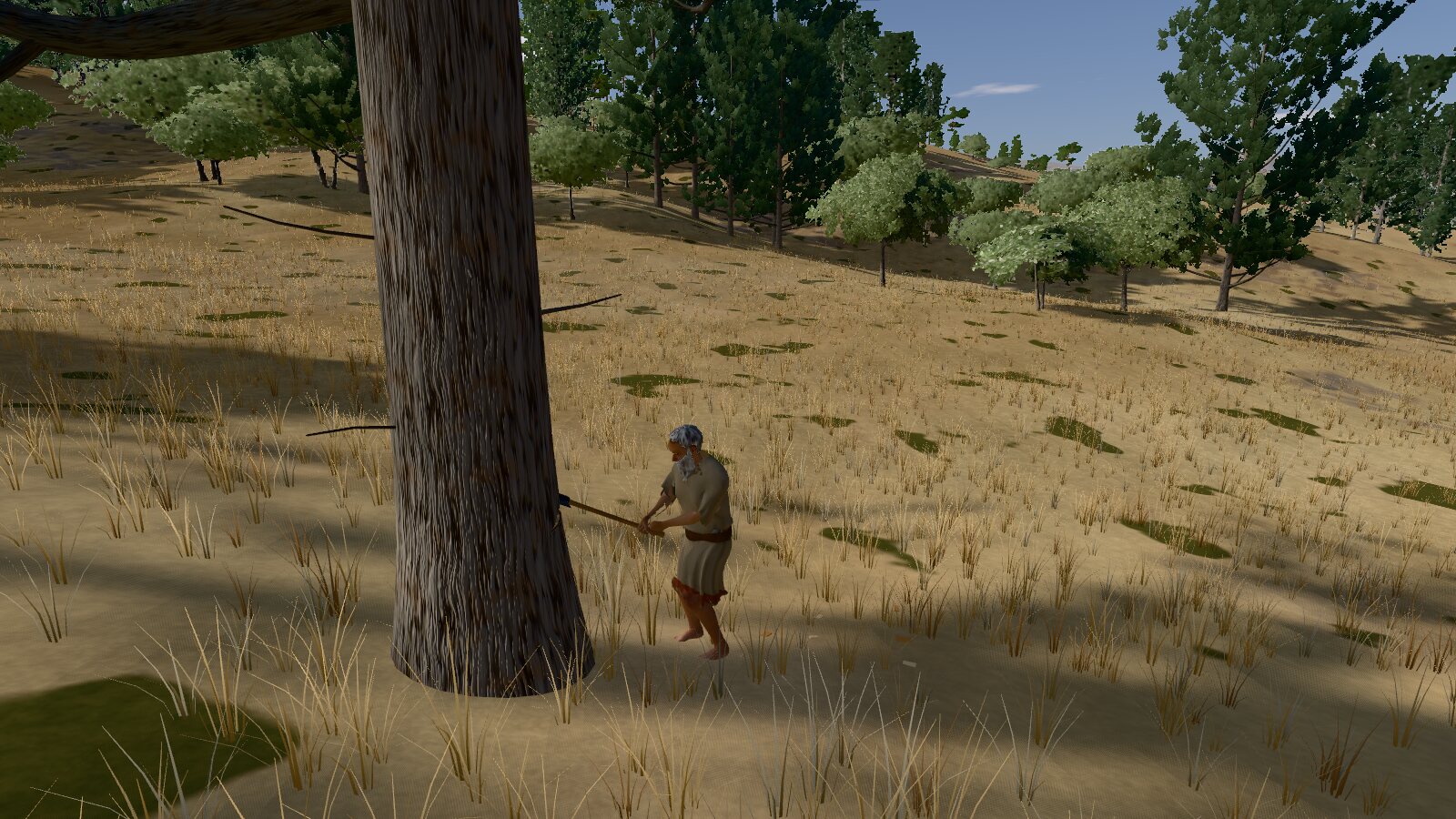
Every tree in the valley can be felled and used, for scaffolding, ramps, rollers or fuel for the pitch kilns. But the hull must be gopher wood, because Genesis says so text, so only cypress passes there in the final check. When you look closely at a cypress, the game tells you what we have told you here, in one line: "Gopher wood in this game (modelled): the most common identification, not certain. The oldest Jewish translations say cedar."
The reference ark needs about 7,900 medium-sized cypress trees modelled. Choosing them, felling them and getting them to the site is where the game really begins.