How big was the ark? The long cubit and the real size
Genesis gives the ark in cubits, but which cubit? Why the game uses the oldest measuring rod ever found, and what 155 metres of ark looks like beside things we know.
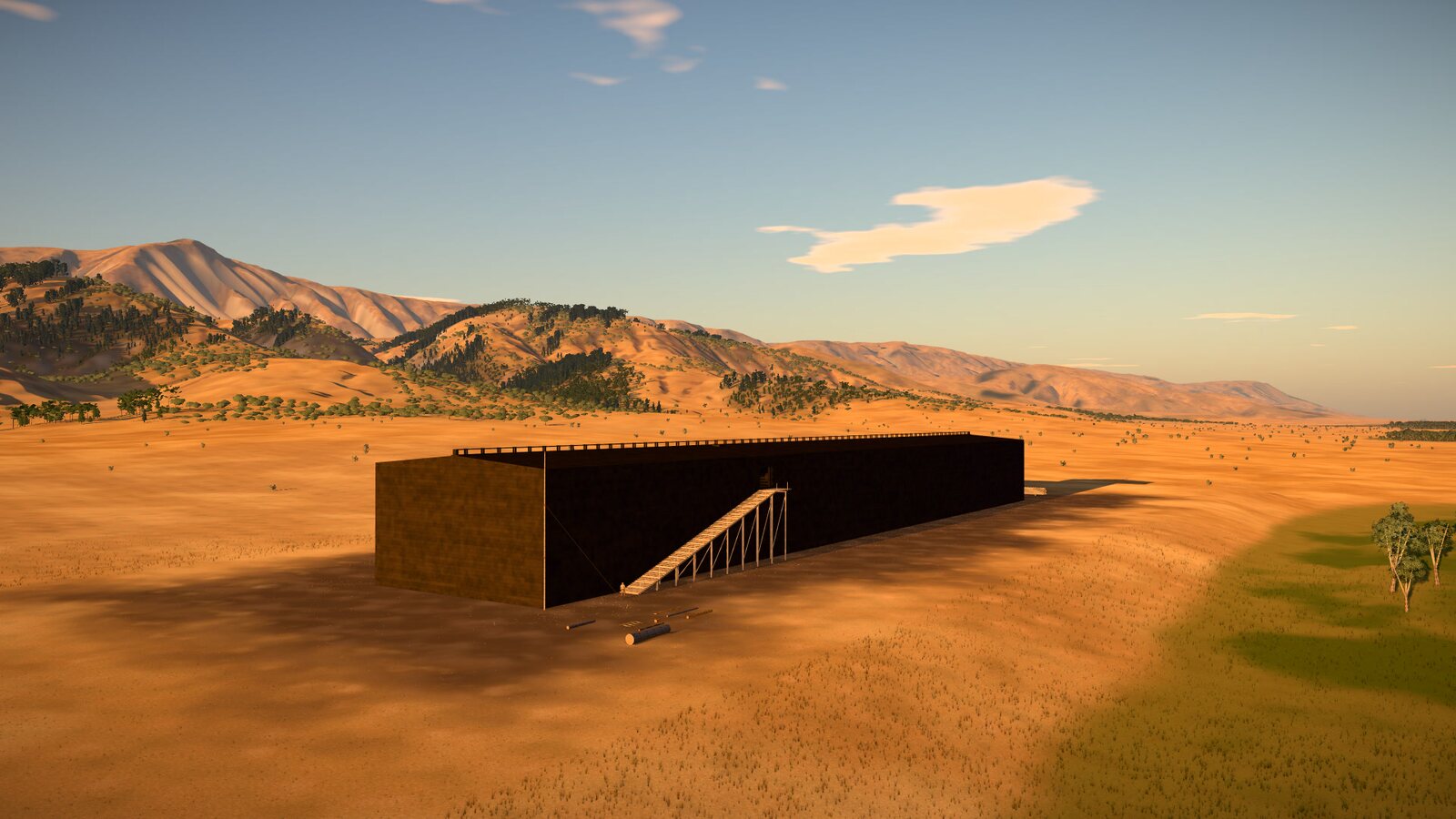
Genesis gives the size of the ark in a single verse:
The length of the ark shall be three hundred cubits, the breadth of it fifty cubits, and the height of it thirty cubits.
Genesis 6:15 text
Three numbers and one unit. That is the whole specification of the ark's size, and everything in House of Noah is built on it: the stakes in the ground, the trees you fell, the years the work takes. So the first question we had to answer was a simple one. How long is a cubit?
A measure you carry with you
A cubit is the length of a forearm, from the elbow to the tip of the middle finger study. Every builder carried one, which made it handy and also a little loose: arms differ. So the ancient world made rods, and kept standards, and over the centuries ended up with more than one cubit.
The Bible itself knows this. Og's great iron bed was nine cubits long "after the cubit of a man" (Deuteronomy 3:11) text, the everyday cubit. Ezekiel's temple was measured with a reed "of six cubits long by the cubit and an hand breadth", and he spells it out: "The cubit is a cubit and an hand breadth" (Ezekiel 40:5; 43:13) text. And Solomon's temple was laid out "after the first measure" (2 Chronicles 3:3) text, that is, by an older standard than the one in use when Chronicles was written.
So there was a common cubit, and a longer one, a handbreadth longer. Egypt had exactly the same pattern: a royal cubit of seven palms, which surviving rods put at 52.4 to 52.9 cm, beside a common cubit of six palms archaeology.
The short cubit is attested too, but later. In Jerusalem, around 700 BC, workmen cut a water tunnel through the rock from both ends, the conduit usually linked with King Hezekiah (2 Kings 20:20) text. An inscription found inside it says the tunnel was 1,200 cubits long; it measures 533 metres. That is about 44.4 cm to the cubit archaeology.
The oldest measuring rod we know
The oldest cubit we can actually hold comes from Nippur, a city of ancient Sumer in southern Mesopotamia. It is a heavy copper-alloy bar from about 2650 BC, now in the Istanbul Archaeology Museum. It is marked with four large units, each divided into sixteen smaller ones, much like feet and inches archaeology. The German Assyriologist Eckhard Unger described it in 1916, and it defines a cubit of about 51.85 cm (published readings give 518.5 to 518.6 mm) study.
The bar is irregular, its marks are not perfectly even, and the measures on the statues of Gudea, who ruled in the same region five centuries later, do not quite agree with it study. Nobody can prove which cubit the writer of Genesis had in mind, and the text does not say.
But the evidence leans one way, and the game follows the evidence modelled:
- It is the oldest physical measuring rod known.
- It was found in Shinar, the plain where Genesis places Noah's descendants after the flood: "they found a plain in the land of Shinar" (Genesis 11:2) text.
- The long cubit is not a lone find. Egypt's royal cubit is only about 1 % longer archaeology, and the Bible's own "first measure" and "cubit and an hand breadth" point the same way text.
So in House of Noah one cubit is 0.5185 metres. It is written once in the game's code, and every length in the game comes from it. Wherever the game shows it, it calls this cubit "best supported, not certain" modelled, because that is what it is.
The real size
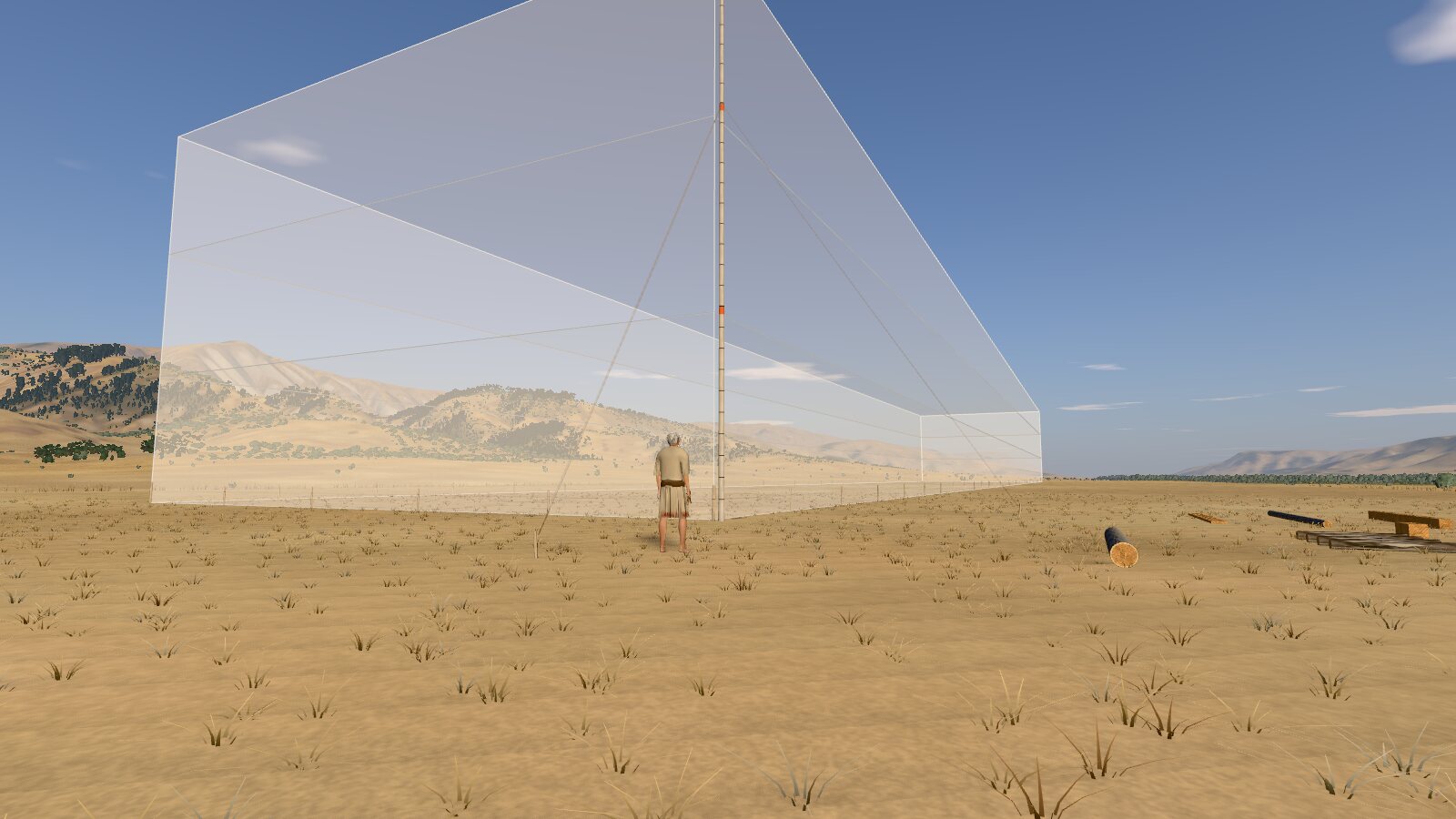
With the long cubit, the ark comes out like this modelled:
| Long cubit (51.85 cm) | Short cubit (about 44.5 cm) | |
|---|---|---|
| Length, 300 cubits | 155.55 m | 133.5 m |
| Breadth, 50 cubits | 25.93 m | 22.25 m |
| Height, 30 cubits | 15.56 m | 13.35 m |
The difference matters. The long-cubit ark is 22 metres longer than the short-cubit one, and because size grows in three directions at once, it holds more than half as much again.
A few more numbers, all simple arithmetic modelled. The ark stands on about 4,030 square metres of ground. With "lower, second, and third stories" (Genesis 6:16) text, its three decks give about 12,100 square metres of floor before a single wall or beam is counted. The box as a whole holds about 62,700 cubic metres.
Beside things we know
Numbers like that are hard to picture, so here is the ark beside some things you may have seen.
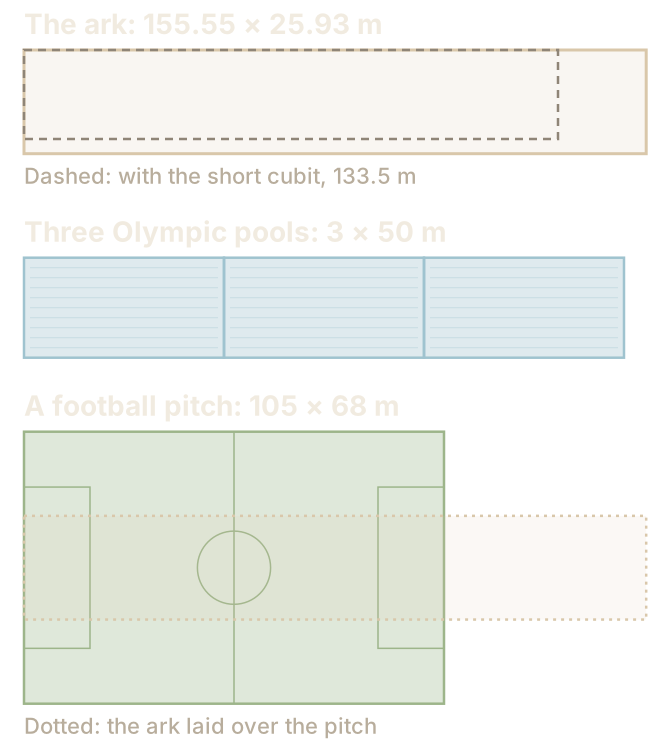
- Swimming pools. An Olympic pool is 50 metres long and 25 metres wide study. Put three end to end and you have 150 metres: the ark is a little longer than that, and a little wider than one pool.
- A football pitch. FIFA recommends a pitch of 105 by 68 metres study. The ark is about one and a half times as long, but much narrower: it covers a bit more than half the pitch's grass.
- The Titanic. The great liner was 269 metres long and 28 metres across at its broadest historical. The ark is a little under three fifths of its length, and nearly as broad.
- People. A man of the Early Bronze Age in the Levant stood about 1.66 metres tall archaeology, and that is the height of Noah and his sons in the game. About 94 of them could lie head to foot along the ark's side, and the hull rises to more than nine times their height.
- A full-size ark you can visit. The Ark Encounter in Kentucky was built with a cubit of 20.4 inches, about 51.8 cm, and is 510 by 85 by 51 feet study: 155.4 by 25.9 by 15.5 metres. That is within about ten centimetres of the game's ark in every direction. If you have walked round it, you have seen the size of the ark in this game.
What real size means for the game
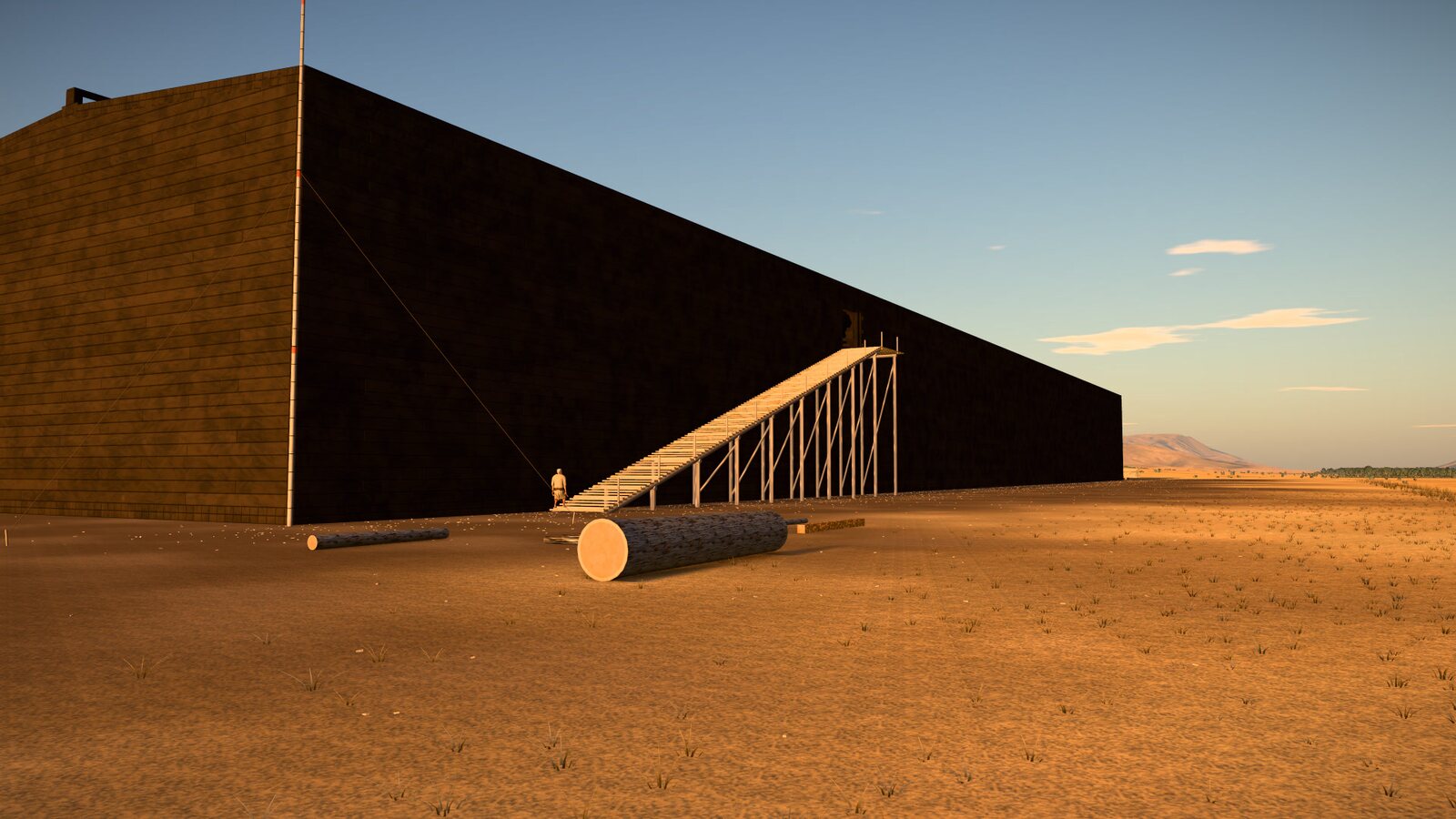
Building at real size means building the real amount. The game's reference design, one sound way of building the ark among several, needs about 13,800 cubic metres of timber, or roughly 7,900 medium cypress trees, and about 970,000 hours of work: 122,000 working days of eight hours for one person modelled. Later pages will show how we arrived at those numbers, and why they are only as good as the studies behind them.
It also means the measures are a test. In the game the site is laid out with a cubit rod, stakes and a cord, as builders did, and the final check will measure what was built against Genesis 6:15. How close is close enough is still open: one cubit either way, or a share of the length modelled.
What we don't know
The text gives the numbers and not the unit's length. The long cubit is the best-supported reading, not a certainty, and the game says so wherever it shows a measure. If better evidence turns up, the cubit changes in one place in the code, and the whole valley changes with it.