Why our ark is a box: Durupınar, the text and the timber
A boat-shaped formation near Ararat is in the news again, with radar, drilling and soil samples. How it compares with the numbers in Genesis, what geologists on both sides have concluded, and why the game's ark is a box of straight timbers.
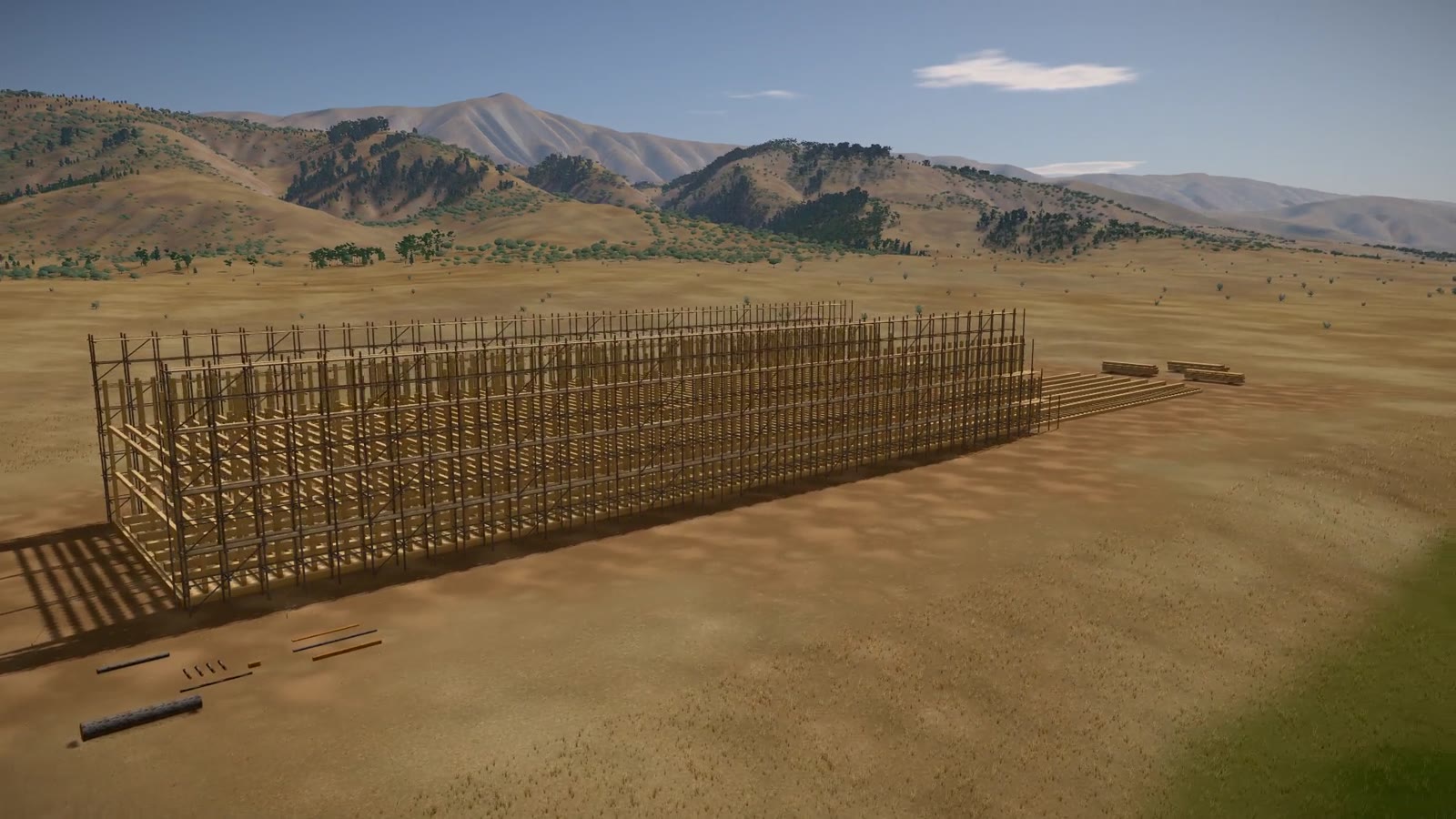
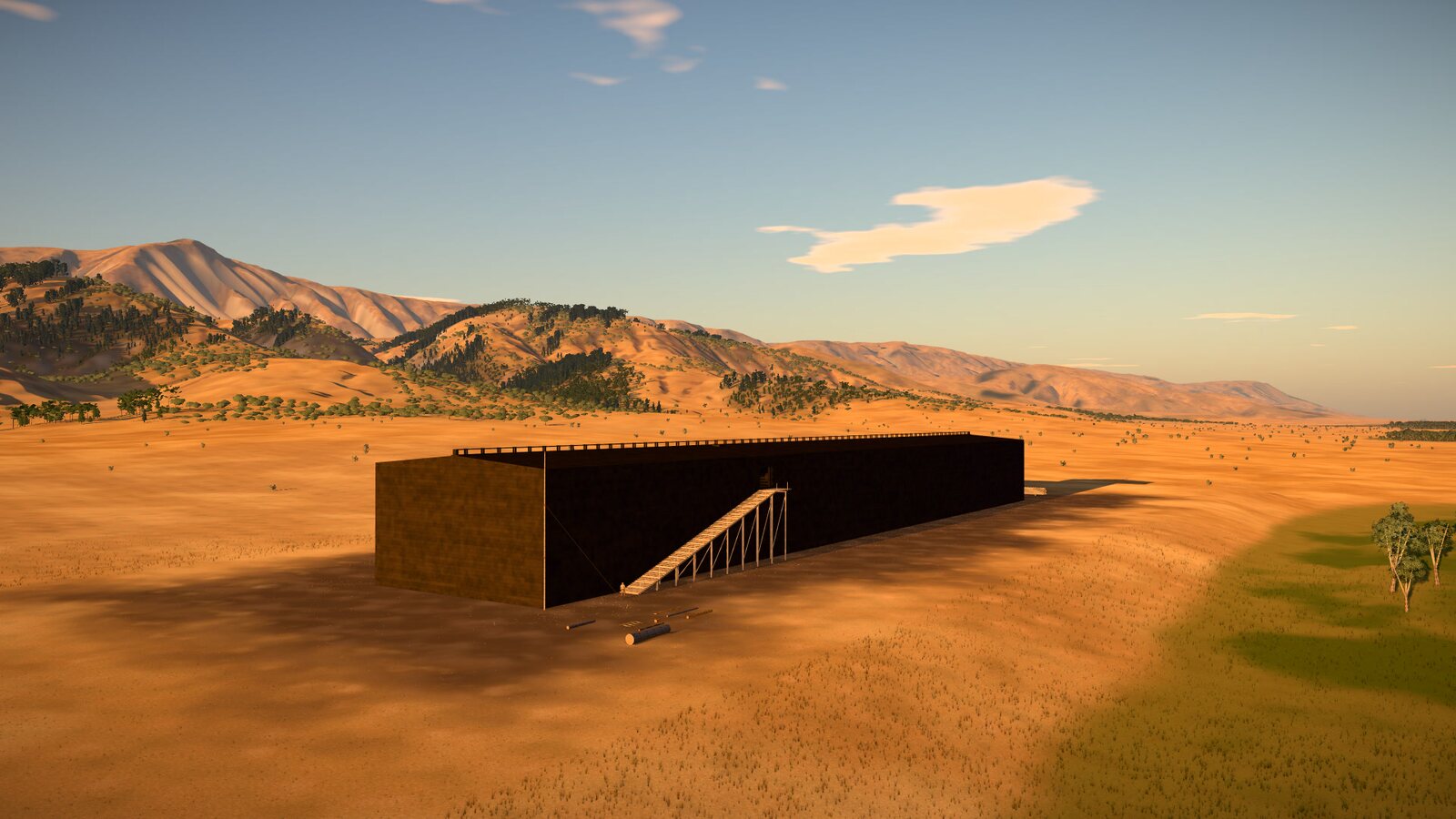
A boat-shaped mound in eastern Türkiye is in the news again. Videos and articles call it the resting place of Noah's ark, and this year a team drilled into it. People ask us what we make of it, since the game builds the ark at its real size. Here is how the formation compares with the text, what geologists have said about it, and why the ark in House of Noah is a box.
What is being studied
The Durupınar formation lies in Doğubayazıt district of Ağrı province, near Mount Ararat. It was noticed in 1959. From the 1970s Ron Wyatt promoted it as the ark, and since 2014 the Noah's Ark Scans project has surveyed it with ground-penetrating radar and electrical resistivity archaeology. The group reports "corridors and room-like chambers" under the surface, features meeting at right angles about nine metres down, and soil from inside the outline with "nearly three times more organic material" than soil from outside.
In 2026 a campaign authorised by the Turkish authorities, directed by Prof. Cenker Atila of Sivas Cumhuriyet University, drilled cores and took about 1,000 soil samples between June and September, and recovered pottery fragments. Its results are expected in 2027 archaeology. Those results are not out yet, and this page does not try to guess them.
What the text gives
Genesis gives the ark's size in three numbers:
The length of the ark shall be three hundred cubits, the breadth of it fifty cubits, and the height of it thirty cubits.
Genesis 6:15
That is six times as long as it is wide. The text adds rooms, pitch "within and without", a window, a door in the side and three storeys (6:14–16) text. The Hebrew word for the ark, tevah, appears elsewhere only for the basket in which the infant Moses was laid by the river (Exodus 2:3, 2:5). Neither use describes a pointed hull.
The text also says where the ark came to rest: "upon the mountains of Ararat" (8:4), plural. Ararat is the name of a land elsewhere in the Bible (2 Kings 19:37, Jeremiah 51:27), so the text names a region, not a single peak text. Durupınar lies in that region, so the text alone does not rule the place out.
How the formation compares
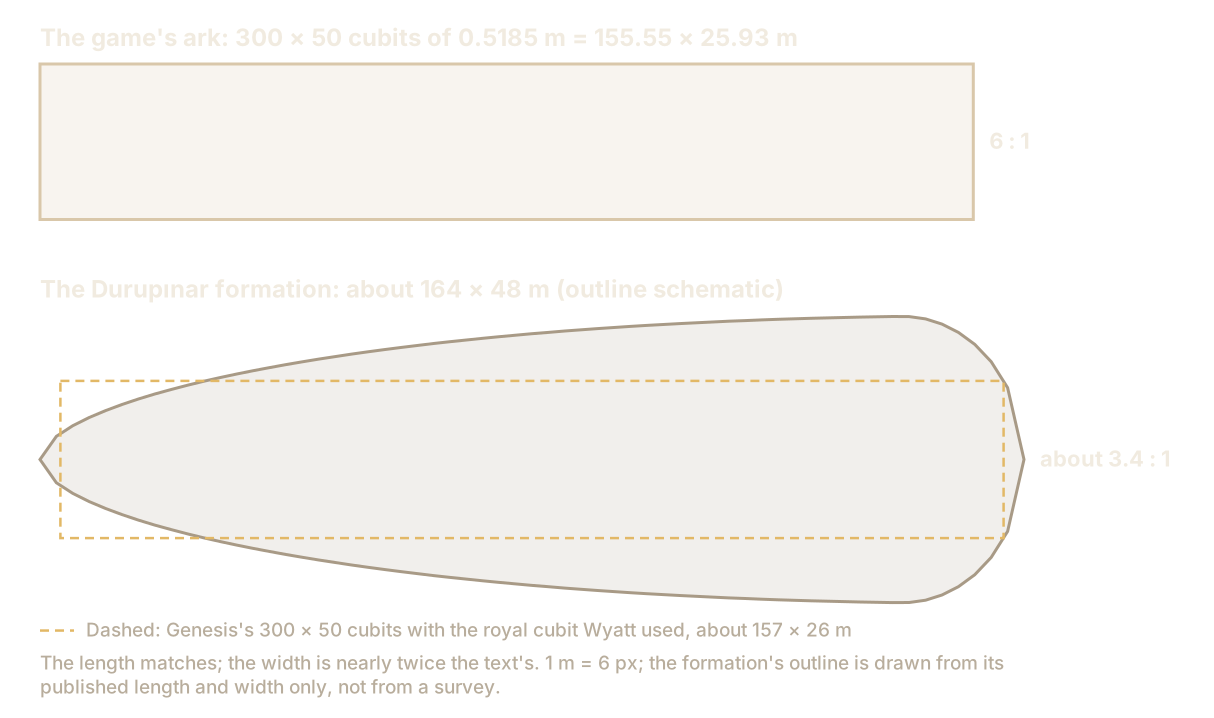
The formation is reported as about 164 metres (538 feet) long and about 48 metres (157 feet) across at its widest, with a pointed end and a rounded end study. Wyatt measured it at 300 royal Egyptian cubits, a cubit of about 0.52 metres, which gives about 157 metres. The length is the closest match, and it is the main reason the identification has drawn attention.
The width is the problem. Fifty of the same cubits make about 26 metres, but the formation is nearly twice as wide. Its length is about 3.4 times its width, against the text's 6. Supporters of the identification have suggested that the hull's sides spread outward as it settled and broke down study.
What geologists have concluded
In 1996 the geologist Lorence Collins and David Fasold published a paper on the formation. Fasold had supported the identification in the 1980s and had been at the site with Wyatt. The paper concluded it is a natural structure: a doubly plunging syncline, with the "walls" formed by natural concentrations of iron minerals in tilted layers of rock study. Andrew Snelling, a young-earth creationist geologist, came to the same conclusion. The doubts are therefore not limited to people who reject the Genesis account. The Christian apologists Wesley Huff and Jeremiah Johnston have called the latest claims "not legit" study.
The project presents its radar images and soil tests as new evidence that the earlier studies did not have. The drilling is meant to settle the question, and its results are due in 2027.
Building it: a box or a ship
The formation's outline is a ship's: a pointed bow and curved sides. Building a ship's hull 155 metres long is a different job from building a box.
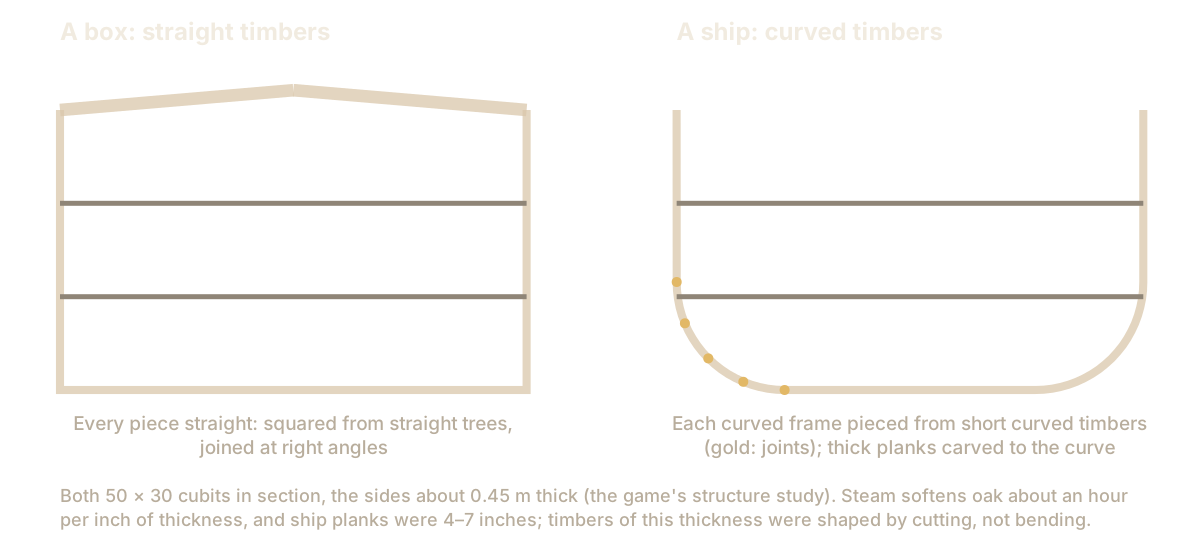
A box is built of straight timbers. Its bottom, sides, decks and walls are flat. Each piece can be squared from a straight trunk and joined to the next at a right angle. That is how the game's ark is built.
A ship's hull is built of curved timbers. Each frame follows the curve of the bilge. Shipwrights never bent the heavy timbers into shape. They looked for trees that had grown curved, which they called "compass timber", and pieced each frame from several short curved sections historical. Such timber came mostly from trees growing on their own and cost more than straight timber. Planks, which are thinner, were softened with steam and pulled to the curve. The rule of thumb is an hour in the steam for every inch of thickness, and the planks of the frigate Constitution are 4 to 7 inches thick historical.
The game's structure study puts the ark's bottom and roof at 0.4–0.5 metres thick: 16 to 20 inches, far beyond what anyone steams modelled. Planks that thick would have to be shaped the way the Egyptians shaped the Khufu ship's: each one carved to the curve out of a larger log archaeology. Ancient builders could make curved hulls, as the Khufu ship shows. But at 155 metres, every frame becomes a hunt for the right curved tree, and every plank a carving job with a great deal of wood cut away.
The curve also adds joints, and joints are where a long wooden hull is weakest. The game's study found that good cypress is strong enough on its own. The pegged and keyed joints between pieces are what limit the hull. The forces in its seams grow with the square of its length: at 155 metres they are about 2.4 times those of the schooner Wyoming, which was about 100 metres long, and which flexed and leaked despite its iron straps modelled.
Building and loading on land. A curved hull does not stand on its own. Shipyards build one on a line of blocks under the keel, propped up along its sides with shores, and launch it down sloping ways into the water historical. The ark was never launched. It was built and loaded on land until "the waters increased, and bare up the ark, and it was lift up above the earth" (Genesis 7:17) text. A flat-bottomed box stands upright on its own, spreads its weight and its cargo over its whole bottom, and lifts evenly as the water rises under it. Flat-bottomed barges are built to sit upright on the mud when the tide goes out, while keeled boats need legs or props, or lean over study. A round-bottomed hull 155 metres long, loaded with its cargo, would rest that weight on a line of keel blocks and a row of props, and would have to float free of them as the water came. The same holds where the ark came to rest (8:4): a box settles upright.
How could anyone bend such beams? They couldn't, and shipwrights never tried. A curved hull this size was not impossible, but it would have cost far more work and far more joints than a box.
In the game's valley, about a quarter of the big cypress grow curved, and they are the minority of trees a curved hull would need modelled. A box can use the straight majority.
Why the game's ark is a box
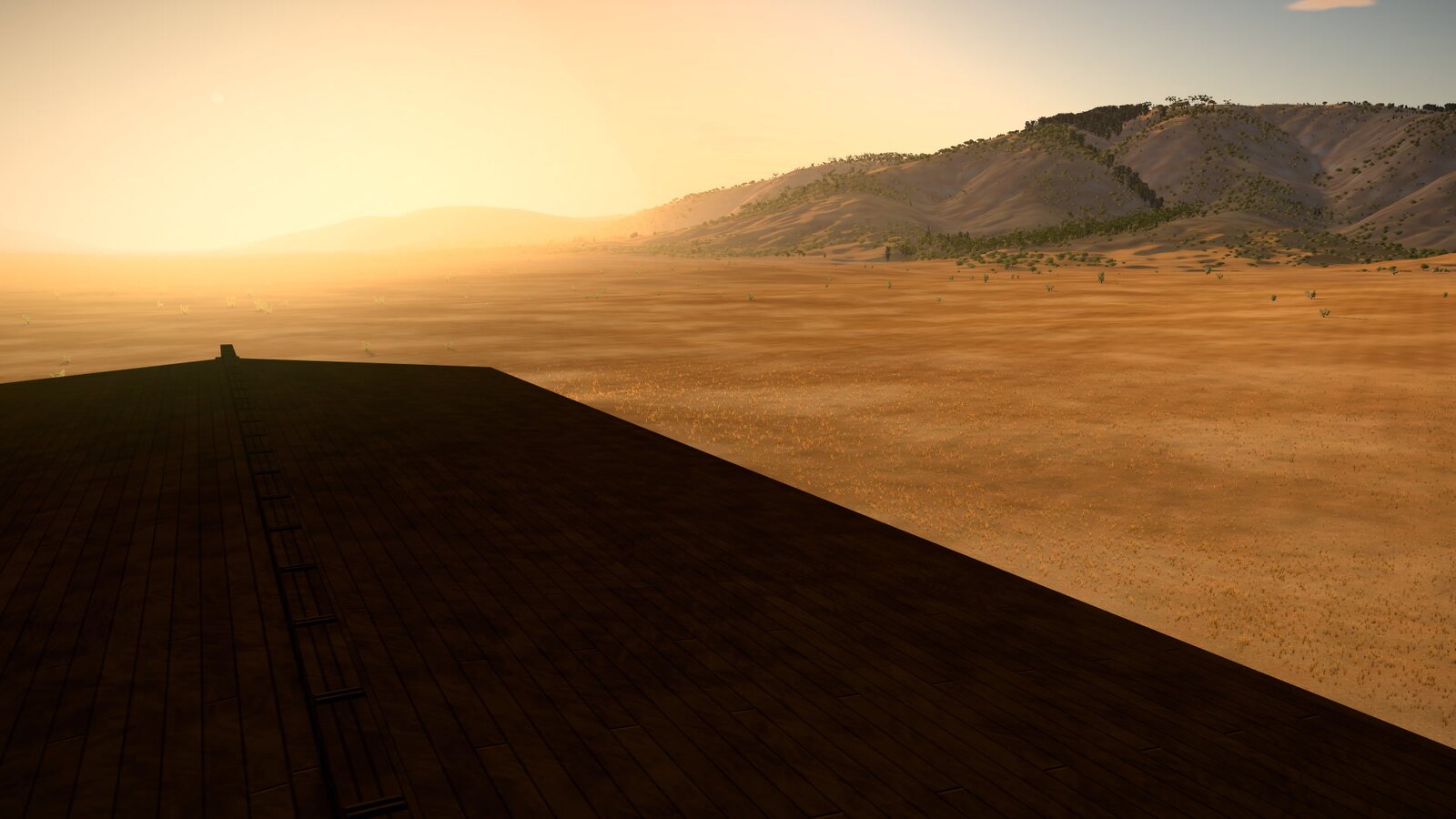
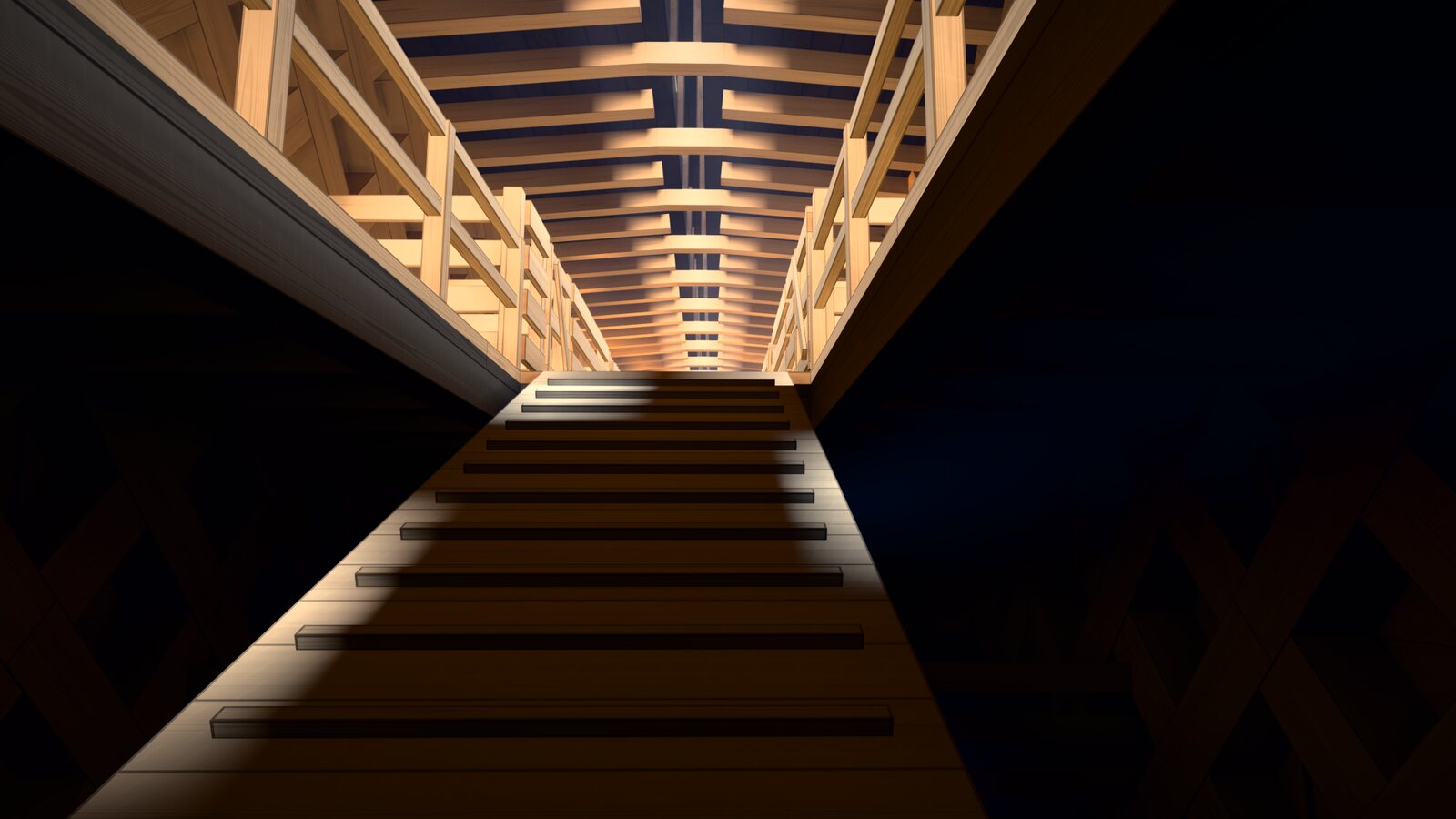
The game builds what the text describes: 300 by 50 by 30 cubits, six times as long as it is wide, a tevah, with three storeys, rooms and a door in the side. Read that way, the ark is a box of straight timber, and that is the shape the game's structure study tests against a storm.
A box also holds up on the water. In 1994 naval architects at the Korea Research Institute of Ships and Ocean Engineering compared a box with the ark's proportions against twelve other hull forms of the same volume. On their combined measure of stability, seakeeping and strength it came second, and the form that came first failed on stability study.
The method of building is open in the game: a house may try other ways, and the final check judges the result. The shape and proportions come from Genesis. When the Durupınar results come out in 2027, this journal will report what they show.