Year 1 is Noah's 480th: the 120 years and the family's calendar
Genesis dates the flood by Noah's age, to the day. How the game sets its calendar from that: why the build begins in Noah's 480th year, how a year of twelve months of thirty days is counted, and which deaths and births stand on it as marks.
Genesis rarely dates anything to the day. The flood is the exception:
In the six hundredth year of Noah's life, in the second month, the seventeenth day of the month, the same day were all the fountains of the great deep broken up, and the windows of heaven were opened.
Genesis 7:11 text
House of Noah ranks houses by how long their build takes on the game's calendar, so the calendar has to start somewhere, and it has to count the way Genesis counts. This page is about when year 1 falls, how a year is reckoned, and what stands on it.
Where year 1 falls
Genesis gives the build no start date. It gives a number that has long been read as one:
And the LORD said, My spirit shall not always strive with man, for that he also is flesh: yet his days shall be an hundred and twenty years.
Genesis 6:3 text
Some read the 120 years as the time left until the flood text. Rashi, following Seder Olam, dates that decree "twenty years before Noah had any children" historical. Noah began to have sons when he was 500 (Genesis 5:32) text, so the decree came when he was 480. That is where the game begins: year 1 is the year Noah is 480 modelled, and the flood, in his 600th year, comes in year 121.
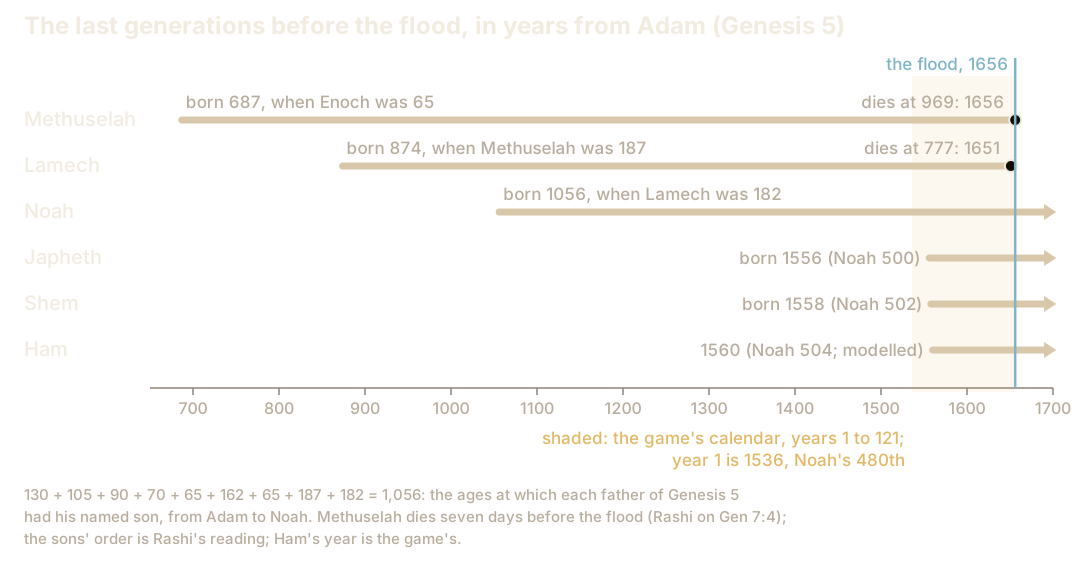
One small question had to be settled first. Genesis names the flood's year two ways: Noah "was six hundred years old" (7:6) and it was "the six hundredth year of Noah's life" (7:11) text. Read strictly, those could be a year apart. The ages in Genesis 5 settle it. Adam was 130 when Seth was born, Seth 105 at Enos's birth, and so on down to Lamech, 182 when Noah was born: 130 + 105 + 90 + 70 + 65 + 162 + 65 + 187 + 182 = 1,056 text. Noah was born in year 1056 from Adam, and both readings put the flood in 1656. These are the Hebrew text's ages, which the King James Version translates text. The Greek Septuagint gives most of the fathers a hundred years more before their sons: Adam 230, Seth 205, and so on down to Lamech, 188. By its sum Noah is born in year 1642 and the flood comes in 2242, or in 2262 by the Codex Alexandrinus, which has Methuselah 187 at Lamech's birth instead of 167 text. The game follows the Hebrew text. Either span moves only where the count from Adam starts, not the 120 years or Noah's ages. So in the game "his 600th year" and "600 years old" are the same calendar year, and in year y Noah is 479 + y years old modelled.
The same sums give the family's marks
The sums that place Noah's birth also place two deaths text:
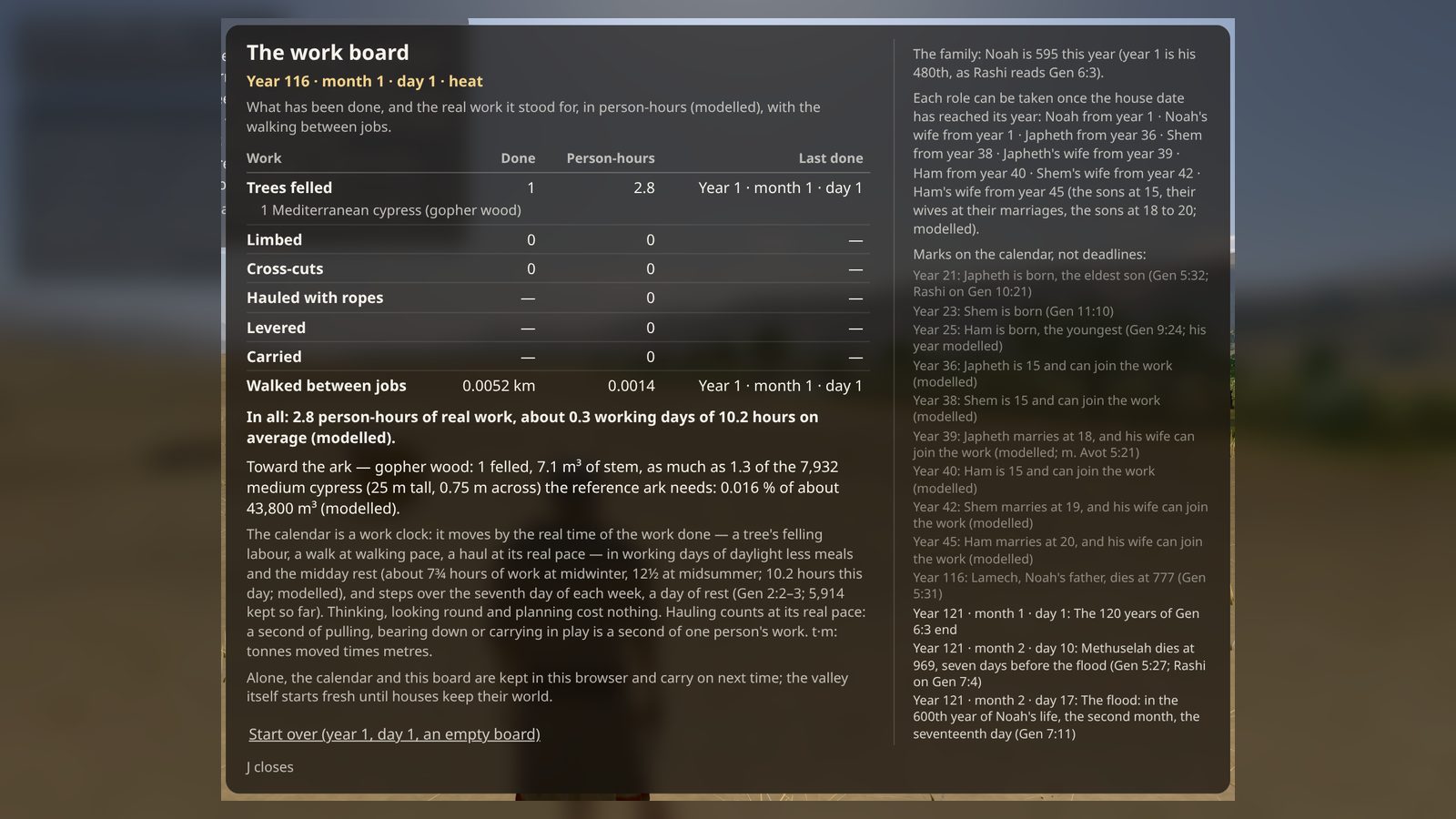
- Lamech, Noah's father, was 182 when Noah was born and died at 777 (Genesis 5:28–31). 182 + 595 = 777, so he died in Noah's 595th year: year 116 of the game.
- Methuselah, Noah's grandfather, was 187 when Lamech was born and died at 969 (Genesis 5:25–27). 187 + 182 + 600 = 969: he died in the flood's own year.
Genesis 7:4 has God say "yet seven days, and I will cause it to rain upon the earth" text, and the Talmud and Rashi read those seven days as the mourning for Methuselah, for whose honour the flood waited historical. So the game puts his death on year 121, month 2, day 10, seven days before the flood modelled.
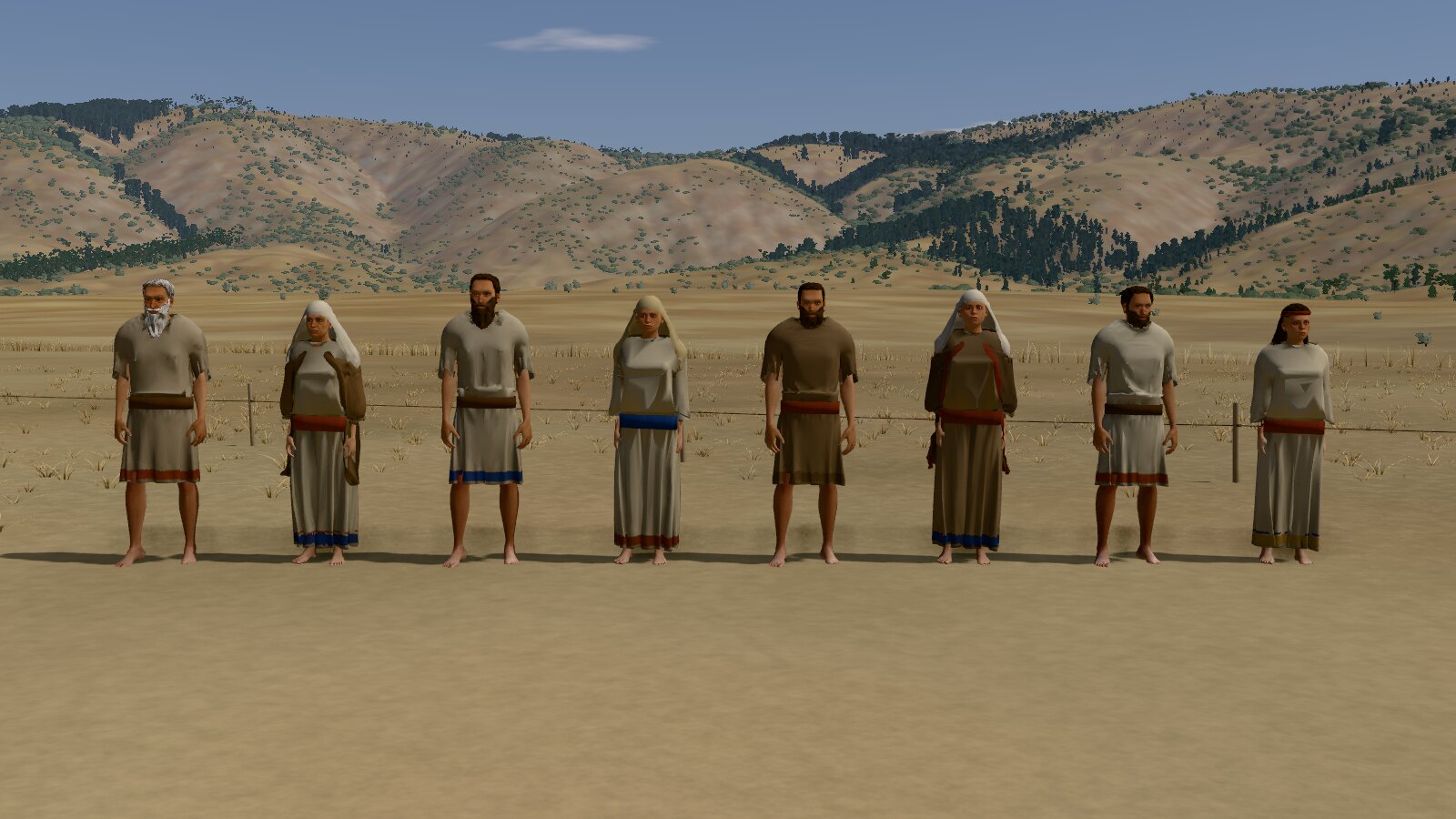
Between year 1 and the flood come the sons, born in years 21, 23 and 25 text historical modelled, and their wives, who join the work in years 39, 42 and 45 modelled. The house of Noah tells that part of the story.
Twelve months of thirty days
Genesis dates the flood by year, month and day, and it also counts the days between. The waters "prevailed upon the earth an hundred and fifty days" (7:24), and the ark rested "in the seventh month, on the seventeenth day of the month" (8:4) text. From the 17th of the second month to the 17th of the seventh is five months, and 150 days: thirty days to a month text. The text goes on to a tenth month (8:5) and then to "the first month, the first day of the month" of Noah's 601st year (8:13) text; twelve months a year is the year of 1 Kings 4:7 and 1 Chronicles 27 text. So the game counts 12 months of 30 days, 360 days a year modelled.
That reading takes the 150 days to run from the flood's first day to the day the ark rested, as most do. Rashi counts lunar months instead, and reads the days by which the flood outlasted a year (Genesis 8:14) as those "by which the solar year exceeds the lunar year", so that it lasted a full year of the sun historical. The game uses the simpler count, with no days added.
Where the year begins, and its seasons
The year also has to lie somewhere in the sun's year, for the sun's path and the grass. The rabbis disagreed about where Noah's year began. Rabbi Eliezer counted the flood's months from Tishri, in the autumn, and Rabbi Joshua from Nisan, in the spring historical. The game follows the autumn reading, which also fits the Bible's own "feast of ingathering, which is in the end of the year" (Exodus 23:16) text: month 1, day 1 falls at the autumn equinox modelled.
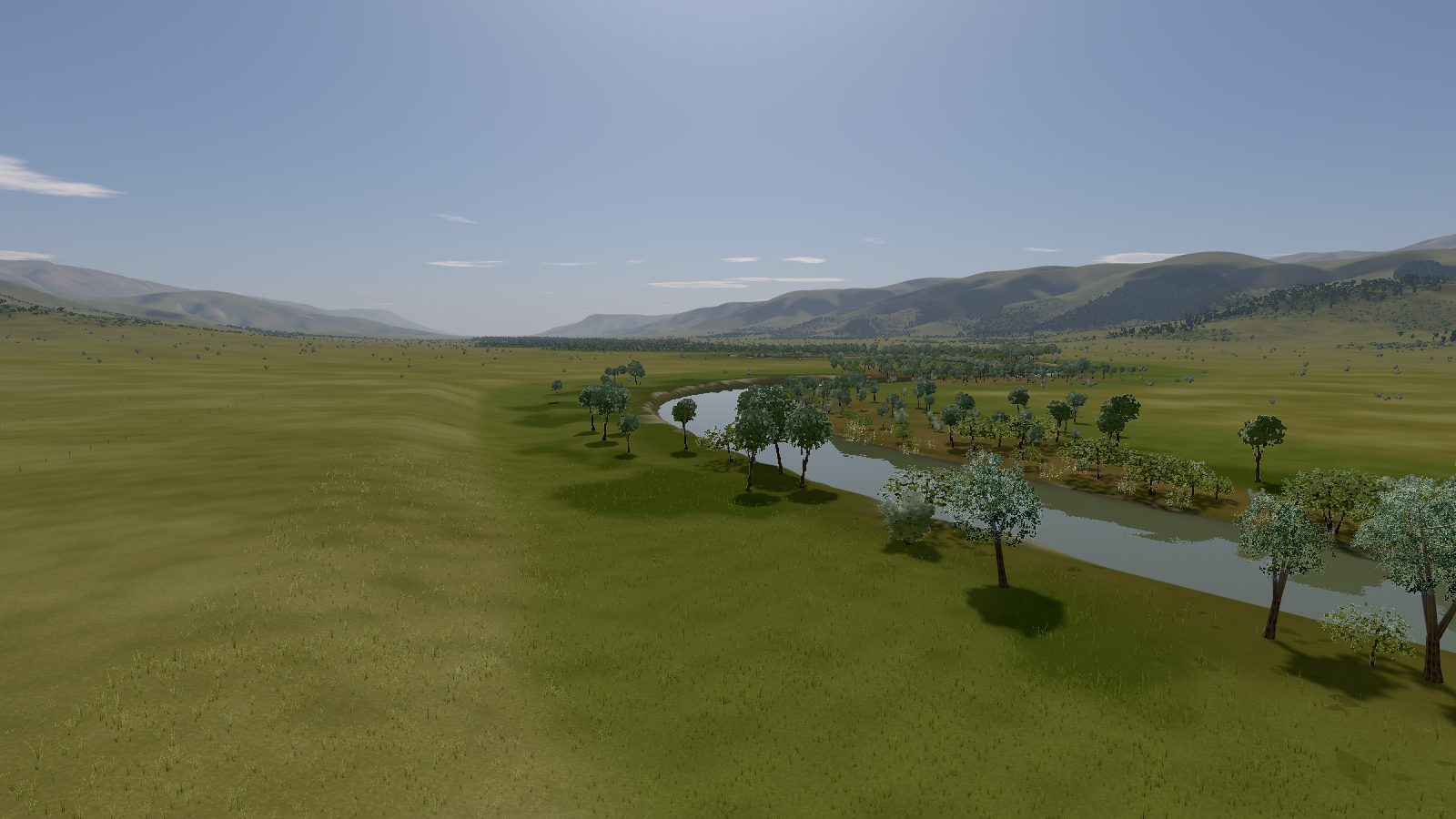
After the flood God promises that "seedtime and harvest, and cold and heat, and summer and winter" shall not cease (Genesis 8:22) text. The Talmud divides the year into those six seasons, two months each, and Rashi gives them in order from the middle of Tishri: seedtime, cold, winter, harvest, summer, heat historical. The game names the season with the date, as in "Year 4 · month 7 · day 21 · harvest", and the valley follows it modelled: the grass greens after the autumn's "first rain" and is greenest after "the latter rain" of spring (Deuteronomy 11:14; Jeremiah 5:24) text, and is cured gold again by summer.
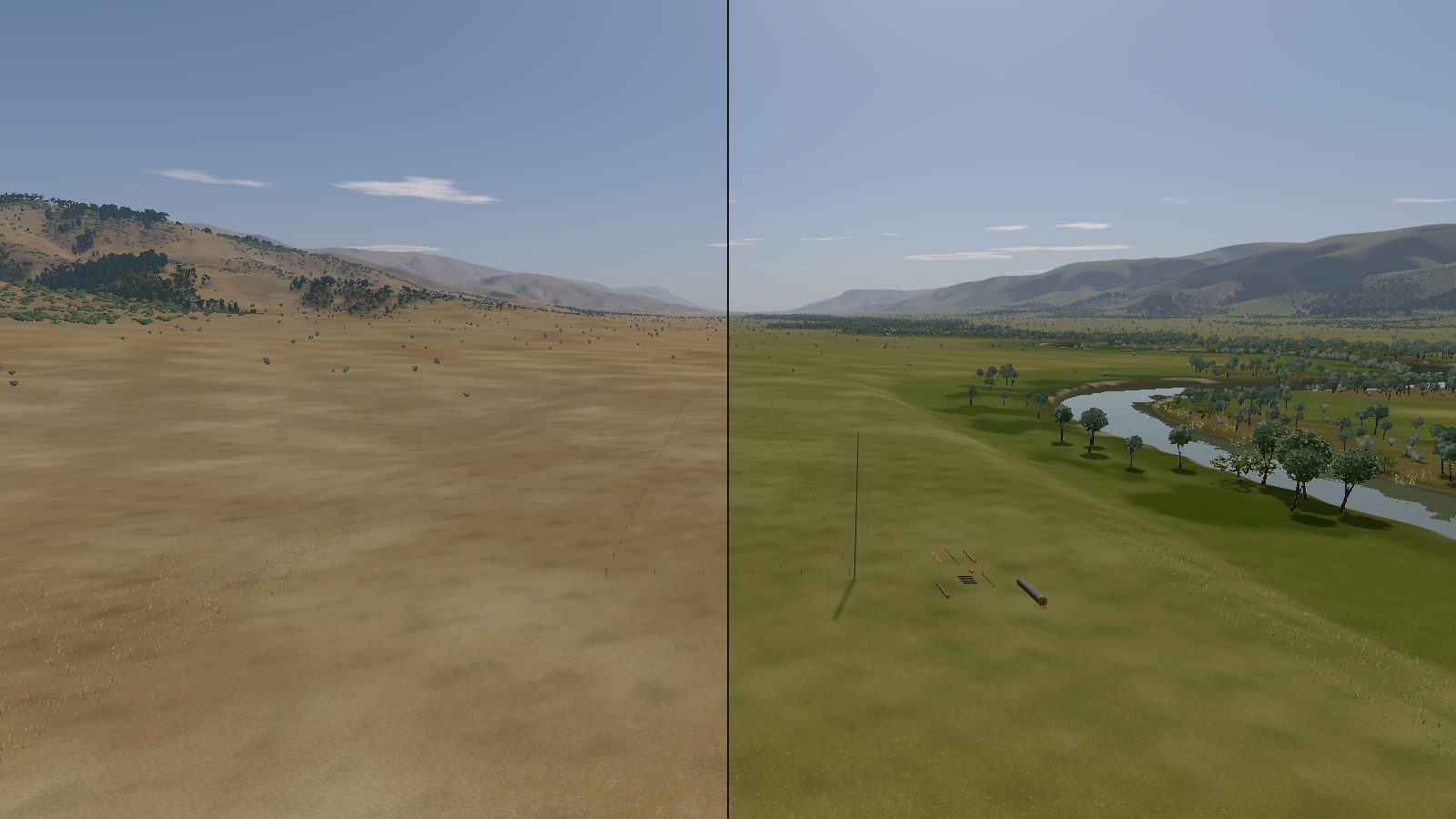
The week is Genesis's too: "on the seventh day God ended his work … and he rested on the seventh day" (Genesis 2:2–3) text, and the house keeps it: no work is done on the seventh day of each week, and the calendar steps over it modelled. The command to keep the sabbath comes much later, at Sinai (Exodus 20:8–11) text, so keeping it during the build is the game's reading.
Marks, not deadlines
All of these dates stand on the calendar as marks modelled. In the year of one, the game's heads-up display names it ("This year: Lamech, Noah's father, dies at 777 (Gen 5:31)"), and the work board (J) lists them all, from Japheth's birth to the flood. None of them is a timer. A house that is not finished by year 121 is not stopped; the ranking simply measures how long its build took.
The days of mourning that will follow Lamech's and Methuselah's deaths, seven as for Jacob (Genesis 50:10) text, are planned, not yet built.
What it means for the game
The calendar runs on work, not on time played: it moves by the real duration of what a house does, in working days of daylight, and a house's date is where its work has brought it modelled. On the game's labour study, a house of eight finishes the reference build in about year 79 to 87, depending on whether it keeps its own herder, a generation before the flood; Noah by himself, with nobody else working, would need about 458 years modelled. These are estimates, and they will move as the work chain is built.
Every house starts on the same day of the same year, with Noah 480 years old and the flood 120 years away. What the house does with the years between is the game.