Oxen: “such as have cattle”
Genesis names cattle-keepers before the flood, and the game gives every house a pair of oxen. How hard an early ox pulls and for how long, what it eats and drinks, why the track under the load matters as much as the animals, and how a player leads, yokes and drives the pair.
The text mentions cattle long before the ark. In the line of Cain, Lamech's wife Adah had a son:
And Adah bare Jabal: he was the father of such as dwell in tents, and of such as have cattle.
Genesis 4:20
The Hebrew word, miqneh, means livestock, the herds a household owns text. The verse says nothing of yokes or ploughs, and it is about Cain's line, not Seth's. But it puts herding into the world Noah lived in, and the game gives every house a pair of oxen, brought to the valley in year 1 and standing by the site from the start, the same for every house modelled.
Archaeologists find the first signs of cattle used for pulling in their foot bones: small changes from light traction at eleven sites in the Balkans, which the authors date by radiocarbon to about 6100–4500 BC archaeology. Egyptian records show oxen hauling heavy loads: in the 22nd year of the pharaoh Ahmose, quarried stone at Tura "was dragged with oxen which his majesty captured … among the Fenkhu" historical.
An early ox
Early cattle were small. Egypt's Predynastic cattle stood 116 to 122 centimetres at the withers archaeology, and the Baladi, the native cattle of the Levant today, are cows of 200 to 300 kilograms study. Modern draught oxen weigh 500 to 650 study. The game's ox weighs 350 kilograms and stands about 1.2 metres at the withers, within a range of 250 to 400 modelled.
How hard an ox pulls depends on how long it must keep pulling. The FAO's study of logging with oxen gives 10 to 14 % of body weight at a walk of 2.5 to 4 kilometres an hour study. A guide to animal power gives about an eighth of body weight held for three to six hours a day in the tropics, about two-thirds for a moment, and a pair losing at least 7.5 % against two oxen pulling alone study. Forestry crews skidding logs with oxen "stop every 50 to 100 meters to recover" study.
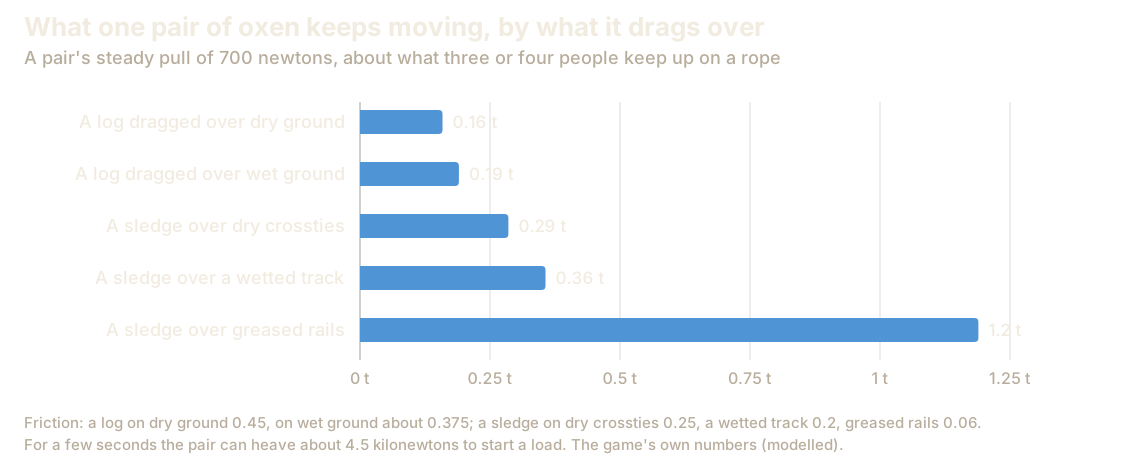
The game takes 11 % of body weight for each ox, less the pair's loss: about 700 newtons held steady, roughly what three or four people keep up on a rope, and about 4,500 newtons for a few seconds to start a load modelled. The pair walks at 0.7 metres a second loaded and 0.9 empty, hauls 5 hours a day and works at most 200 days a year study modelled.
The track matters as much as the oxen
A pull of 700 newtons does not go far against friction. Dragged over dry ground, a log needs about 45 % of its weight to keep it moving, so the pair keeps about 0.16 tonnes going. On a sledge over greased rails it needs about 6 %, and the same pair keeps 1.2 tonnes going modelled.
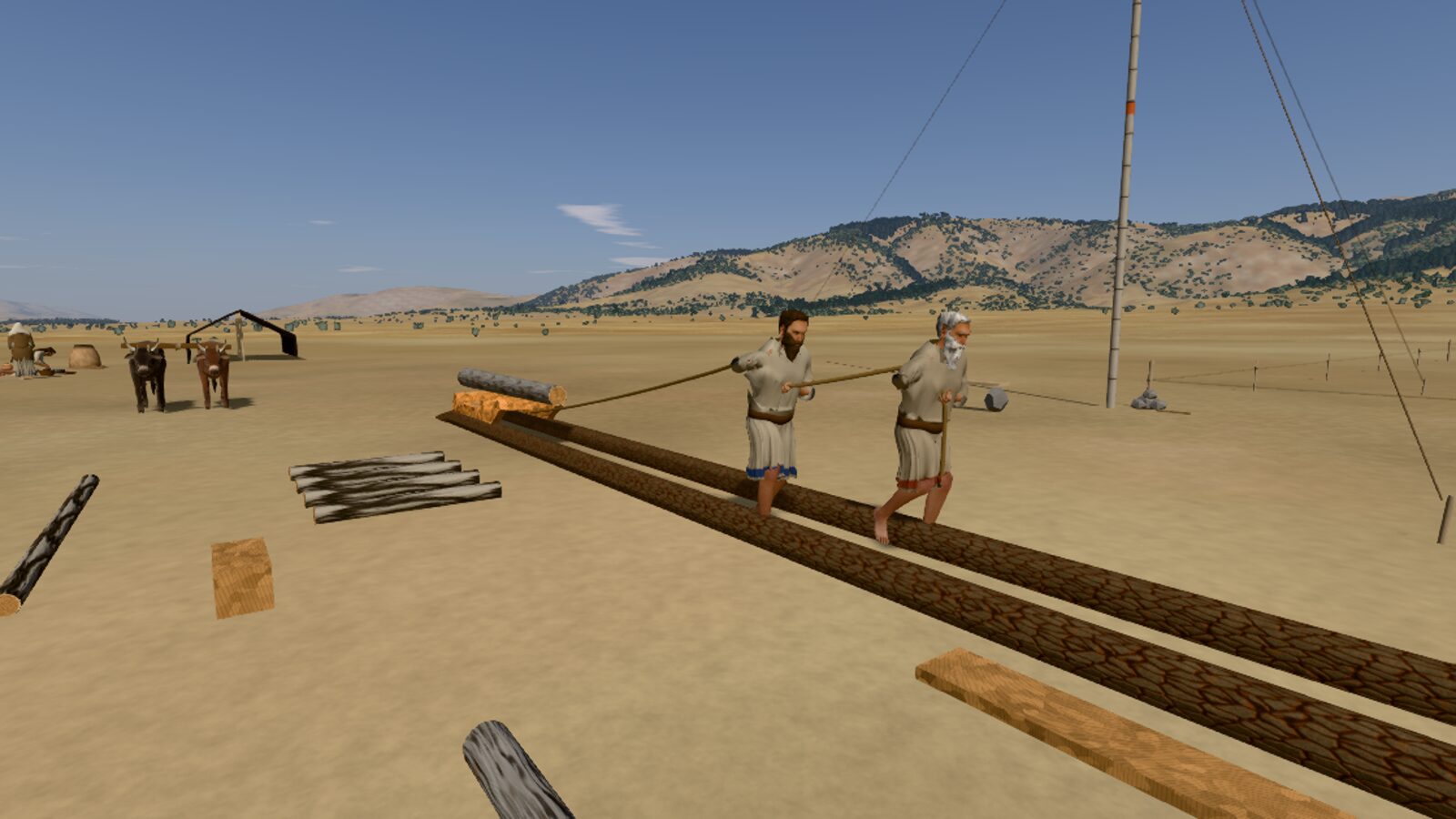
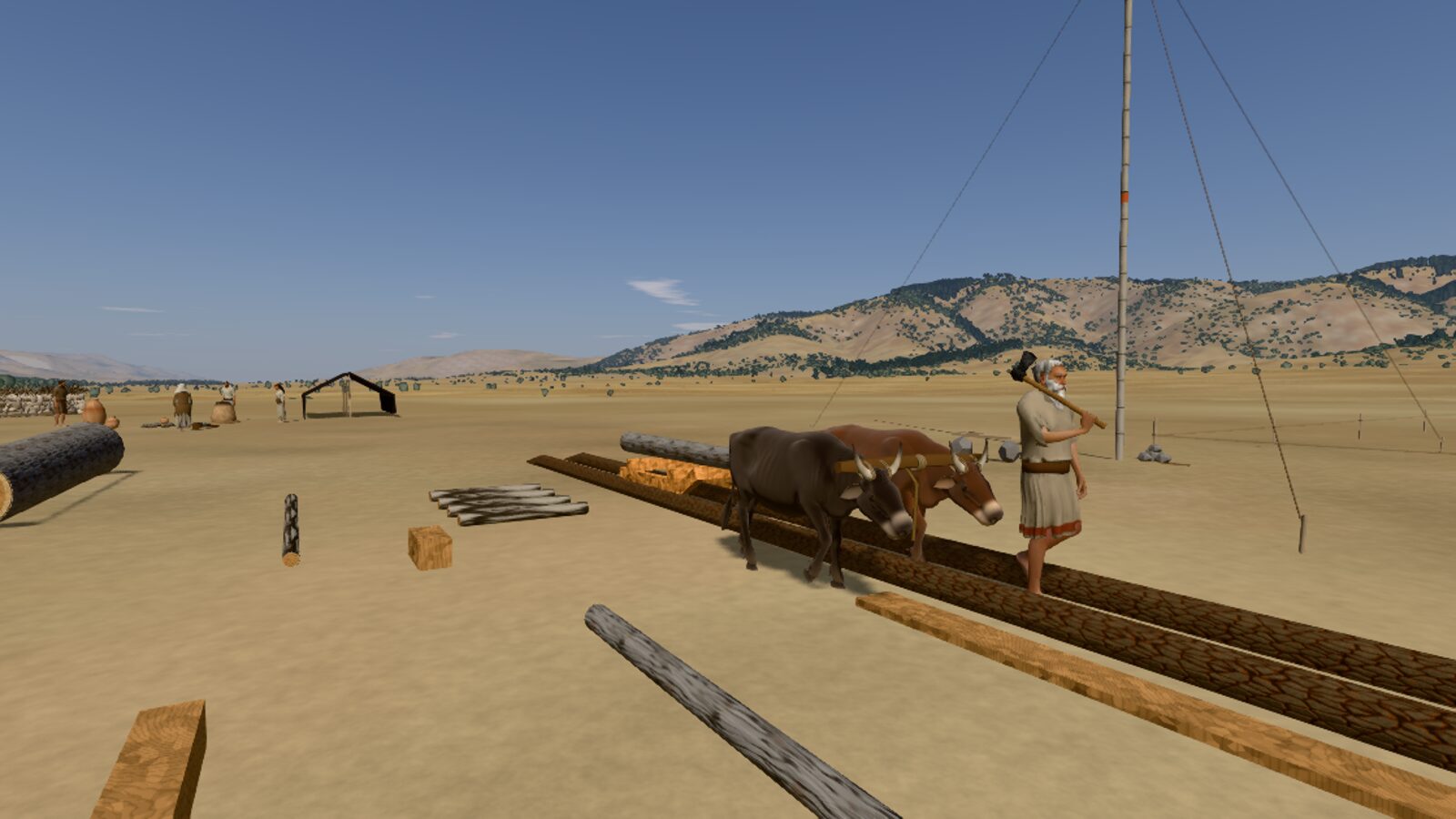
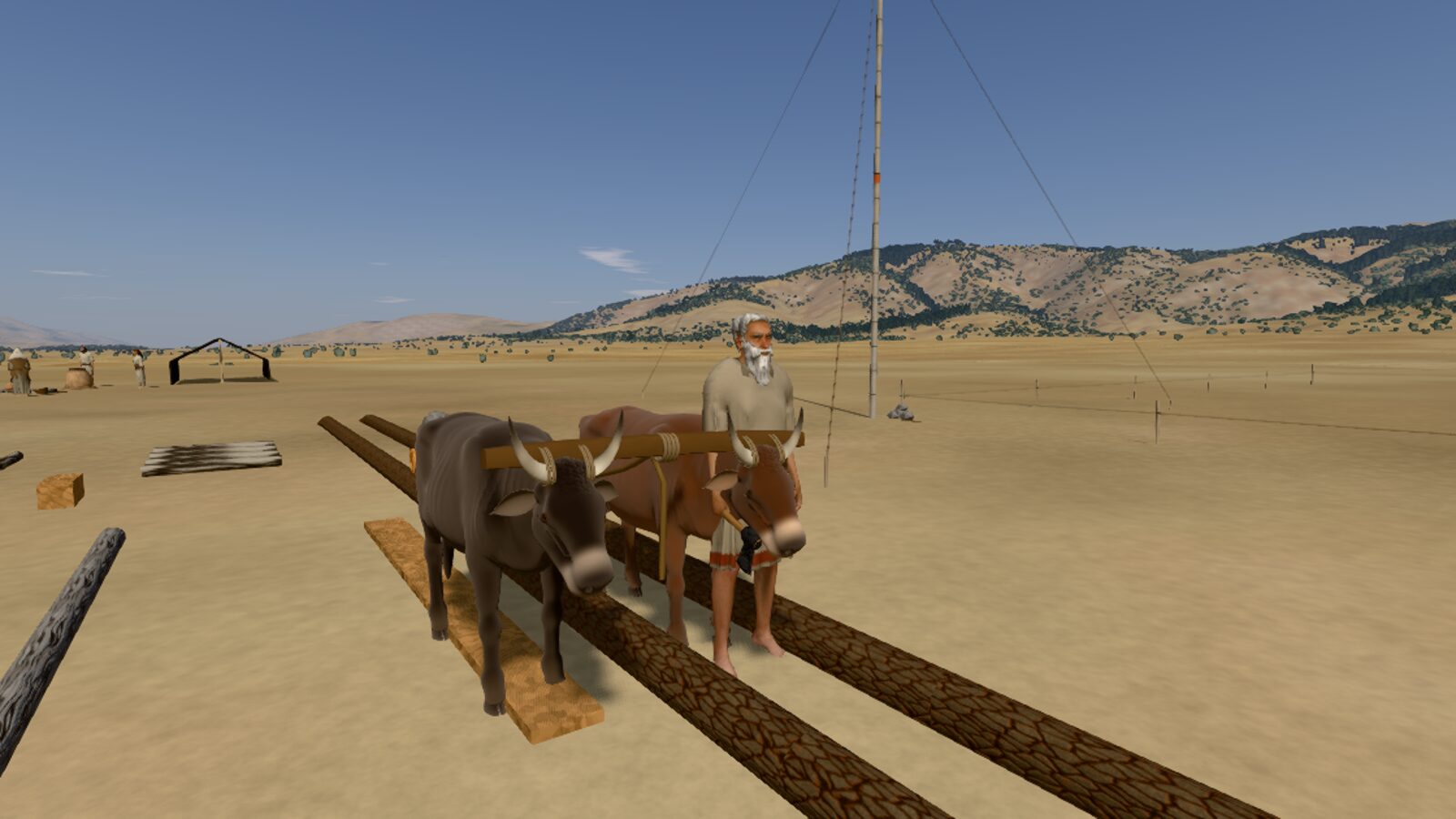
That is why the oxen and the tracks of the previous page belong together. The pair in the picture at the top keeps the sledge and its log, about 320 kilograms, moving on greased rails by itself modelled.
Their keep
An ox at work eats about 2.5 to 3 kilograms of dry fodder a day for each 100 kilograms it weighs, and a mature ox drinks about 45 litres of water study. The game gives each ox 9 kilograms of fodder and 45 litres of water a day, so the pair needs 18 kilograms and 90 litres modelled. On each working day the pair works, three-quarters of an hour of someone's work brings that to it, and it goes on the driver's calendar modelled.
The FAO's study reckons an ox's working life at six years study. In the game the first pair works the whole build for now; their ageing and replacement are on the list to build modelled.
In the game
A player walks up to the pair and takes its lead; it follows at its own pace. At the end of a log, the front of a sledge or a pile, the same key yokes it there, ten minutes of the driver's work modelled. Then walking on ahead drives it: the pair leans into the yoke, the load starts on the pair's brief heave, and it follows at the pair's pace. If someone is on a rope as well, their pull adds to the pair's modelled.
The driver pulls no rope, but his time is counted at the pair's day: five hours of hauling in his eight, so each second of driving goes on his calendar as 1.6 seconds of work, with the game's usual 15 % for the rest of the overhead on top modelled. A load moved a metre with the pair leads a haul batch with the oxen, and the batch counts the pair's pull beside the crew's, walks each load at the pair's pace and charges their care once on each working day modelled. Yoking and driving off a load is the slowest lead in the game to do by hand, about two minutes of play modelled. The same pair ploughs the house's fields and draws the threshing sledge over its grain.
What it means for the ark
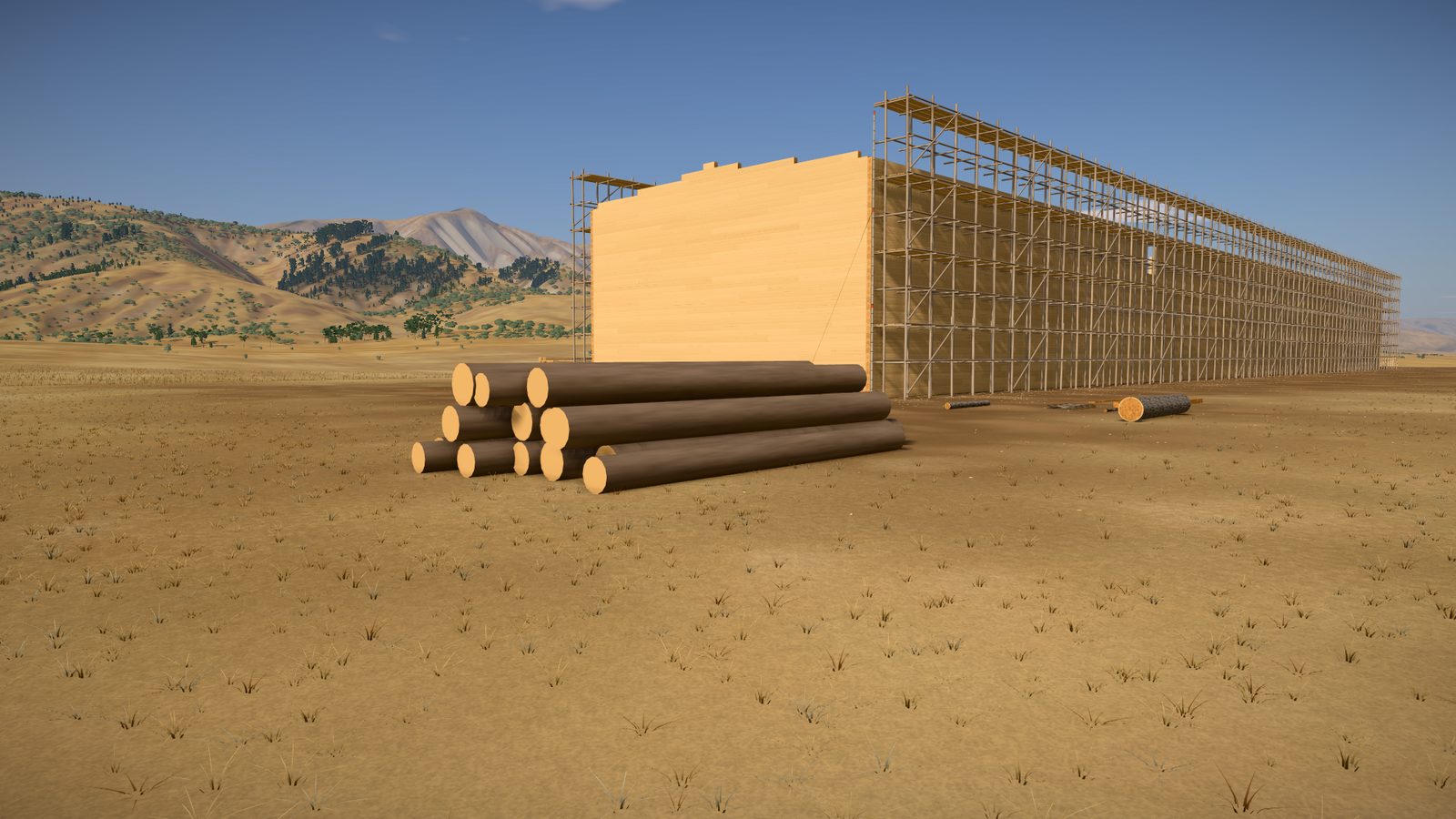
Hauling the reference ark's timber two kilometres overland with oxen adds about 11 % to the whole build, against floating it down the river; with people alone, no oxen, the whole build takes about twice as long modelled. Two small oxen that pull like three or four people, every working day, for decades, are one of the largest choices a house makes, and like the track they change how many people the next load needs.