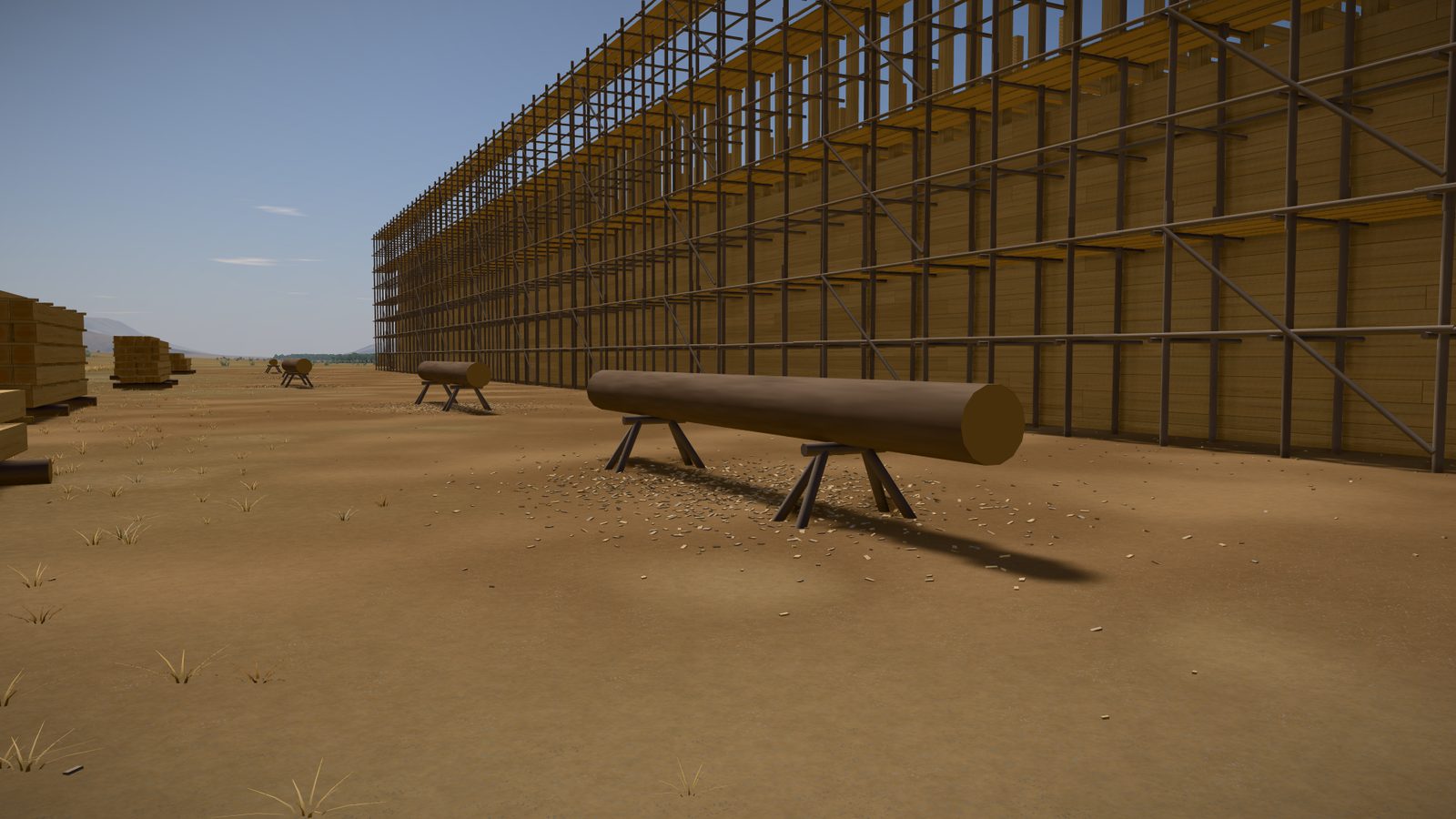
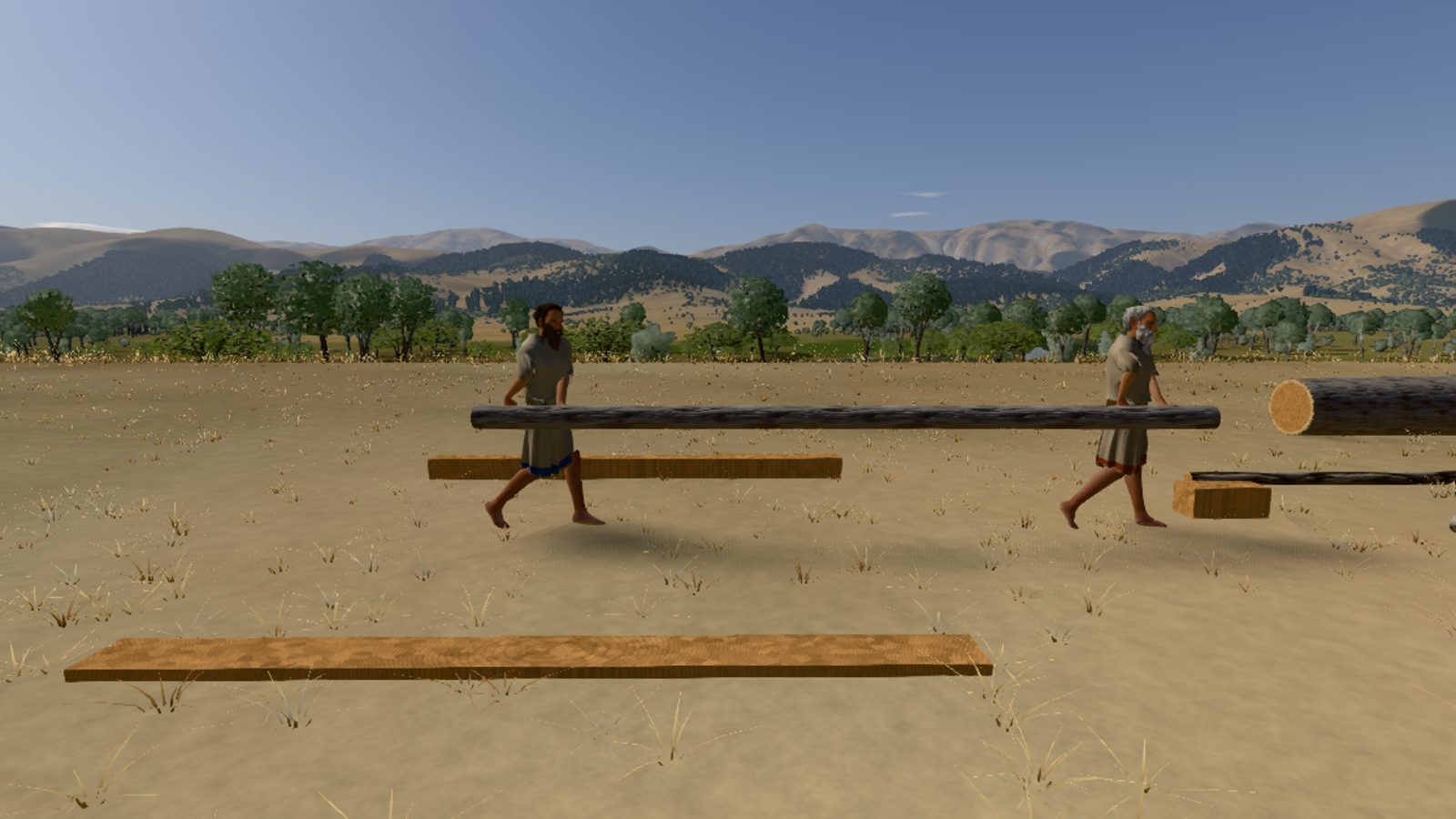
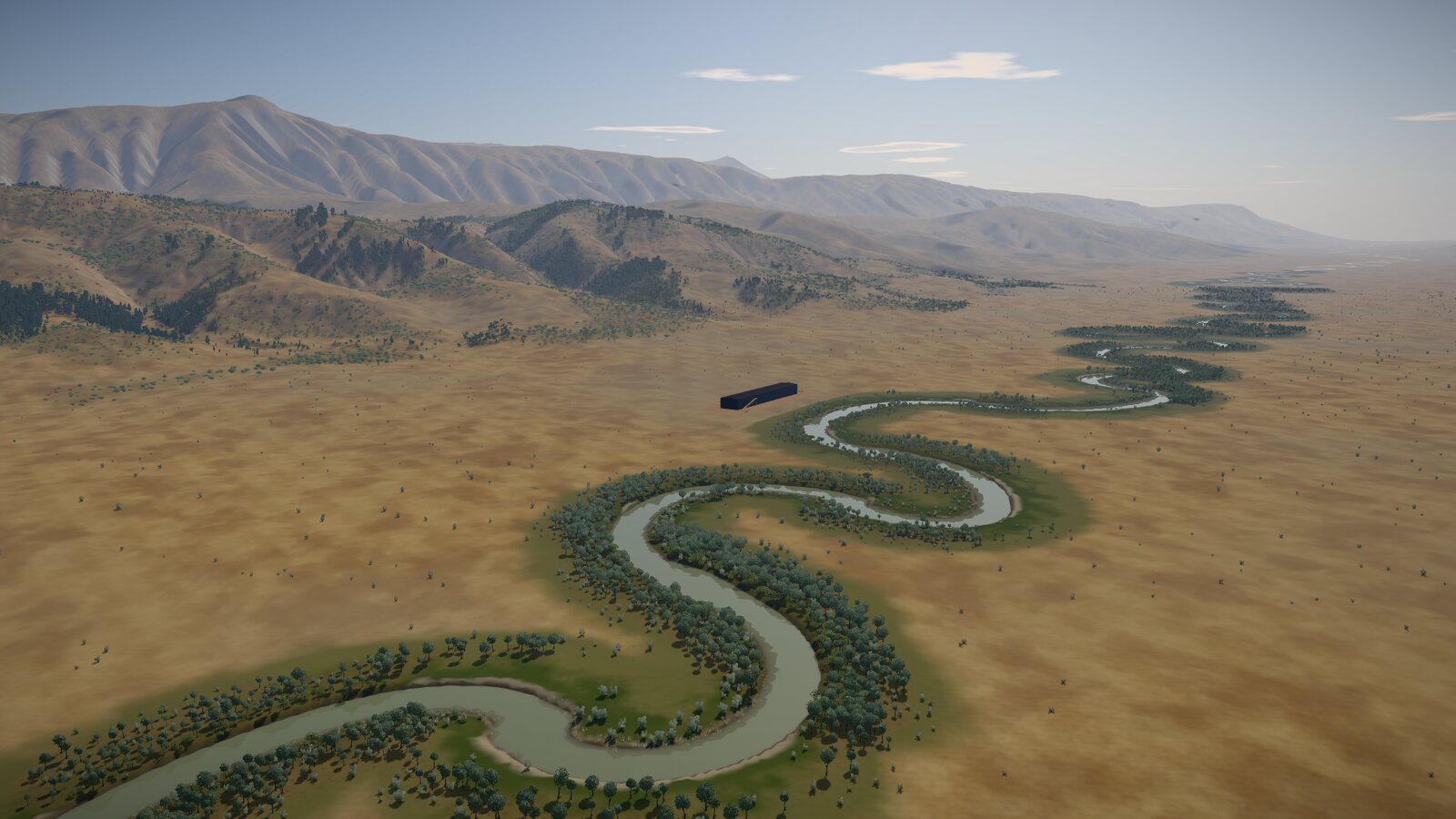
Hew in the forest, or haul the whole log?
Squaring a log where it falls sheds about a third of its weight. Whether to square timber in the forest or haul it whole to the yard was a real choice for timber trades from ancient Lebanon to nineteenth-century Canada, and the game will make it a choice for every house.
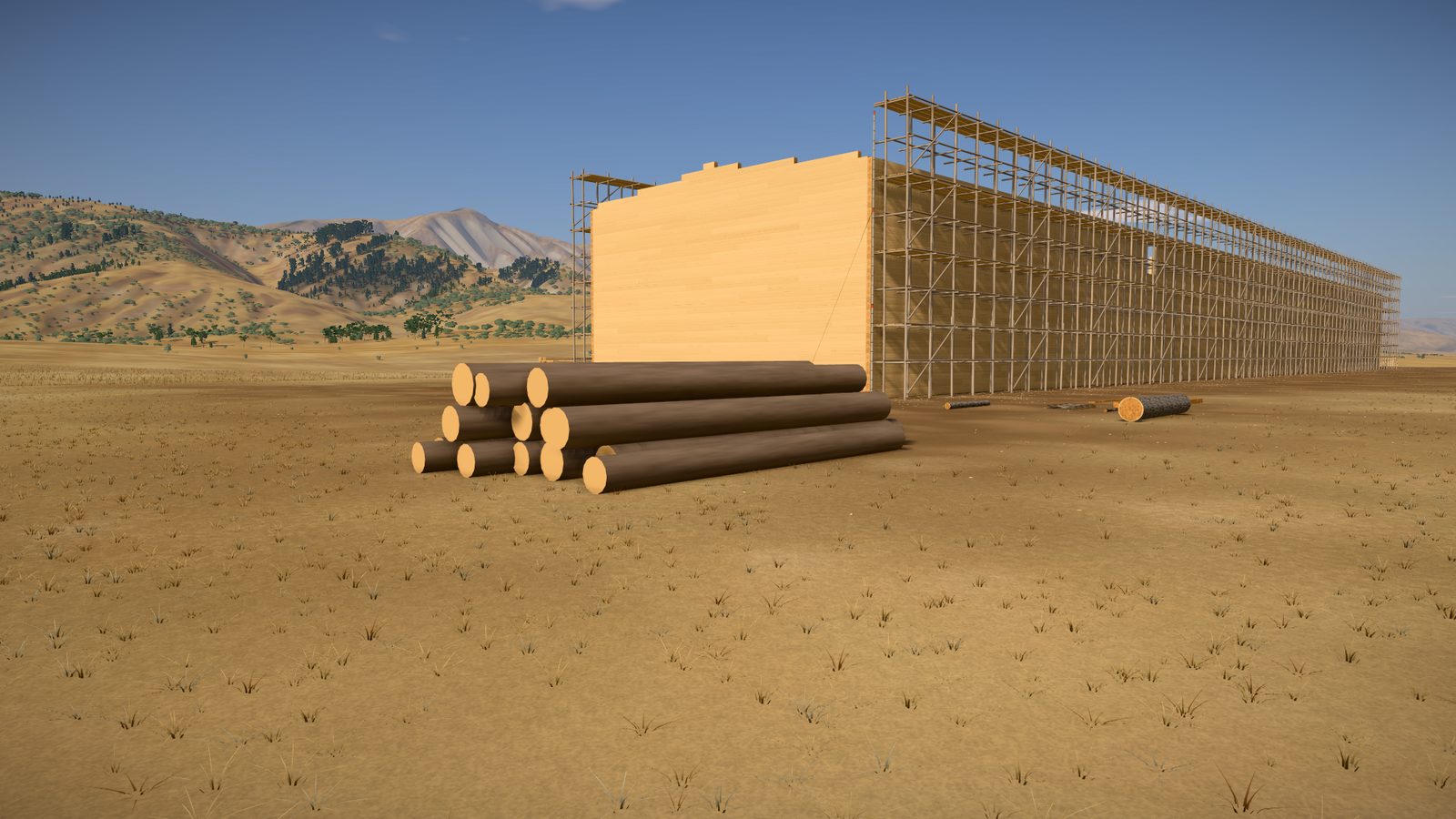
A felled cypress is a long, round, heavy thing lying on a hillside two kilometres from where the ark is being built. Before it can be used it must be squared, and before it can be used there it must be moved. The question is the order. Do you hew it square where it fell and carry only the beam, or haul the whole log to the yard and hew it there?
It sounds like a detail. On the scale of the ark, with about 7,900 trees to move, it is a choice between hauling every log whole and hauling a beam about a third lighter.
A third of the weight
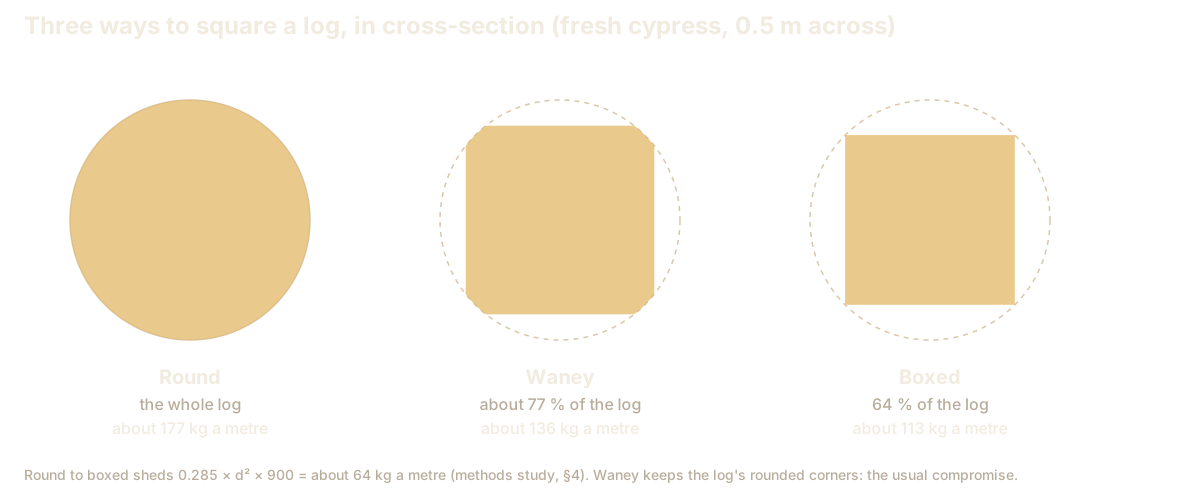
A square beam cut from a round log keeps 2/π of it, about 64 %, if the log were a perfect cylinder modelled. Real logs taper, and a beam squared to the small end of a tapering log keeps less, 42 to 50 % modelled. Squaring leaves the rest in the forest as slabs and chips.
For a log of fresh cypress half a metre across, that is the difference between about 177 and 113 kilograms a metre: 64 kilograms of every metre need not be moved at all modelled. For a 10-metre log it is more than half a tonne.
Hewing moves, it doesn't add
The surprise is that hewing in the forest costs no extra work modelled. The ark needs squared timber anyway, so the faces have to be hewn somewhere. A 10-metre cypress log half a metre across needs about 14 square metres of hewn face, about 7 person-hours at the game's rate, whether it is hewn at the stump or at the yard.
What hewing at the stump saves is hauling. Taking 0.64 tonnes less off that one log saves, for every kilometre it travels, about 22 person-hours if people drag it over the ground, about 10 on a wetted timber track, 5 on greased rails, and about 6 with a pair of oxen modelled, by the hauling rates the game's research works out from experiments and forestry studies.
What it costs
Hewing at the stump has its prices too modelled:
- The slabs stay in the forest. At the yard they would have been fuel for the fires that heat the pitch.
- The sizes are fixed early. A beam has to be hewn to its final size before anyone knows exactly where it will go.
- A mistake can't be undone. A beam hewn too small cannot be re-cut from the waste, because the waste is lying on a hillside.
There is a middle way: waney timber, flattened on four sides but with the rounded corners of the log left on. It keeps about 75 to 78 % of the log modelled. The British Hoppus measure, from 1736, counted a quarter of the girth squared times the length as a log's usable timber, 78.5 % of its true volume historical.
How the timber trades did it
The choice is old, and it was made both ways.
In the Egyptian Report of Wenamun, from about 1070 BC, timber is felled in Lebanon, and "he loaded the keel, the prow-piece, and the stern-piece, together with four other hewn logs" historical. In the same story, "three hundred men and three hundred oxen" felled timber that lay through the winter and was dragged to the shore in summer historical.
In nineteenth-century Canada, timber for Britain was squared in the woods, because "only square timber was shipped to Britain because it could be tightly packed in a ship's hold" study. It was costly: "Squaring timber was an extremely wasteful process. About thirty percent of the wood of each squared tree was lost … a timber-squarer receiving twice the wages of the regular lumberjack" historical. Waney timber, "roughly octagonal in shape and much less wasteful than truly square timber", was the other kind study, and a crew of three worked together "in felling, bucking, squaring the log and skidding" study.
On the Baltic, oak was split and floated as half-products, "much more convenient and faster than floating complete logs, especially in the case of relative heavy oak stems" study. And on the Neckar in the fifteenth century, timber was floated down to Tübingen "already hewn square and cut to size" historical.
The valley's version
In House of Noah the choice comes with the valley modelled. Near the building site the cypress are young and small; the big ones stand on the slopes further out, the nearest groves about two kilometres away. A big tree gives the long, thick beams the ark needs, and weighs the most.
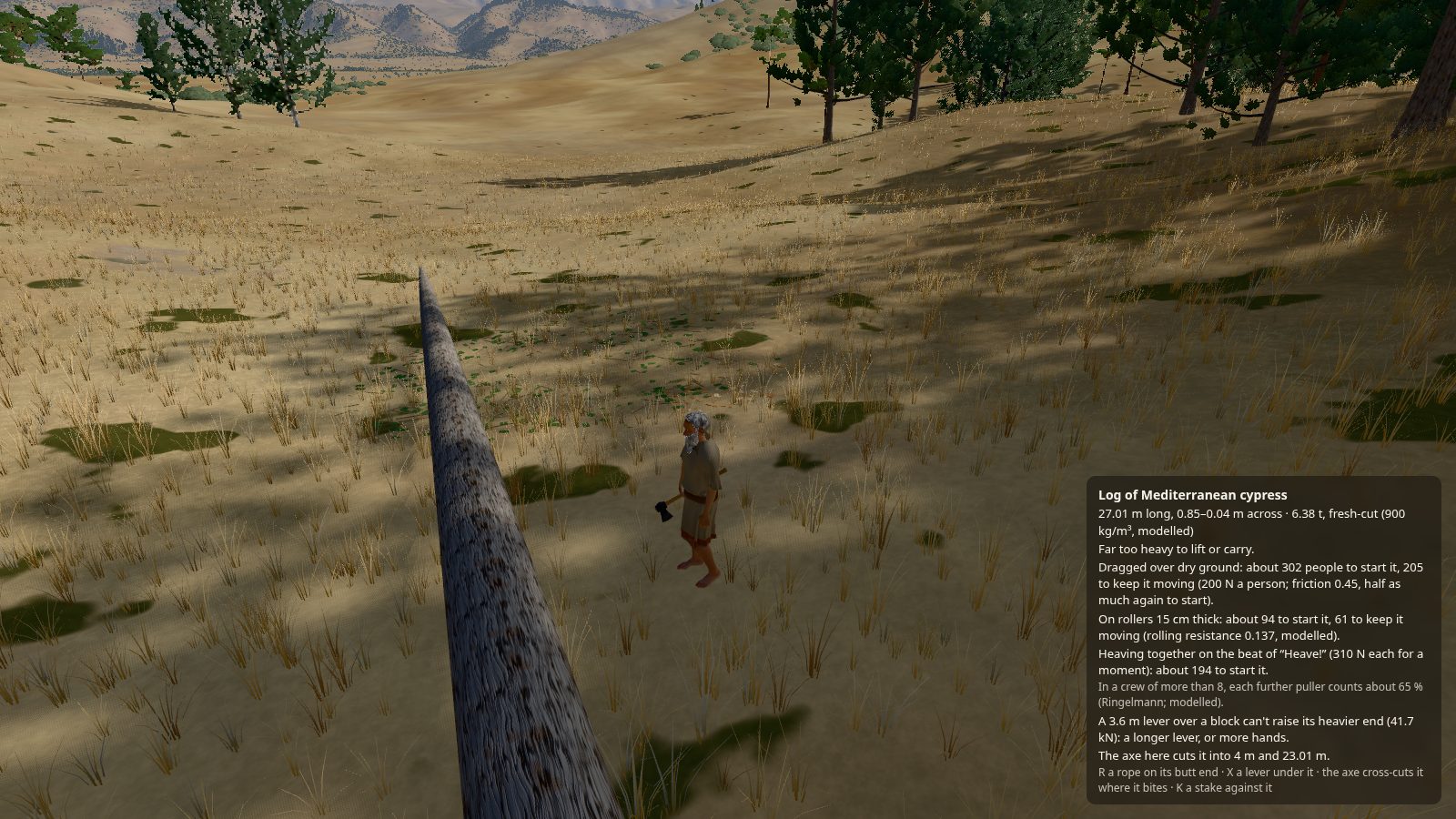
The game's demo tree shows the problem. Felled and limbed, its stem is a single log 27 metres long, weighing 6.4 tonnes fresh, and the game says plainly what moving it would take: about 300 people to start it over dry ground modelled.
How the timber moves matters even more than where it is hewn. In the game's labour study, hauling the reference ark's timber by river costs about 46,000 person-hours; hauling it two kilometres overland with oxen adds 11 % to the whole build, and with people alone, no oxen, the whole build takes about twice as long modelled.
What the game will offer
Converting and hauling are planned for the game's next phase, not yet built modelled. The research proposes making the stump a real decision: three cuts to choose from where the tree falls, round, waney or boxed, with weights of 1, 0.77 and 0.64 of the round log, less on a tapering one, and the hewn faces counted as the labour modelled. Each choice changes how many people, oxen or rafts the next step needs, and what is left at the yard for the fires.
Nothing in the final check asks where a beam was hewn. A house that hews in the forest and one that hauls whole logs can both build an ark that passes. They will just spend their years differently.