A door in the side
Genesis puts the ark's one door in its side and says nothing more. Rashi's reason for the side, and where, how big and how high the game's reference ark sets its door, above the water it would float in.
The ark's door gets half a line in Genesis, between the window and the storeys:
A window shalt thou make to the ark, and in a cubit shalt thou finish it above; and the door of the ark shalt thou set in the side thereof; with lower, second, and third stories shalt thou make it.
Genesis 6:16 text
One door, set in the side. That is the whole instruction text. The verse does not say which side, where along the 300 cubits, how big or how high. In House of Noah a door has to stand somewhere, so this page is about an old reason for the side, and where our reference ark puts its door.
What the text gives
The verse speaks of one door, "the door", and puts it "in the side" text, not in the roof. The animals come to Noah (Genesis 6:20; 7:9), Noah's family goes in with him (7:13), and then comes the only line about the door being closed: "the LORD shut him in" (7:16) text.
Genesis never says how the door was made, hung or fastened. The one time it is shut, it is not Noah who shuts it.
Why the side
Rashi, the great 11th-century commentator, has a short note on the words "in the side": "in order that the rain might not penetrate" historical.
It reads naturally beside his note on the roof just before it, a covering that "slanted upwards so that it narrowed at the top to a cubit, in order that the water should run off on both sides" historical (see A roof that sheds the rain). Read together, the reasoning is a builder's. Rain falls on the top, so the top should shed it and have no door in it. A hatch in the roof would face forty days and forty nights of rain (Genesis 7:12) text. A door in the wall, under the eaves, faces sideways, and the water runs down past it.
Rashi also says what the three storeys were for: the top for people, the middle for animals, the bottom for refuse, after the Talmud (Sanhedrin 108b) historical. He does not say which storey the door opened onto.
The reference ark's door
The game's reference ark is one sound way of building the ark among several, and its door is one reading of the verse. Here it is modelled:
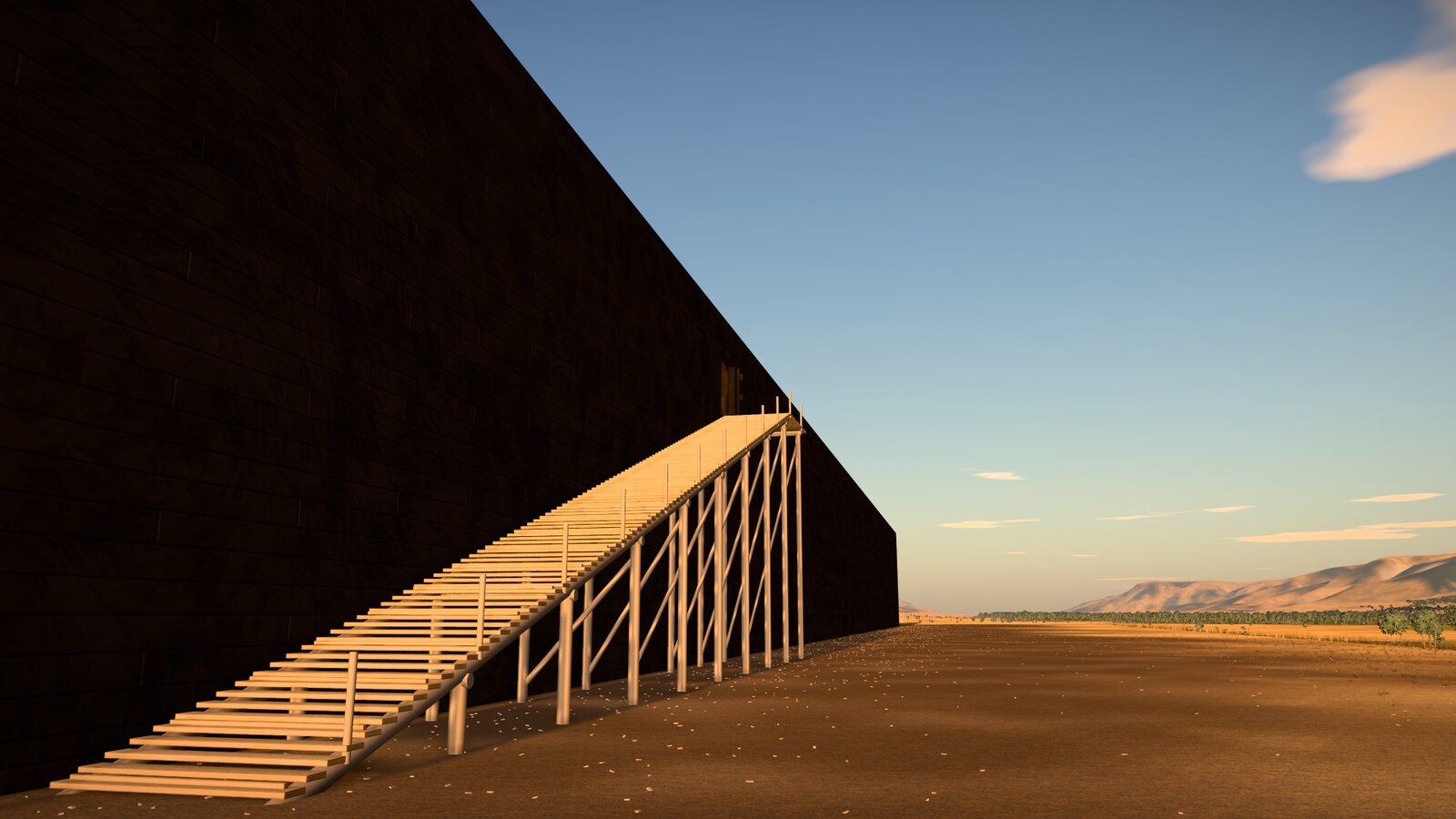
- The side. The river side, where the site's first stake and the marked pole stand. The text says only "the side", so this is a choice, not a finding.
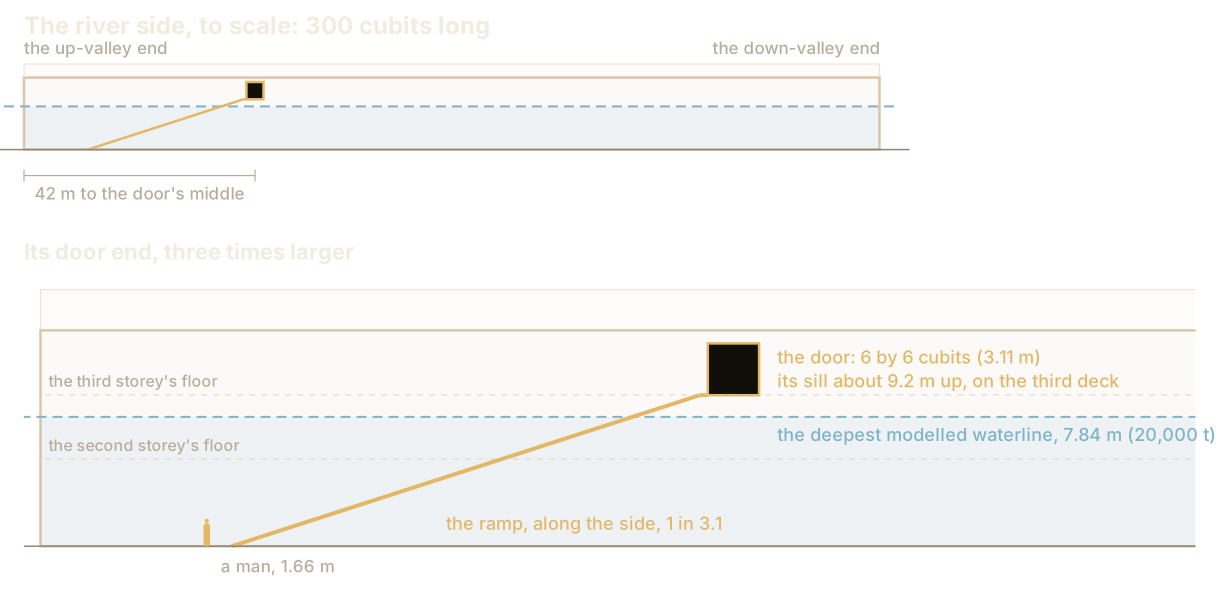
- Along the length. Its centre is 42 metres from the up-valley end, about a quarter of the way along. The window that opens (Genesis 8:6), a hatch in the roof, is near it at 47.5 metres, at the end where the family would live.
- The size. 6 cubits wide and 6 high, about 3.1 metres square: room for large animals and their keepers. Which animals go aboard is for Part 2 of the game, not designed yet, so the door is sized for large animals in general.
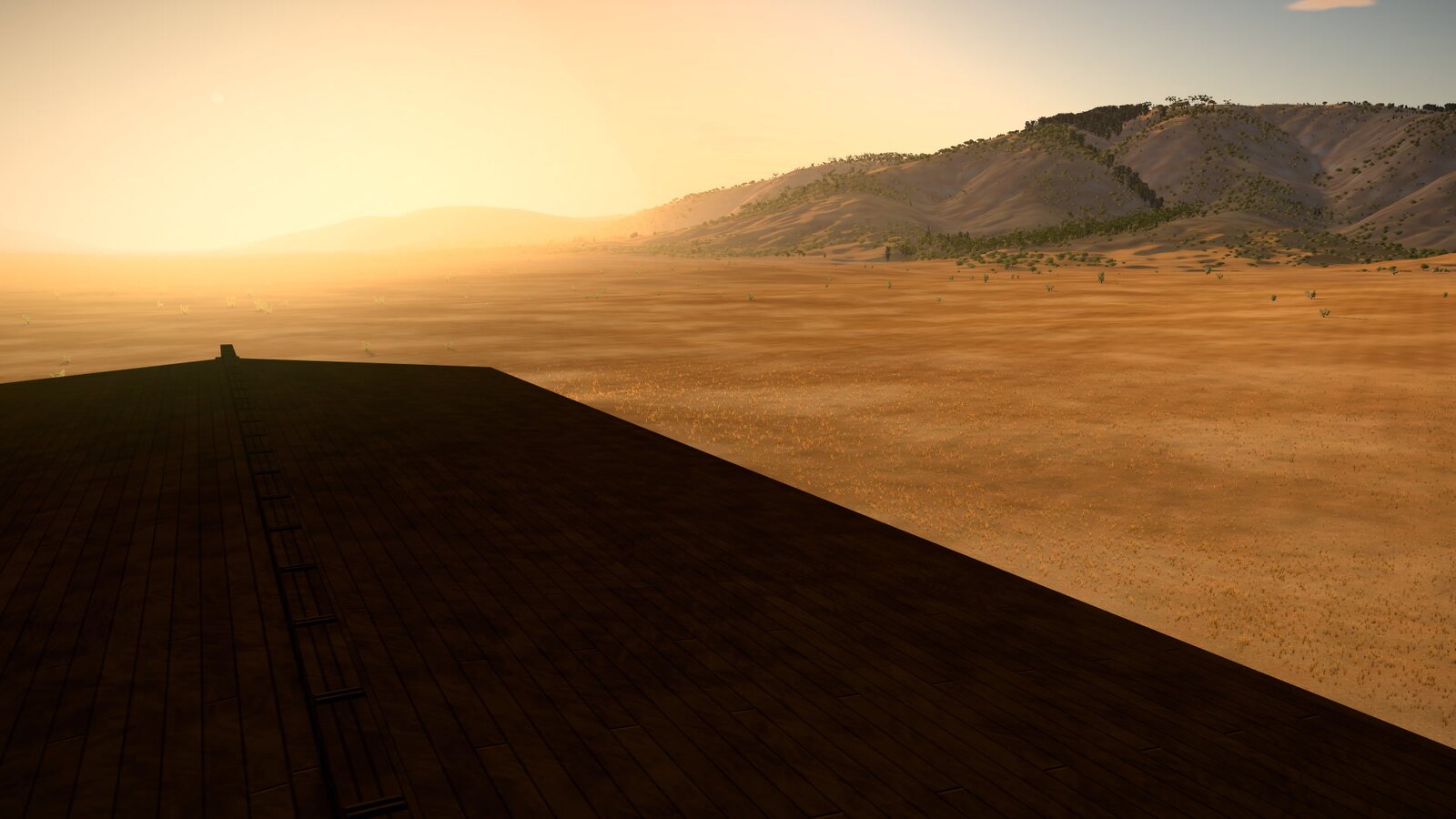
- The height. The sill lies on the third deck, the floor of the top storey, at 17½ cubits plus 0.1 metre: about 9.2 metres above the bottom of the hull. Its head sits just under the eaves, 13.08 metres up.
The third deck's height is itself a result of the door. The structure study put it at two thirds of the depth, 20 cubits. Under the sloping roof the sides stop at the eaves, and a 6-cubit door on a deck at 20 cubits would have run past them, so the deck was lowered to 17½ cubits modelled. Where the decks go is only a guide; a house sets its own.
Why so high
The reason for the third deck is the water. The game's structure study worked out how deep the reference hull would float in still water modelled: 3.00 metres empty, 5.42 metres with 10,000 tonnes aboard, and 7.84 metres with 20,000 tonnes, the most it models. Nobody knows the real cargo, which is Part 2's to design.
The second deck sits a third of the way up, at about 5.2 metres. With the heaviest cargo that deck is under water, and a door standing on it would have most of its height below the waterline (our arithmetic modelled). On the third deck, the sill stands about 1.3 metres above even the deepest waterline the study gives.
The way in
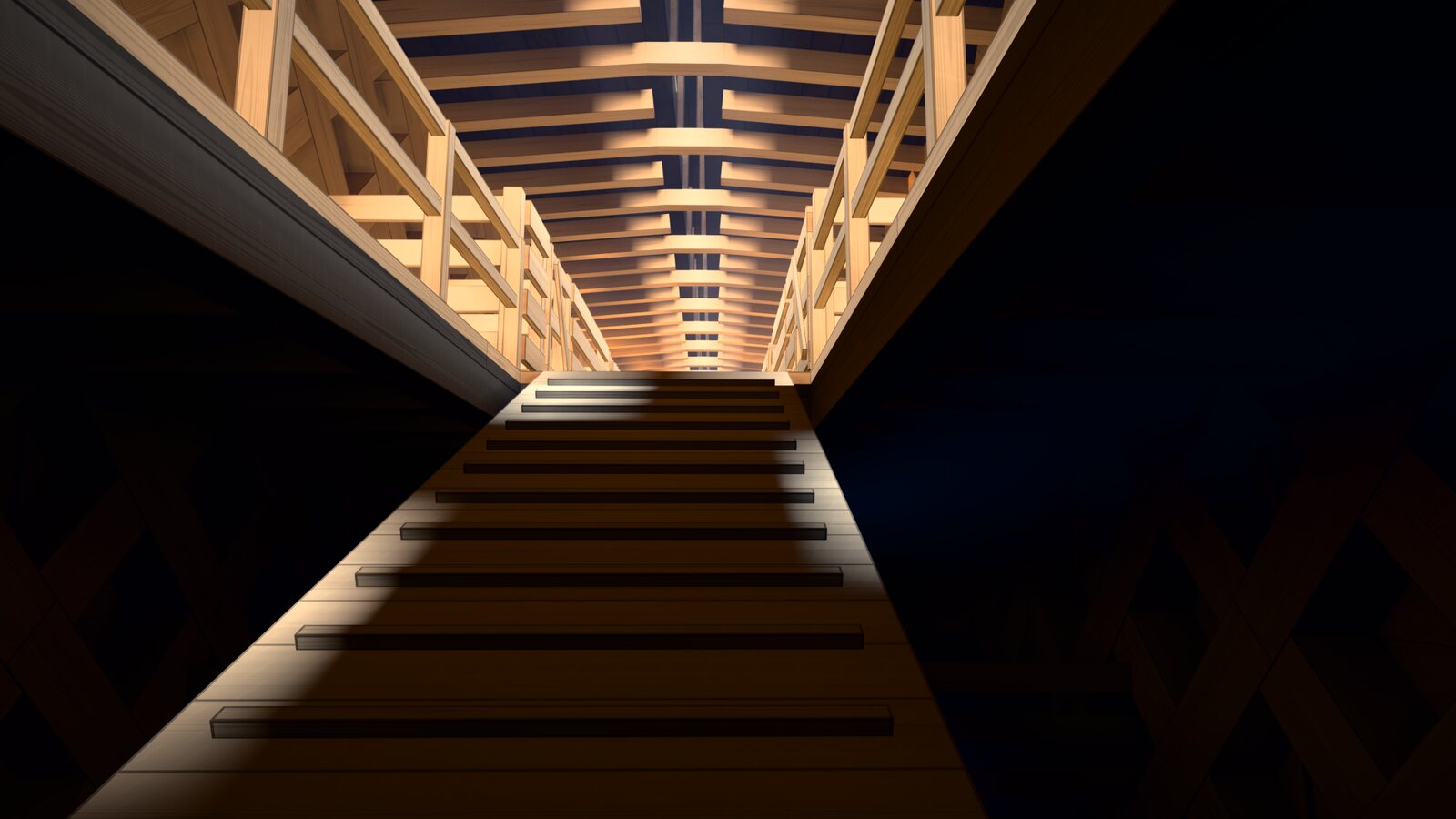
Outside, a ramp climbs to the sill at 1 in 3.1, about 18 degrees. To rise 9.2 metres it runs about 28 metres along the side of the hull, toward the up-valley end (our arithmetic modelled). In the game, ramps, scaffolding and ladders are a house's own work, with their own timber and labour.
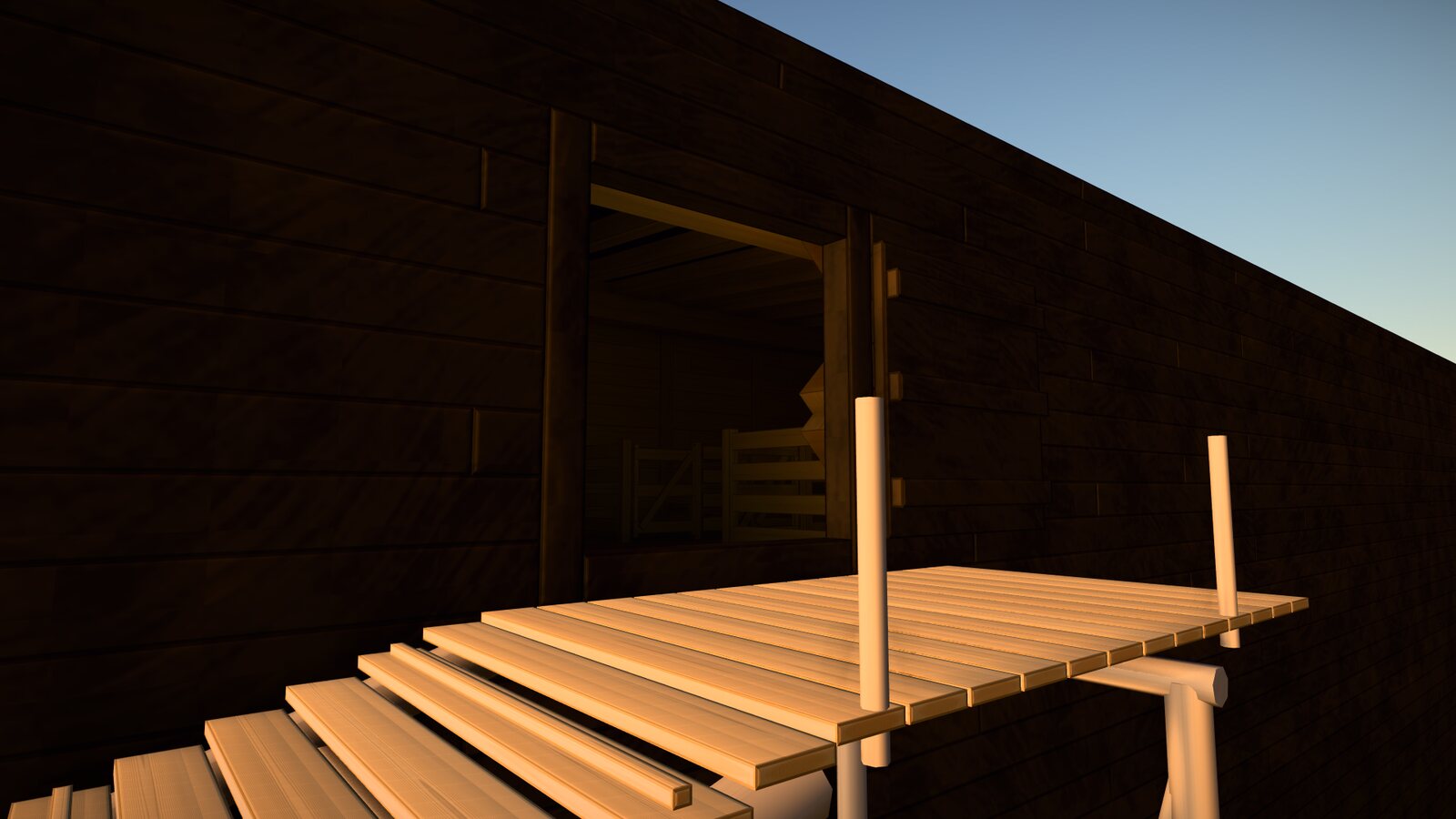
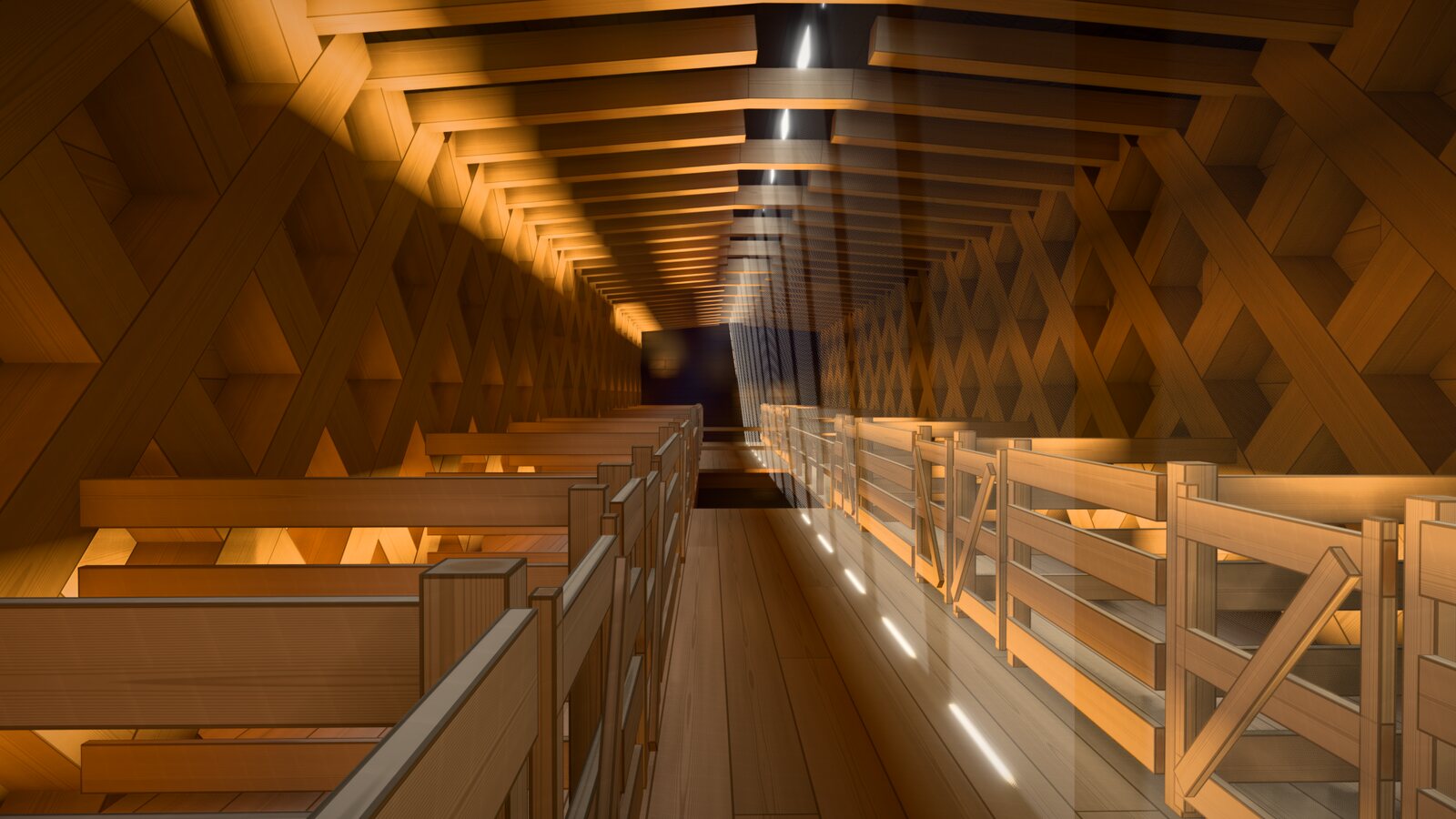
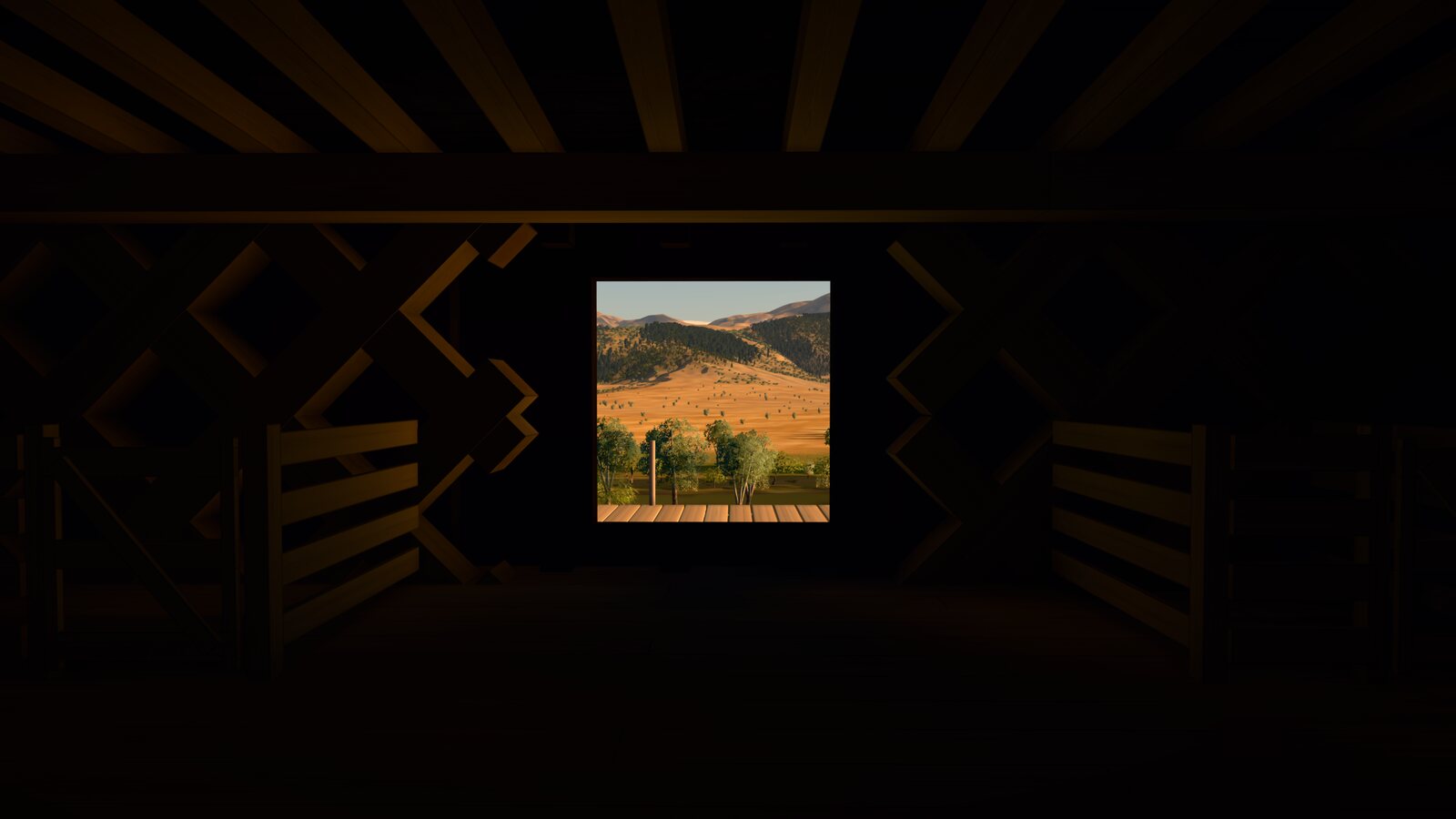
Through the door you are on the third storey, in an aisle 2.4 metres wide between rows of pens, wide enough for a keeper with a load to pass a led animal modelled. Two long walls divide each storey into three bays, and across from the door a doorway 2.1 metres wide and 3 metres high goes through each, so every bay can be reached modelled. Near the up-valley end, ramps 2 metres wide go down to the storeys below at 1 in 2.5, and near the other end there are ladders for the keepers modelled.
What a hole costs a hull
A door is a hole, and in a ship the sides are not just walls. The structure study treats the ark as a hollow girder: the roof and the bottom are its flanges, and the two sides are its webs, which carry the shear between them as the hull bends in the waves modelled. In the reference ark most of that work is done by X-shaped diagonal braces, called riders, in the sides and in the two long walls modelled. The door takes a piece about 3.1 metres square out of one of those webs, high up near the roof, and the doorways take smaller pieces out of the walls.
What that costs, we do not know yet. The study is a first-order calculation that treats the hull as a beam, and it lists "three-dimensional effects at the ends and around the door" among the things it leaves out modelled. The doorways in the walls are left for the final structural check as well. The check the study asks for builds the girder from the timbers a house actually placed, counting only those continuous along the length, so a house's door will be part of what it measures.
The work of the door itself is small: the labour study puts the door and the window together at about 600 hours, out of about 970,000 for the whole ark modelled.
What it means for the game
The final check reads the door the way Genesis gives it: a door in the side text. Which side, where along it, how big and how high are the house's to decide. The check then judges the ark that was built, its structure, watertightness and stability, not the way it got there. Our door is one answer, with its reasons: above the water with a heavy cargo, wide enough for large animals, near the end where the family would live. A house may well find a better one.
The door will also have its moment. Setting it in the side is one of the milestones the game is to mark with the verse it fulfils, and among the good surprises planned are onlookers who stay to watch the door being hung modelled. When the time comes, as Genesis tells it, the closing of the door is not the family's to do.