Notch, hinge and back cut: making a tree fall where you want
A tree felled with an axe goes where its cuts send it, or where its lean and the wind do. The faller's three cuts, what each one does, what goes wrong, and how the game works out every fall from the wood itself.
Anyone can chop at a tree until it falls. Making it fall where you want, and not on yourself, is a craft, and the game asks for it. The United States Forest Service's axe manual puts the heart of it in one line:
Never cut through the hinge wood! If you do, you will have absolutely no control over the direction the tree will fall.
Weisgerber and Vachowski, An Ax to Grind (USDA Forest Service, 1999), p. 40 study
Felling with an axe uses three cuts, or rather two cuts and the wood left between them. This page goes through them as a faller does, and then shows how House of Noah works out what the tree does.
The notch
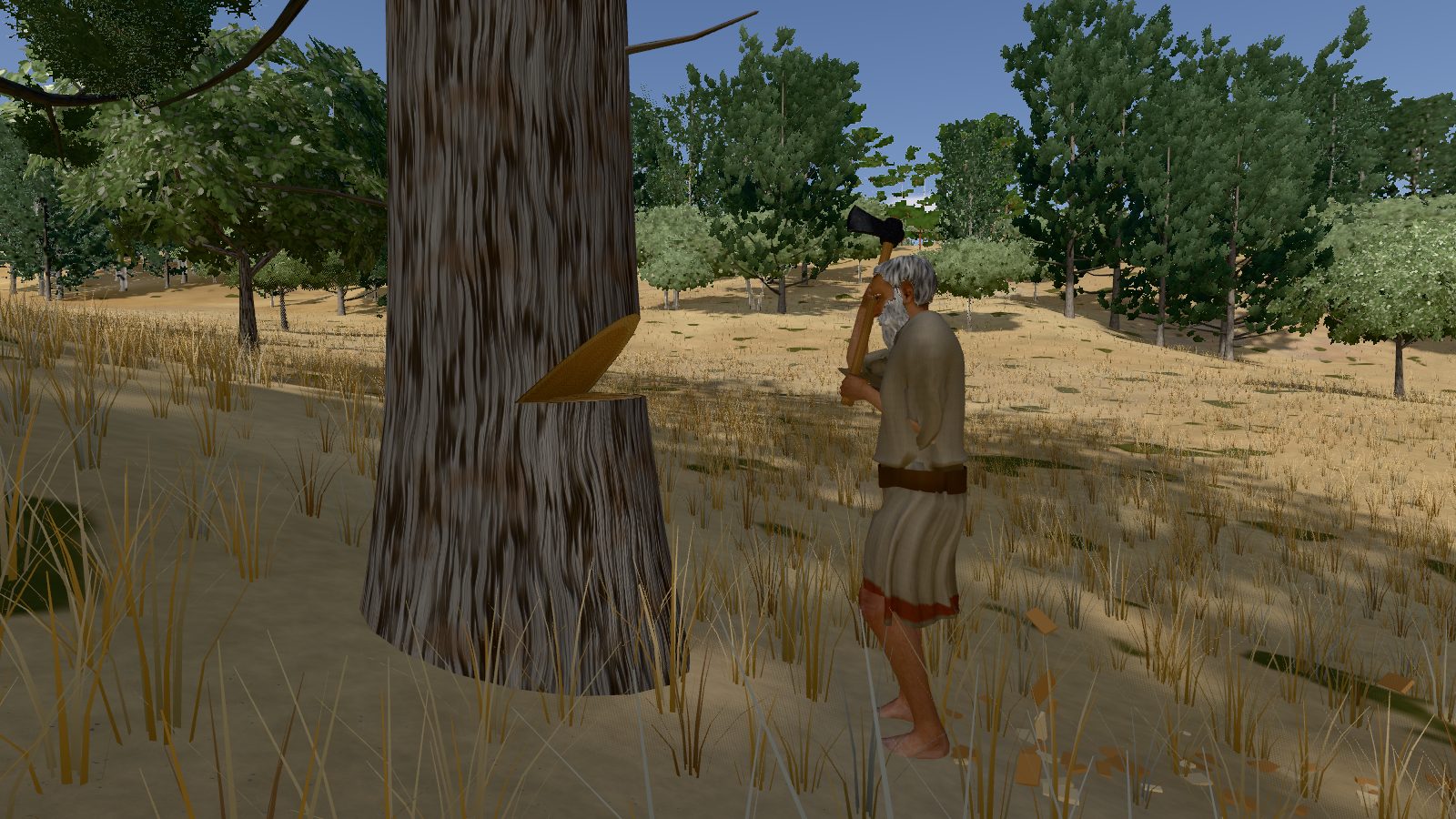
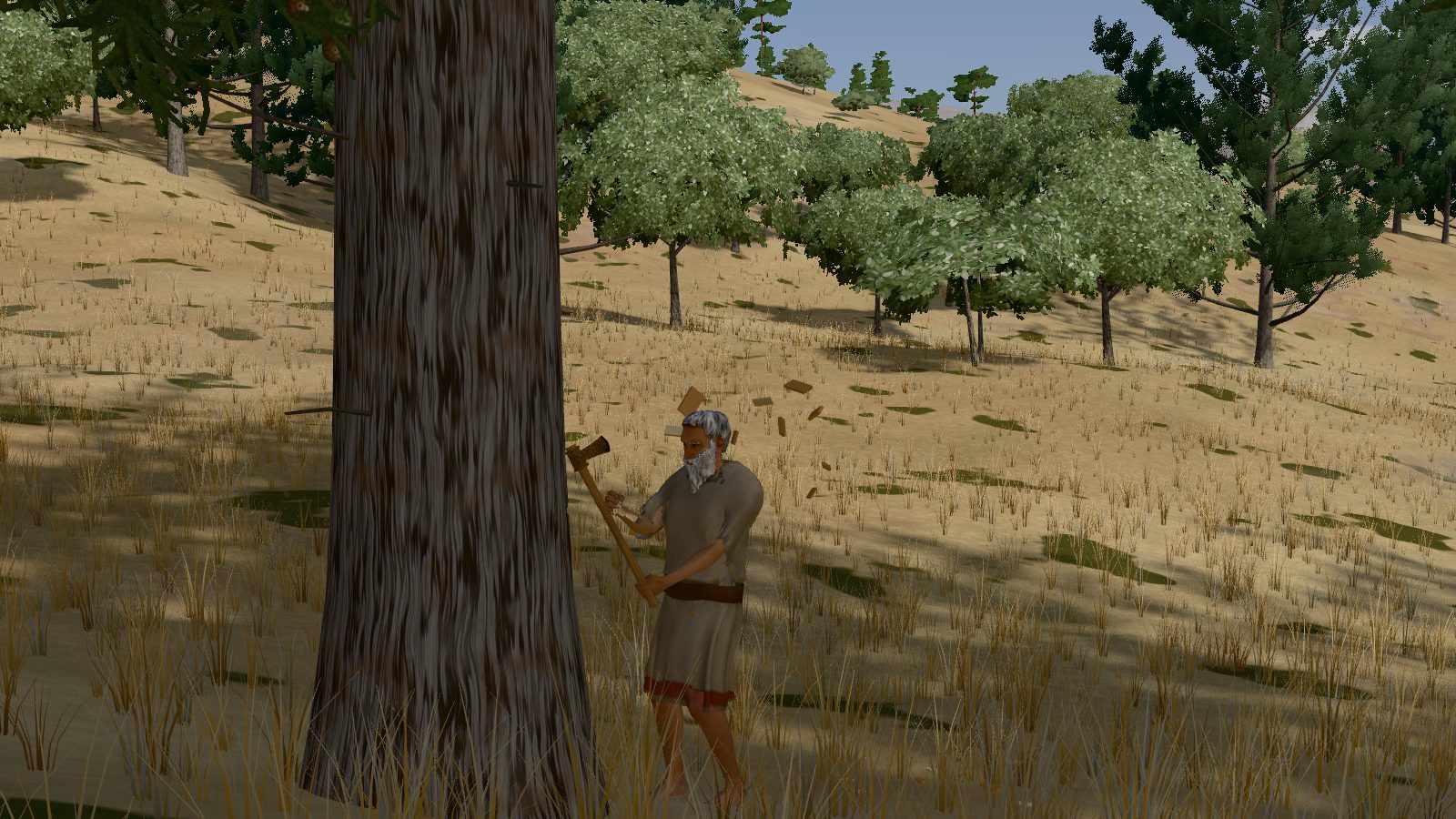
The first cut is the notch, on the side the tree should fall. It is a wedge taken out of the trunk: a level floor, and a roof sloping down to it at about 45 degrees study. With an axe it should go a third to a half of the way through the trunk, deeper than with a saw, where a quarter to a third is usual study. It goes low, "as low on the tree as possible while standing safely and comfortably" study: in the game, between knee and waist modelled.
The notch does two jobs. It lets the tree start to tip toward it, and its floor and roof decide the direction: the tree turns about the wood behind the notch like a door on its hinge.
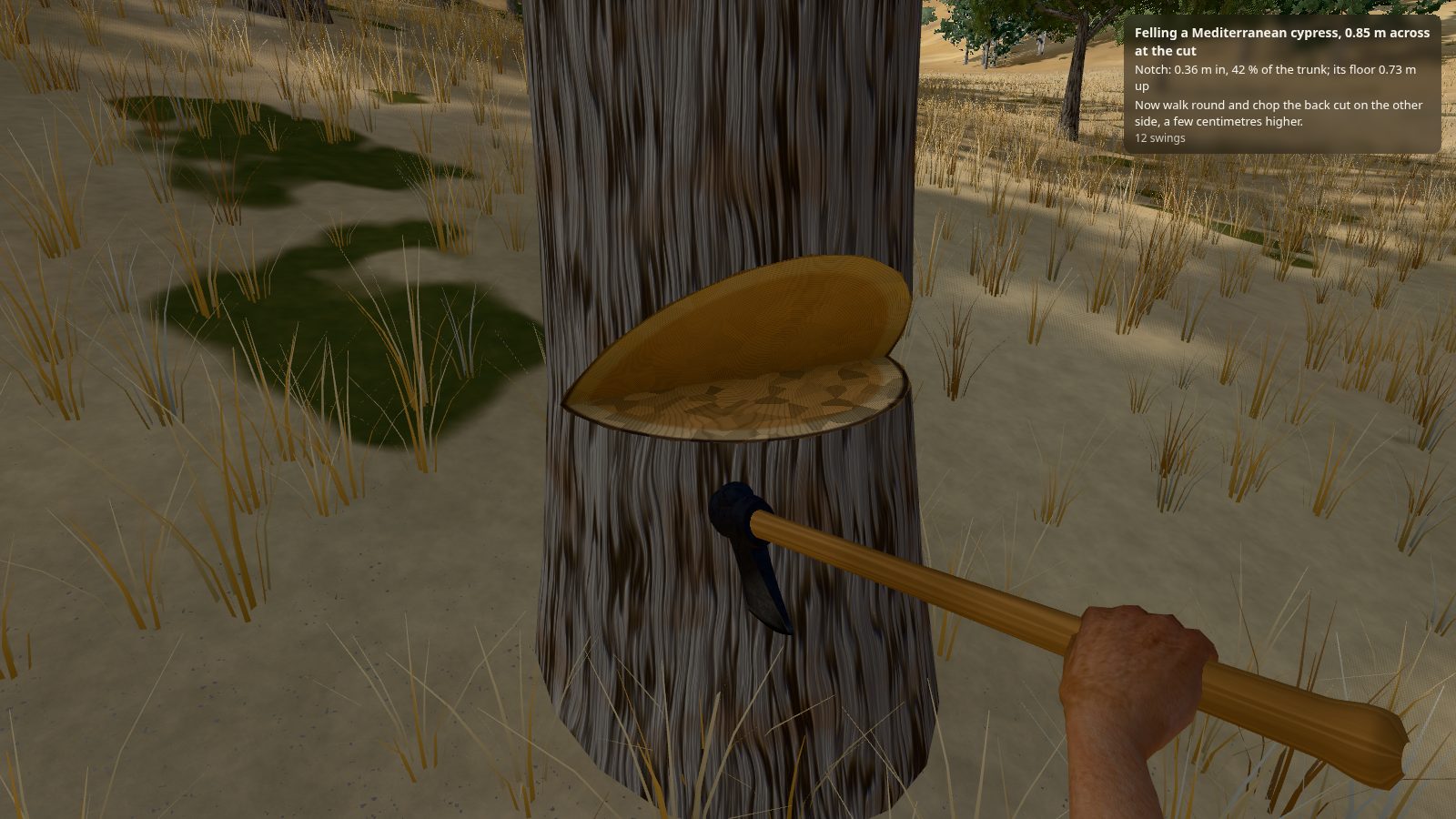
The back cut
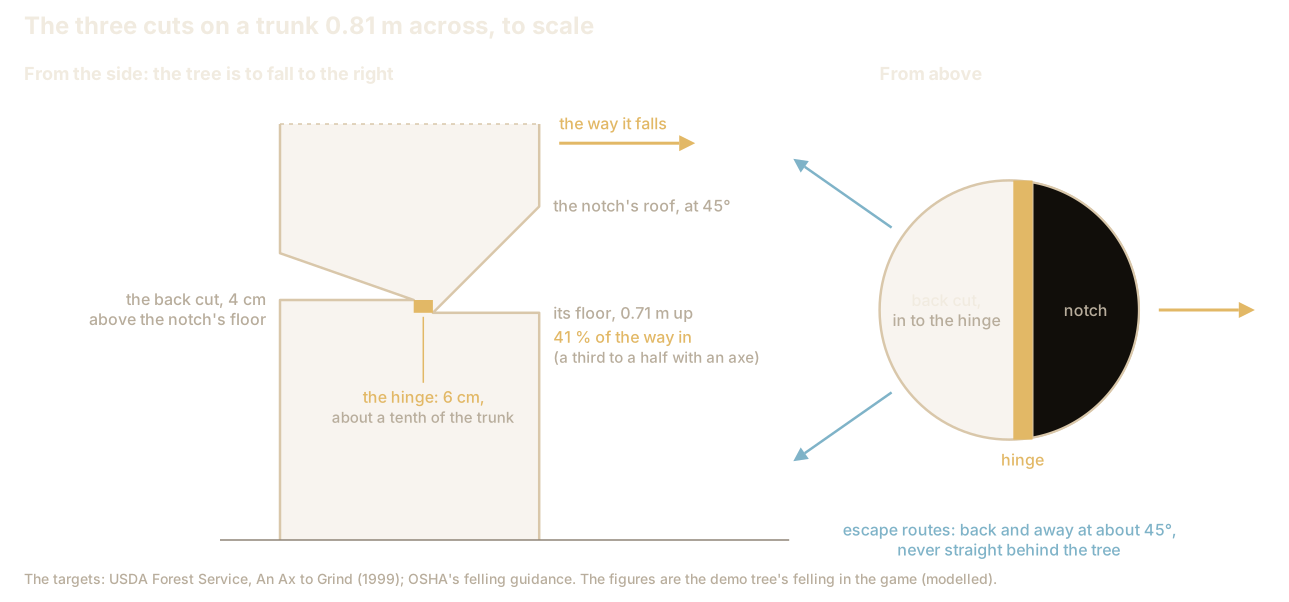
The faller then walks round to the other side and cuts the back cut. It goes in from behind, "a minimum of 2 inches higher on the stump than the front notch", stopping short of the notch study. That step, a few centimetres, matters: it stops the butt of the trunk from sliding back off the stump toward the faller as the tree goes.
The hinge
Between the back cut and the notch stays a strip of uncut wood, the hinge. It should be about a tenth of the trunk's diameter thick and run across most of its width study. While it holds, the tree can only turn one way, toward the notch. Cut it through and the tree is free to go anywhere: the manual's warning at the top of this page.
The hinge also explains why a faller works with a tree. Few trees stand straight; most lean a little, and their weight pulls that way. The manual's advice is to fell "ideally with the natural lean of the tree", and it adds that with an axe "you cannot use a wedge to secure the direction of fall" study. A tree notched against its lean may sit back instead of falling, and the game says why: "It leaned away from the notch and sat back. Fell with the lean, or notch deeper."
What goes wrong
The guides name the failures, and each has a cause study. A barber chair happens "when the force pulling forward on the trunk is great enough to split the trunk but not great enough to trigger the hinge to fold": the trunk splits upward from the cut, usually on a tree leaning hard forward with a shallow notch. A butt that kicks back off the stump is the missing step. And when it all goes, the faller retreats back and away at about 45 degrees to the line of fall, never straight behind the tree study.
How the game works it out
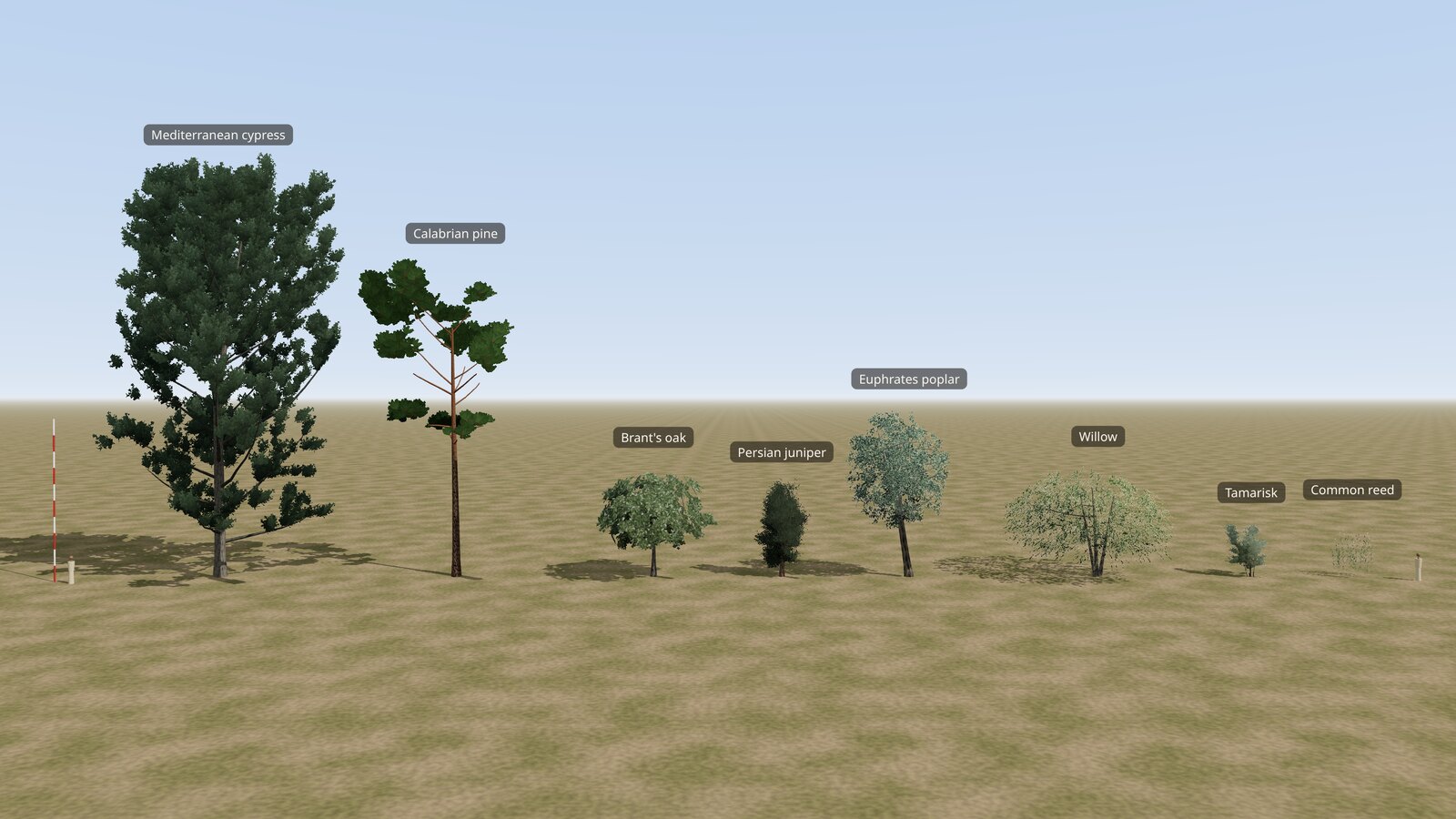
House of Noah does not script falls modelled. Each tree in the valley has a weight from its size and its wood, about 900 kilograms a cubic metre for fresh cypress, with a crown of branches and foliage adding about a third again. It leans half a degree to two and a half, more on a slope, at most four, and a close look tells you which way ("about 2.1° toward the north-east"). In summer a steady north-westerly wind of about 3 metres a second blows down the valley, with gusts, and pushes on the crown.
The hinge has a strength. No test of fresh Mediterranean cypress was found, so the game uses baldcypress, a tree with the same basic density, which holds 24.7 megapascals in compression along the grain when green study, scaled by density for the other woods modelled. When the weight and the wind turn the tree harder than its hinge can hold, it starts to go: first turning about the hinge, then falling free on the real slope, worked out in steps of 1/240 of a second, the same on the server and on every computer modelled.
Nothing in that is a rule about outcomes. Drifting off the aim, sitting back, a hinge cut through, a barber chair and a kickback all come out of the physics, and the game names them afterwards: "The trunk split up from the cut (a barber chair): the notch was too shallow for its lean" modelled.
In one felling of the game's demo tree, the notch went 41 % into the trunk, its floor 0.71 metres up; the back cut stood 4 centimetres above it; the hinge was 6 centimetres. The tree fell 1 degree off the aim: "A clean fall where you aimed" modelled.
Not yet: getting out of the way
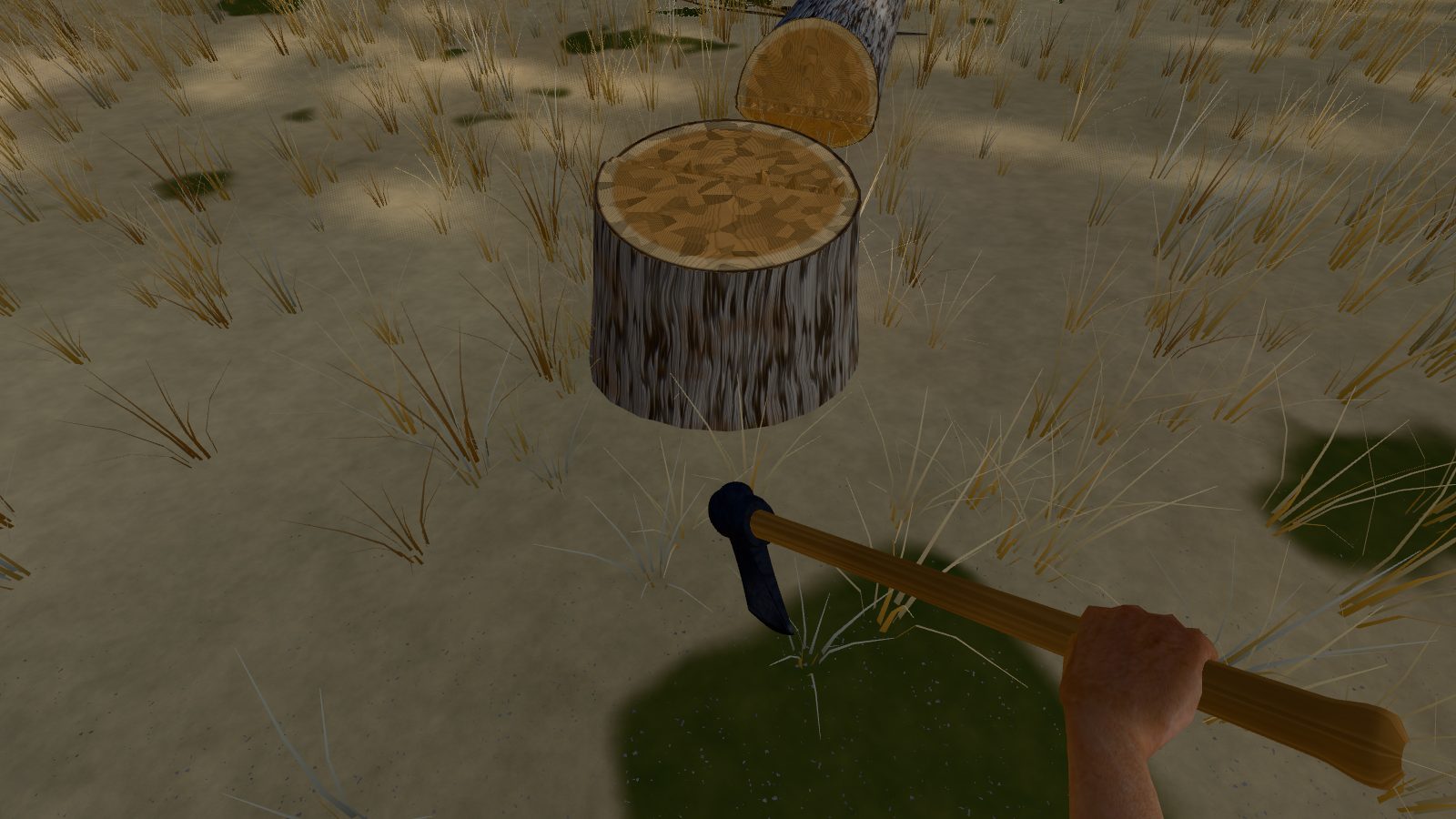
Today the game steps you aside from a falling tree ("You stepped out of the tree's way"). That will change modelled. Injuries are planned: standing in a tree's line of fall will be a risk, and a hurt member of the house will spend days resting, shown without gore. The escape route will become part of the craft.
What it means for the game
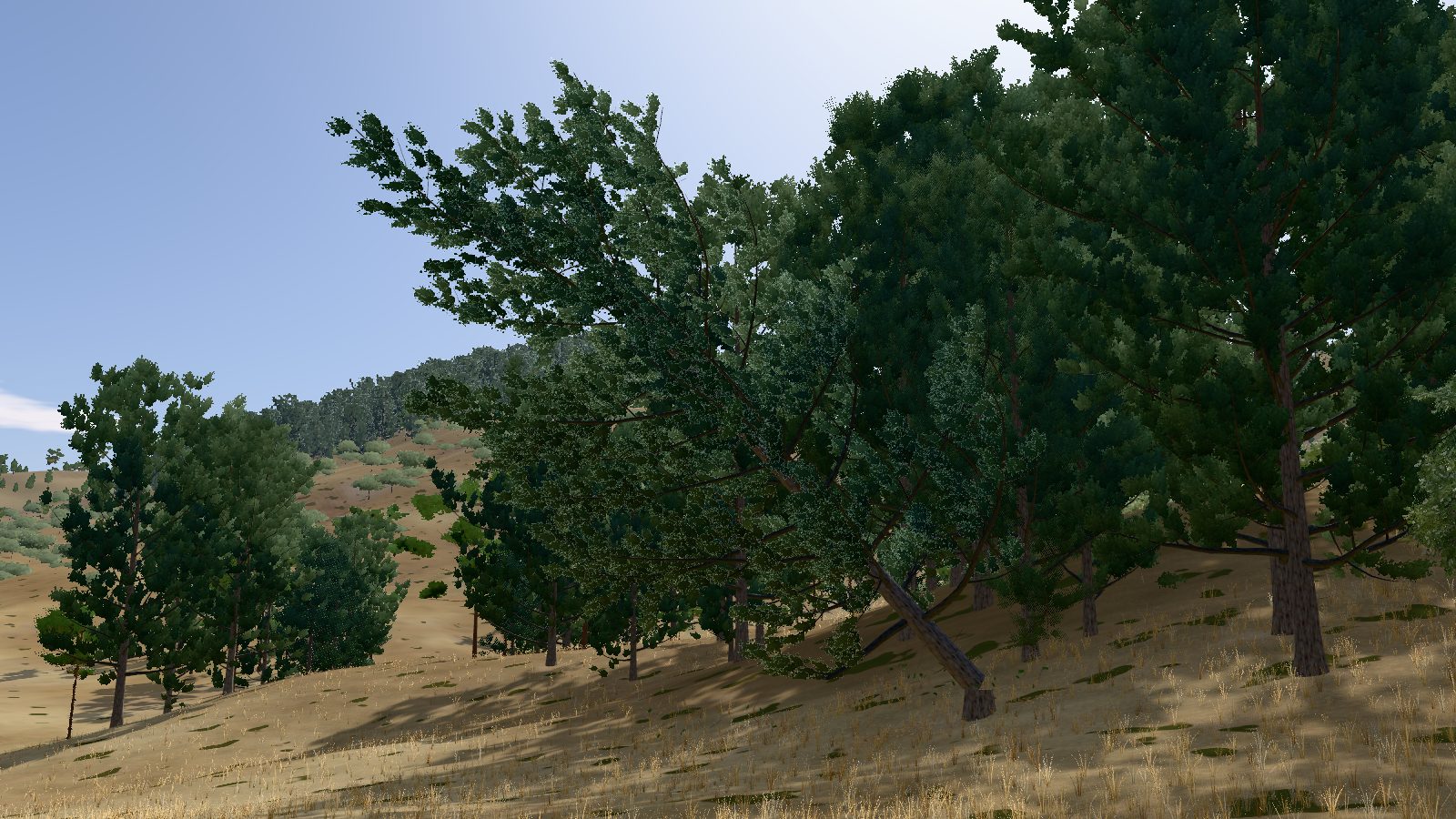
A tree felled well lands where the house wants it: beside a track, toward the river, clear of the other trees. A tree felled badly drifts off its aim, sits back or splits. The game never says which way to fell. It gives you the cuts, and the wood does the rest.